The Little Penquin is the smallest species of penquin. They are also called fairy penguins or little blue penguins (because they are the only penguins with slate blue plumage). They are very common on the southern coastline of Australia and New Zealand, and over 32,000 of them live on Phillip Island. The Phillip Island Nature Park built two stadiums on the beach for folks to watch the little penguins come ashore each evening after they have been at sea feeding all day. It is called the Penguin Parade and it was the primary reason we drove to Phillip Island. Like other Australian Islands, the residents have found wildlife tourism worth the effort to keep out cats, wild dogs and foxes, and the Penguin Parade is quite a tourist attraction. The other principal tourist attraction on Phillip Island is the Australian Grand Prix (motorcycle race), which will be next week. Motorcycles have raced on the Island since 1928.
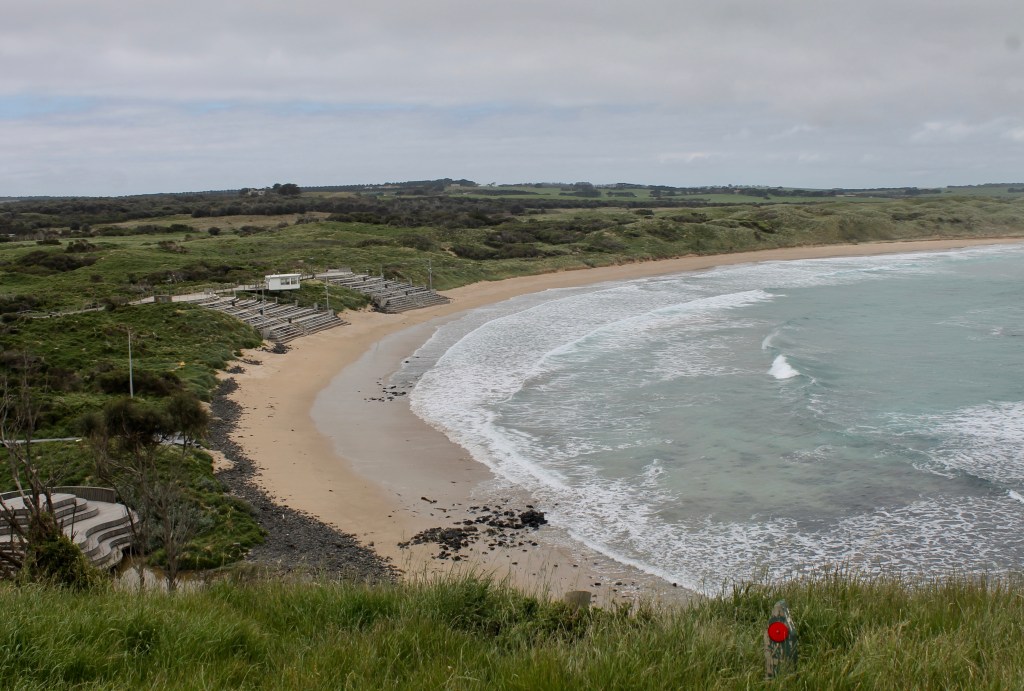
Because the penguins’ eyes are sensitive to light, Penguin Parade attendees are not permitted to take pictures as hundreds of penguins arrive at dusk. At about 8pm this time of the year, the penguins simply emerge from the shore line in batches of 40 to 50 each “wave” and cross the beach. They find their mate (penguins mate each season, not for life, and their “divorce rate” is estimated at 50%), preen their feathers with a gland to add air (waterproofing), and then head into the hills from which we took the picture above to find the burrows where their chicks are waiting. The adults make a guttural sound to announce their return and the chicks chirp to give the adults location signals. But we would have to wait several hours for the event to begin.

Just east of the penguin beach, hundreds of fur seals live year round on the rocky outcrop at the top left of this point. And on our way from Nobbies View (Nobbies is the tall round island in the top middle) to our hotel along a gravel road, we came upon an echidna eating beside the road. This time we were able get a picture.
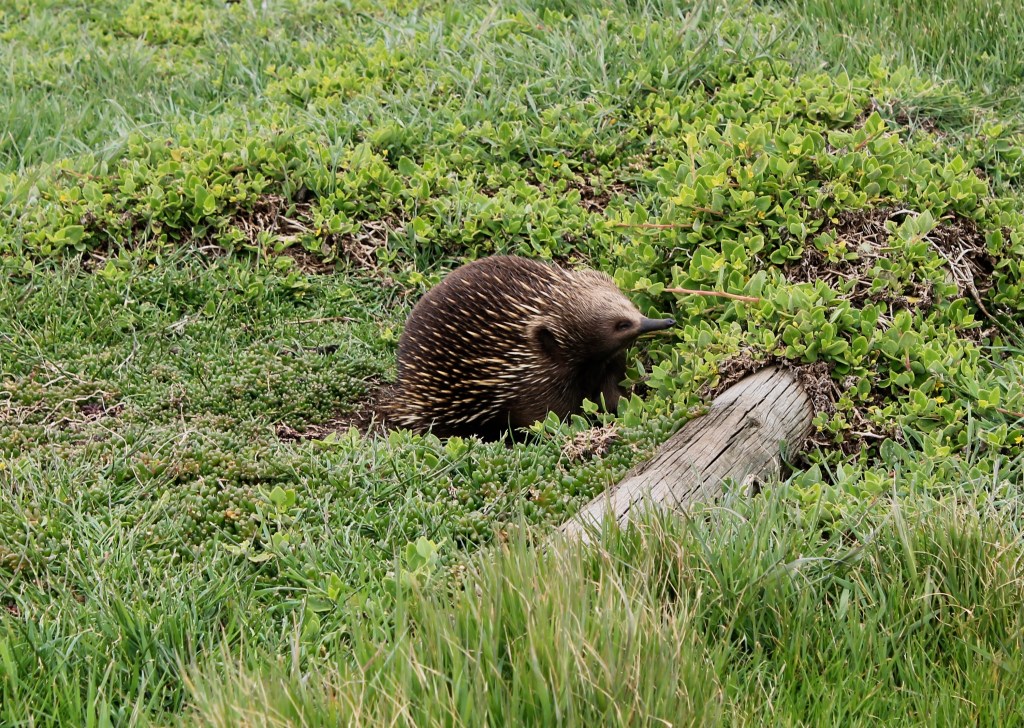
The guy was actually fairly large for an echnida. Unlike his cousins on Kangarooo Island, he just ignored us and continued to eat whatever insects were making their home under this rotting log. Just past the echnida were some parent Cape Barren Geese with their striped goslings.

Then we saw this sign warning us to be careful when we finished our visit with the penguins that evening.

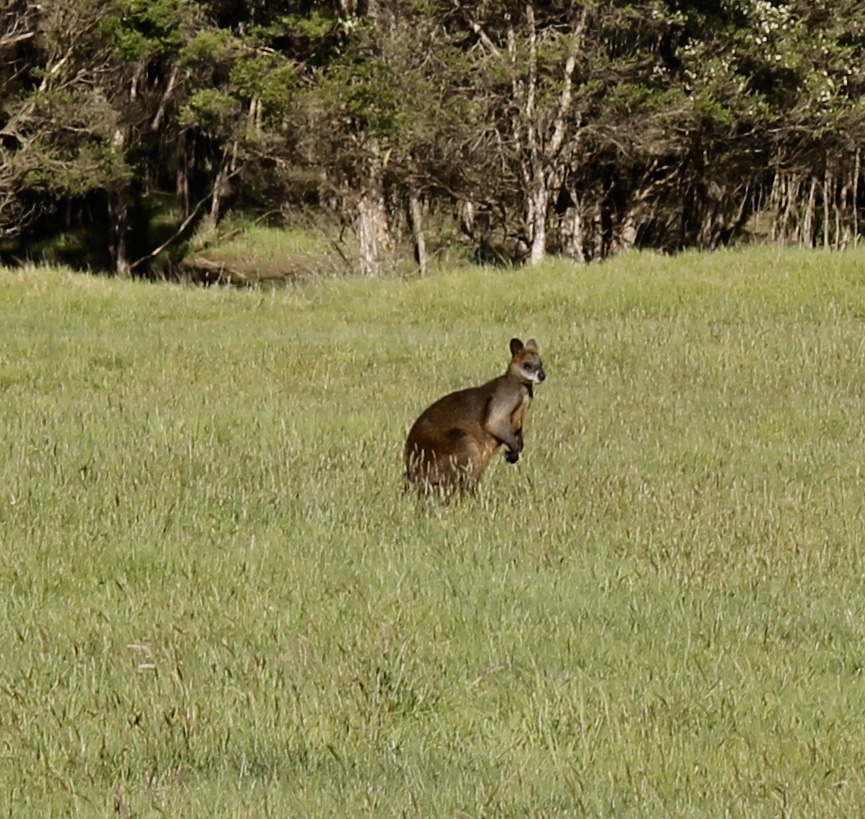
Dawn decided to take a nap while we waiting for dusk to arrive. I drove to a nearby estuary featuring a boardwalk into the mangroves. Phillip Island has its own subspecies of wallaby, known as the swamp or black wallaby. The ones on Kangaroos Island are tammar wallabies. It was late enough that the swamp wallabies decided to come out for an early dinner (this was just one of about six that were in the field).
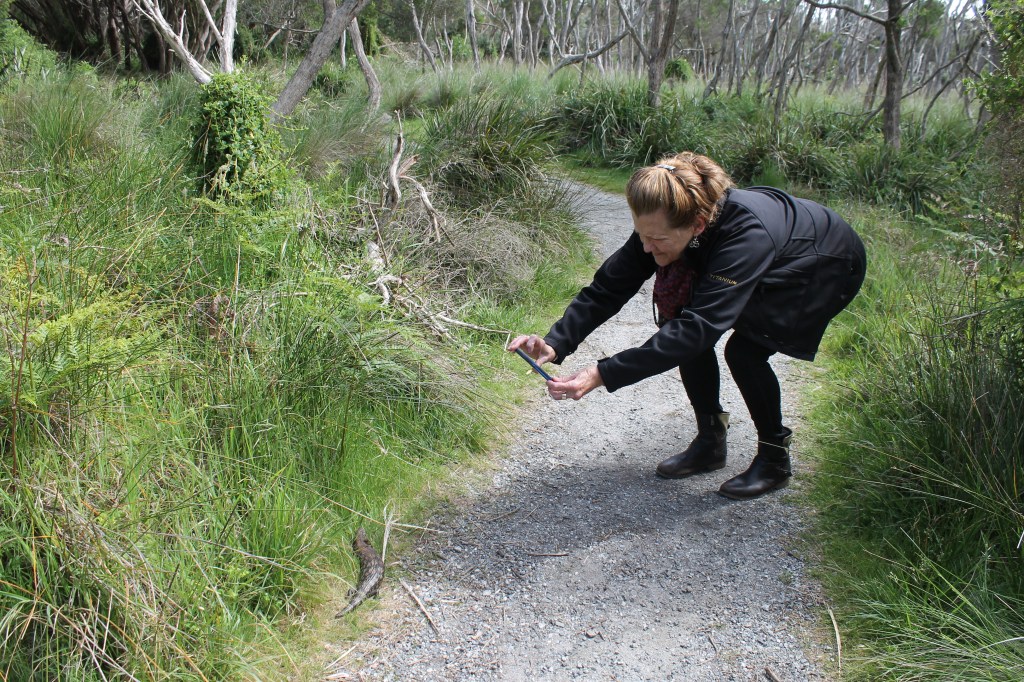
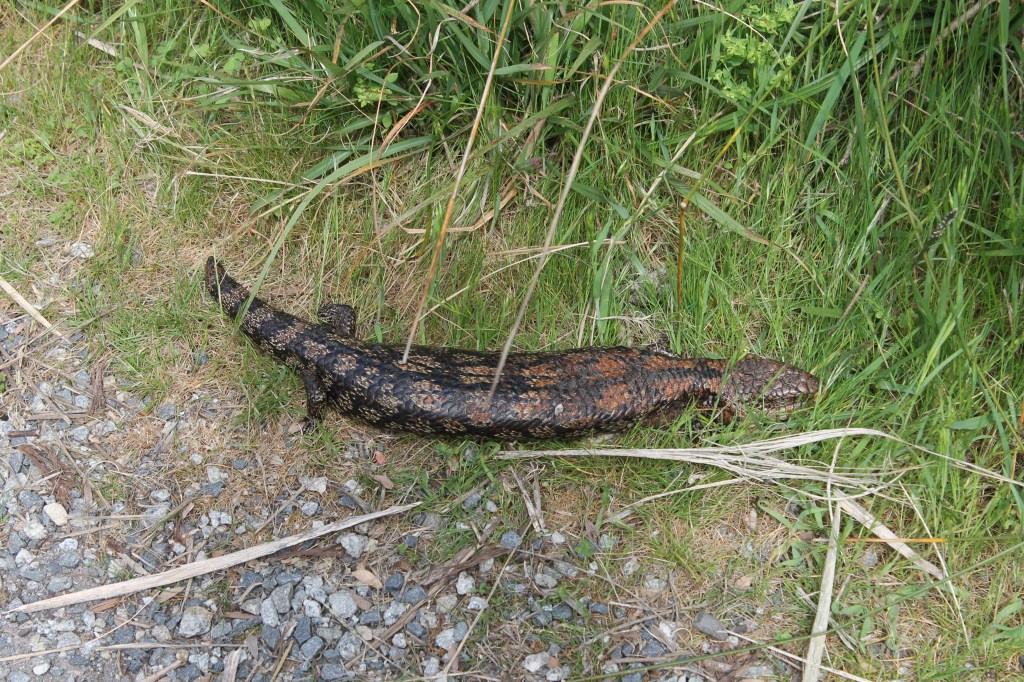
After a quick seafood chowder back at the hotel, we drove to the cold evening damp of the Penguin Parade (along with hundreds of other humans). The Parade officially began at 8:05 pm as the first wave of penguins arrived and ended about 10pm (but the rangers said more penguins would continue to arrive for hours). The sight of hundreds of little penguins suddenly emerging from the water in wave after wave was amazing but the sound of the adults and chicks as they reunited was magical. We lingered in the dark of the path back to the parking lot as long as possible savoring the moans of the adults and the clicks of the chicks in the hills (and watching the adults waddle down the many paths into the hills of the Penguin Parade center for these reunions). The next morning, we returned to Swan Lake near the center. In the path to the lake, we discovered one of the 389 species of skink in Australia. Dawn is the “lizard lady” (and has four pairs of lizard earrings to prove it), so she spent several minutes documenting our discovery. Australia has some of the largest species of skinks on the planet.
We finally got to Swan Lake where we spotted dozens of black swans (and their chicks), black ducks, a royal spoonbill, and a little black cormorant. And of course, there were dozens of Cape Barren geese.
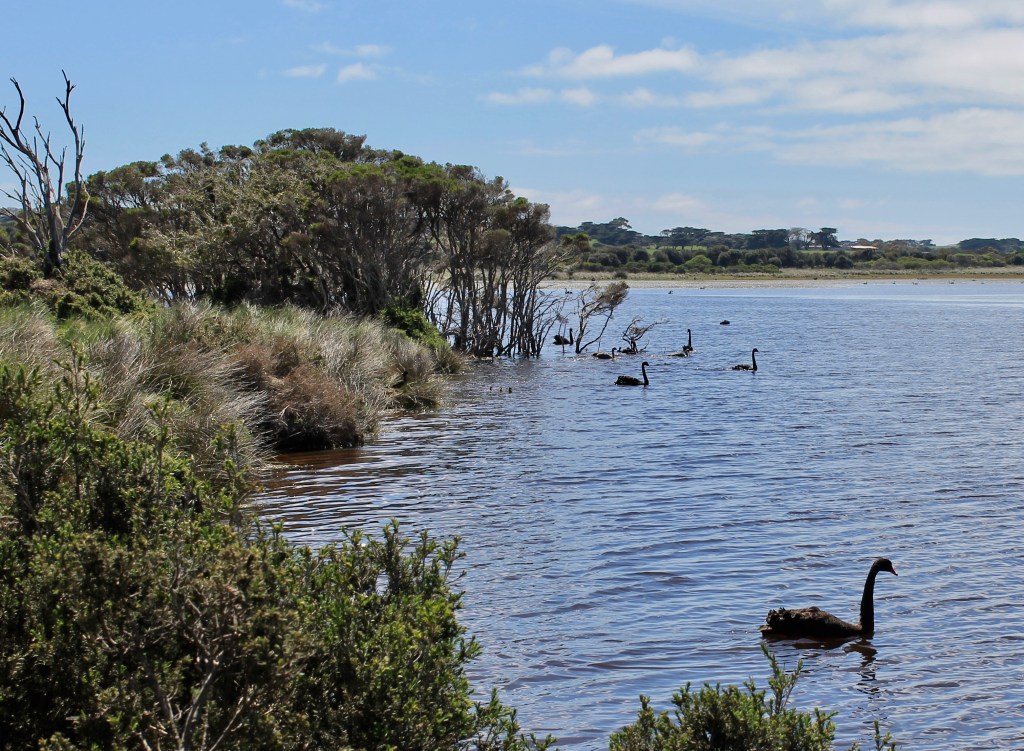
The morning was getting late and we had to return the rental car to Avis in Melbourne, so we had to leave Phillip Island. Dawn had found the Melbourne PBS radio station (yes, it is PBS here), so we got to listen to bluegrass, blues and 1950s rockabilly all the way to Melbourne.
PS., Mom got to see a large skink and another echnida in the wild, so she is really happy tonight (me too, cause I am safe for another night) and Lena, we are spending a lot of your inheritance on a really nice historic hotel here in Melbourne.
 Ginger Without Borders
Leave a comment