I mentioned a couple of blogs ago that the Melbourne Botanical Gardens had tons of public restrooms. Australia has a ton of public restrooms, apparently maintained by the local municipal authorities (at least that is what the signs say at most of the facilities I have used). In our first cafe in Brisbane, I thought it was a litte odd that the waitress directed us to the restrooms on the second floor of the office building in which the cafe was located. But when I asked where the restroom was at dinner that night in Brisbane’s ritzy South Bank, the waitress said the restroom was a block away in another part of the set of buildings that constituted the development where the restaurant was located.
She saw the puzzled look on my face (she was from Germany and working on a student visa) and explained that it was not a requirement in Australia for a restaurant to have “facilities” within the walls of its establishment because “Australia has so many public restrooms.” She did not agree with the policy (and frankly neither do we). Now we have eaten at a lot of Australian restaurants that do have facilities, but I have been surprised at some that did not, including some upscale locations.
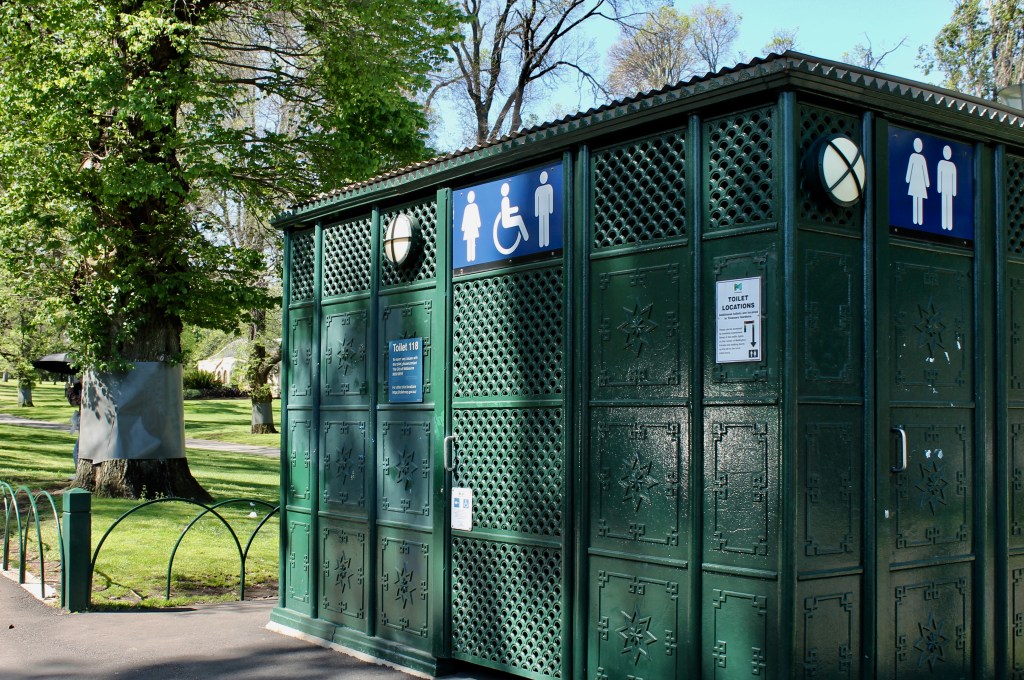
Also, the design of some of these municipal facilities is interesting. In Adelaide, they were just dull gray metal boxes but in Melbourne they were a little more fancy in the parklands:
The one I used in Adelaide had an automatic sliding door and when I pushed the close button, the door slid shut and a voice annouced that the door would open again in 10 minutes. So I was very careful to end my session promptly.
The upscale South Bank restaurant in Melbourne where Dawn and I ate had no facilities. We were directed down the hall of the development where there was an opaque glass door with “unisex restroom” written in large block letters. You had to push a button to open the sliding door to a fairly small single room with one toilet. Once inside, you had to push the close button twice and only then did the “door locked” light come on. We were not given a time limit in that facility.
The Melbourne Botanical Gardens had a similar design for all of its facilities and they were fairly open and airy given the climate there. But the Hobart climate is a little less predictable or warm, so the floor plate (that is Australian for floor plan) was different for their two facilities:
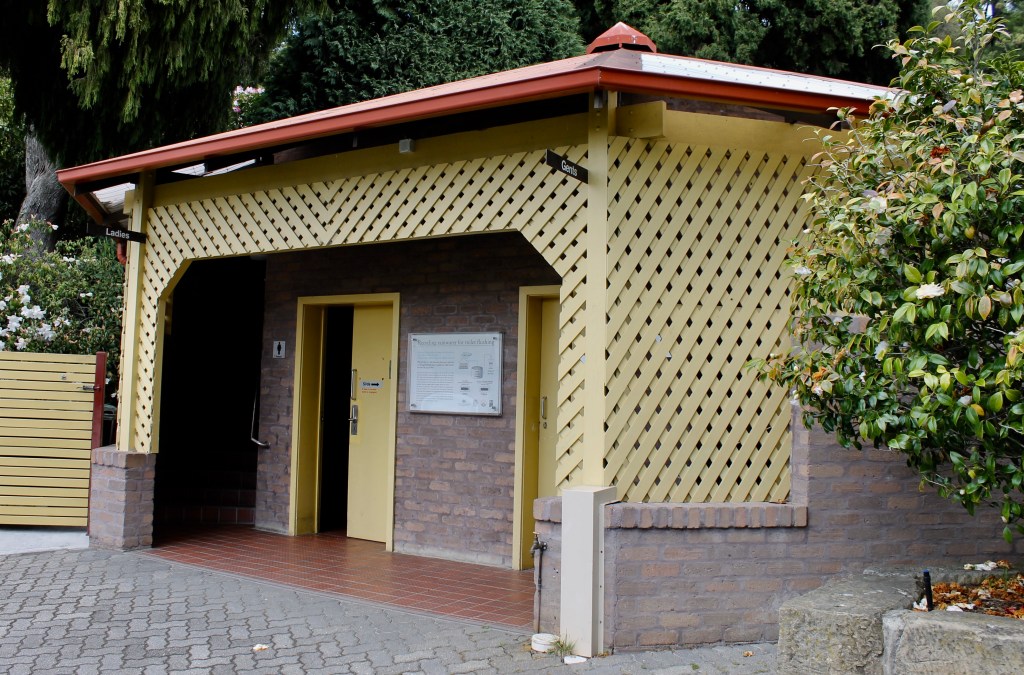
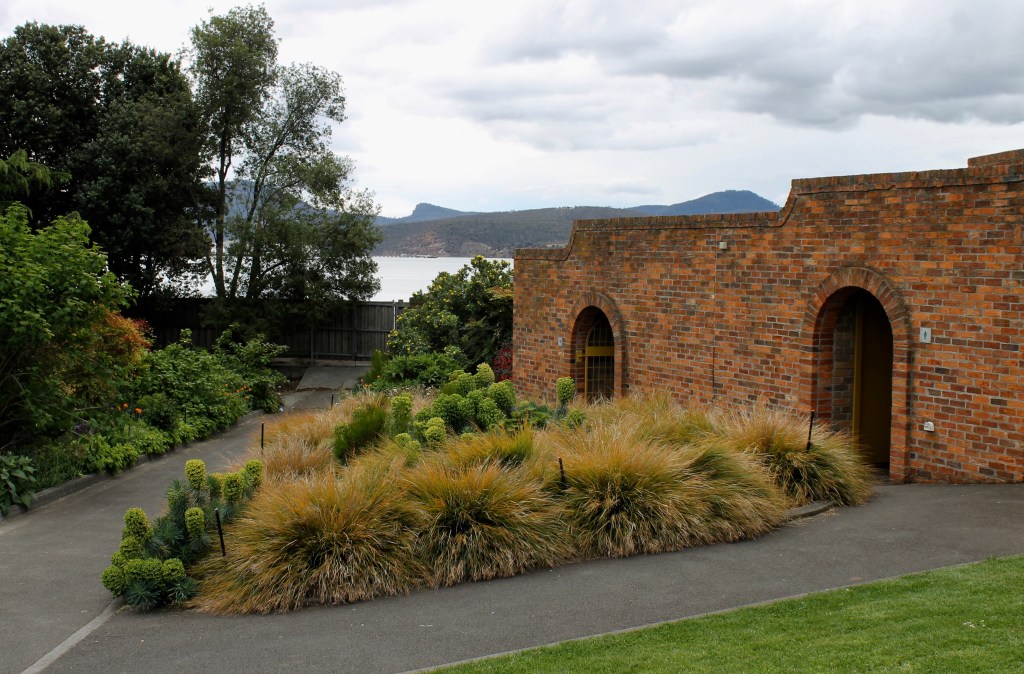
The interesting part of these Hobart Garden facilities was that each had a cistern on top of the building to catch rainwater. According to the signs posted at the Gardens, all of the water used in their facilities came from these cisterns. And as I pointed out previously, all Australian restrooms have metal collection boxes for used needles.
Now if you, as I did, grew up at a certain time in the life of public school restrooms, all boy’s rooms had a certain type of urinal that was a lot more communal that today’s individual urinals. I doubt any of those exist in the US anymore. But they are fairly common here in Australia and it has been a real trip down memory lane to use them. Ladies, please avert your eyes for the next picture, but Bob, I know you would like to see one of these again.

PS., Lena, none of your inheritance was spent on this blog since all public restrooms in Australia are free and Mom knows I am writing this blog. She is happy because the second semi-final of the Rugby World Cup is tonight.
 Ginger Without Borders
Leave a comment