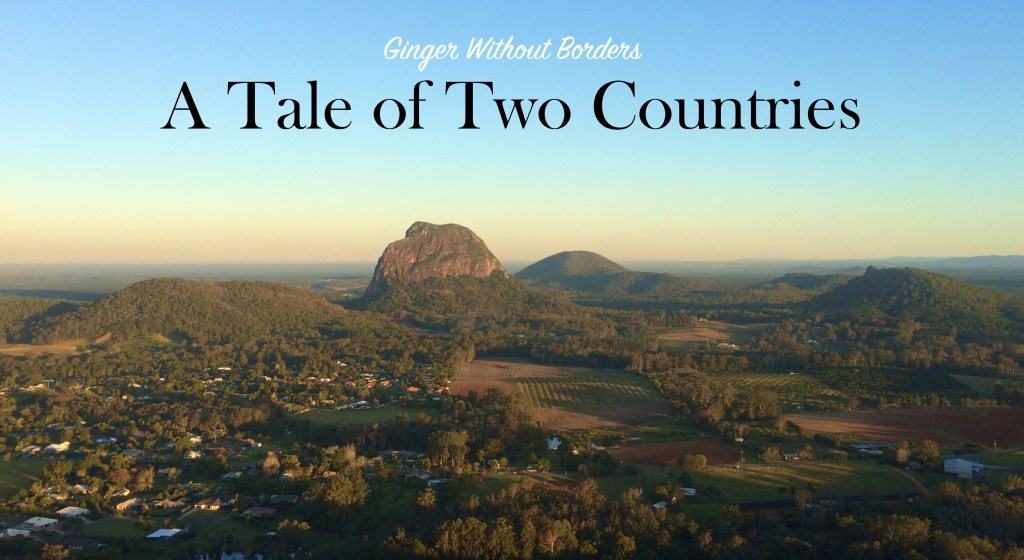
Cradle Mountain is almost 5,100 feet above sea level and was declared a scenic reserve in 1922. The campaign to create a park was led by a couple who visited on their honeymoon and decided it should be protected. The area became a National Park in 1947 but the surrounding area was logged heavily up until 1972. Public protests stopped the logging. The man who developed the Lemonthyme Lodge (which is not on National Park territory) was the son of one of these timber harvesters. He opened his Lodge in 1990.
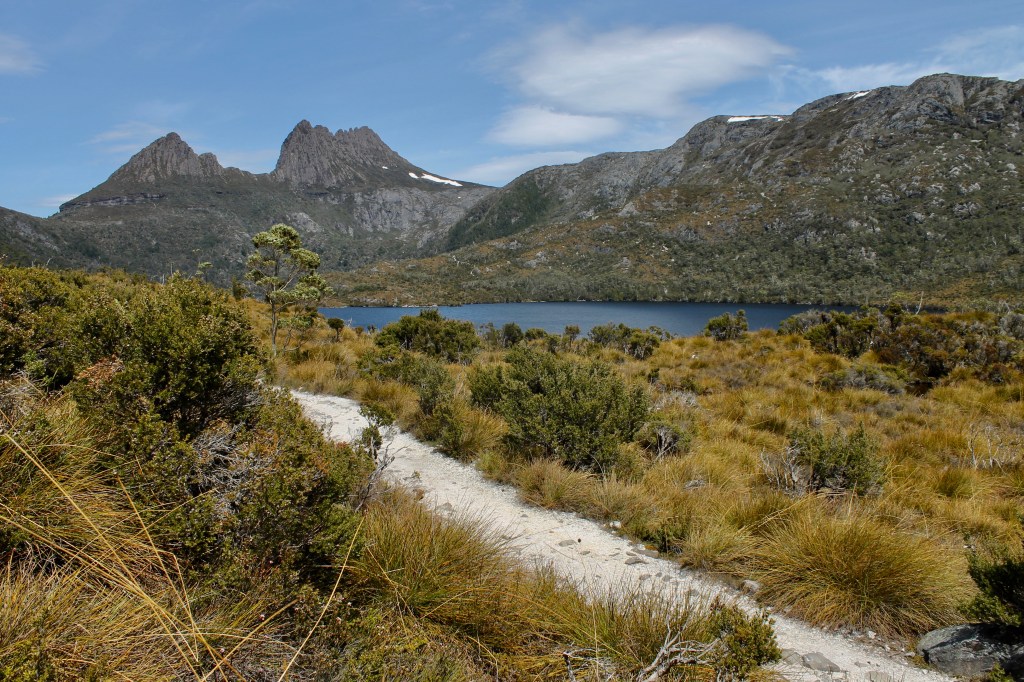
We rose early in the hope of getting to the National Park in time to see the wombats that are very common there. But it ended up being an almost 45 minute drive (not the advertised 30 mintues), since I apparently don’t drive the winding (with blind curves) dirt road as fast as Australians. The view is so spectacular that Cradle Mountain is the picture used to advertise Tasmania by Qantas. And those white areas on the peaks are patches of ice!

There are hiking trails in every direction. Most of the animals that live here are burrowing animals, so the trails are substantial and no one is permitted to leave the trail for fear of collapsing their tunnels. We found lots of the distinctive wombat poo. Wombats are solitary and very territorial, so they have evolved square poo that will not roll down the mountain. But alas, no wombats in view.
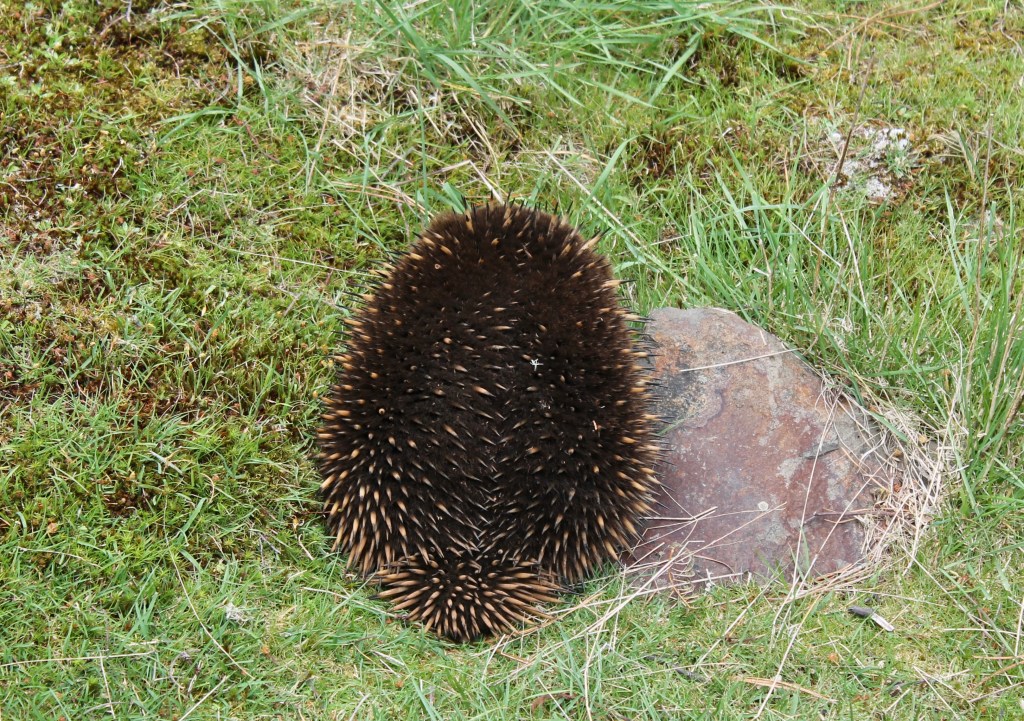
Adjacent to the entrance to the park is a private animal rescue facility dedicated to increasing the genetic diversity of three endangered Tasmanian species, the Tasmanian devil and two species of quoll (an animal we did not know even existed). They permit (for a fee) folks to watch as the staff feeds their charges in the evening. We bought our tickets and planned to head back to the Lodge for lunch and a nap. Our petrol (gas) was getting low and we soon discovered that the nearest petrol station was thirty minutes past the Lodge turnoff (so an hour away). It was a frustrating drive to the petrol station but on our way back to the Lodge, we saw three (surprise) echidnas. Instead of running into the forest, the last one simply ran over to his rock and buried his head in the ground to form his protective quill shield.
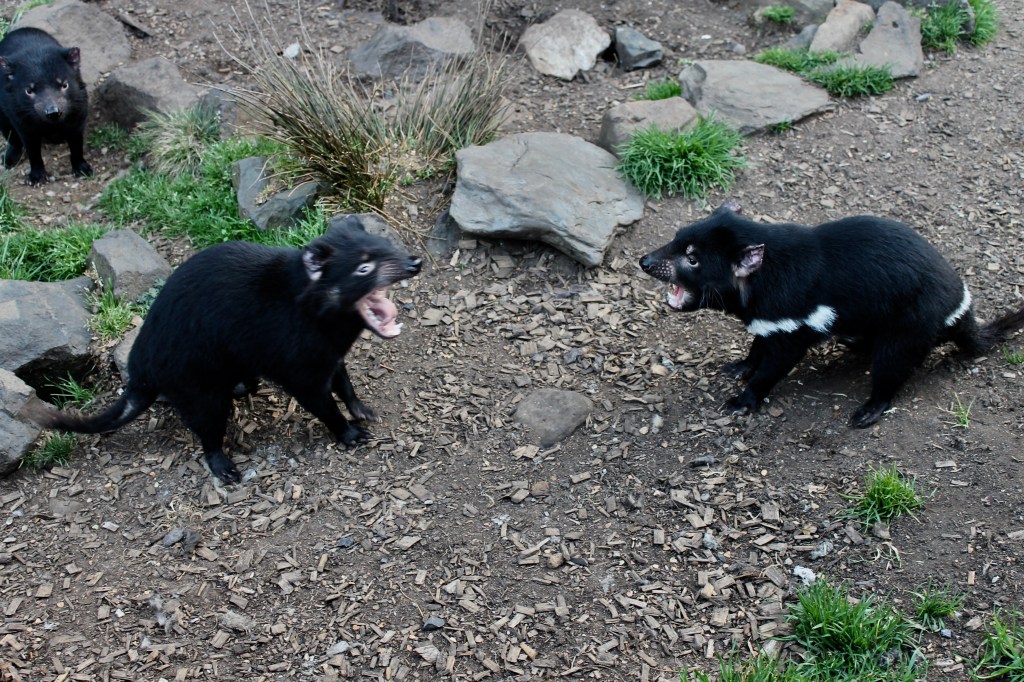
We ate a hurried lunch at the Lodge and headed back to Cradle Mountain (now the third trip of the day down that 5 miles of dirt road). We got to the rescue place about an hour before the feeding would start (5:30 pm) but the animals were all aware that food was coming and were quite active. So we finally got to see a bunch of Tasmanian devils and frequently heard the snarling screams that earned them their name. As scavengers who do not hunt their prey, they feed communally on any carcass they find. They hiss and snarl to protect their portion of the meal but only rarely do they actually bite each other or scream at one another while feeding.
Devils only inhabit Tasmania and their numbers have been decimated by a facial tumor that is spread by contact (when they bite each other while feeding). The idea to save the devils is to breed disease free offspring with greater genetic diversity than their parents (and hopefully immunity from the cancer). So devils (including ones at this facility) are flown all over the planet when breeding season arrives (and mated to maximize diversity). Devils from this facility have been reintroduced into the wild on Tasmanian islands free of diseased devils. The program appears to be working – disease free populations are increasing on these islands while devils are disappearing on mainland Tasmania. Researchers have had limited success finding a treatment for the cancer.
The quoll (also called the tiger quoll) is a cousin of the devil and also a carnivore. Unlike the “roadkill eating” devils, the spottted quoll is the apex predator on Tasmania and can kill a pademelon even though it may be three times the size of the quoll. Feral cats (introduced by Europeans) are particular competition for their food sources and have significantly reduced quoll populations. This quoll is about the size of a possum and can climb trees (like shown here).

The Eastern quoll is a smaller species and hunts mostly mice, frogs and similar prey. They do not have spots on their tails. Coat color is genetic (like our hair color) and a parent can have both white and black quolls as offspring.
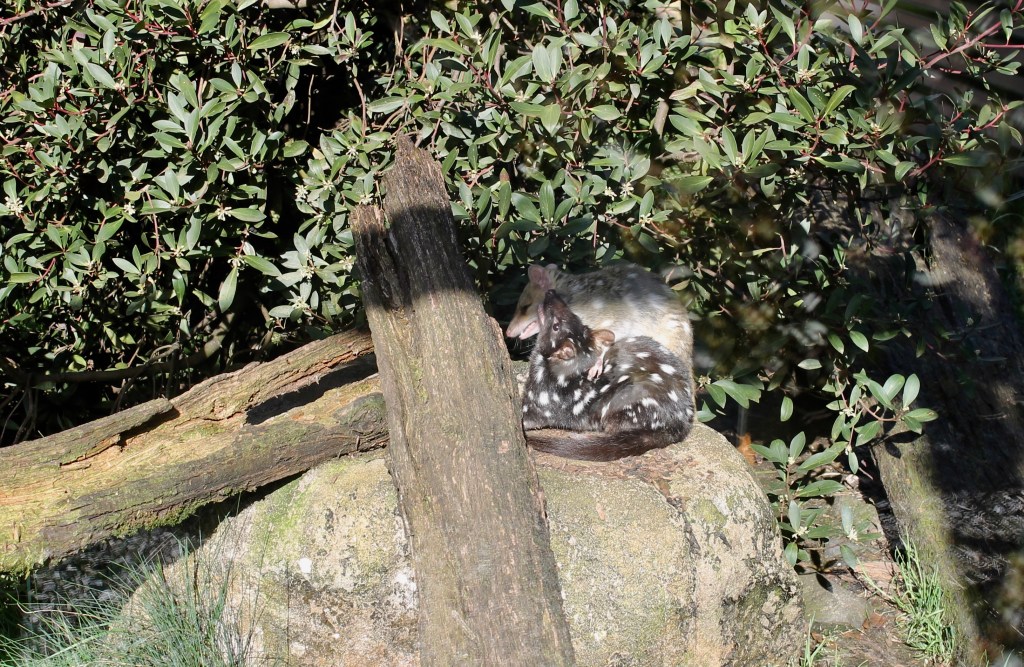
The surprise of the day was hidden in a back enclosure. Although generally solitary, they had two wombats. Dawn calls them four legged fuzzy tanks because of the bone in their backside that is their sheild when they dive into their borrow. They have few predators (one is the tiger quoll) because that bone is so hard. They are grass eaters (like a very small cow) but are also marsupials. Their pouch faces to the rear so that dirt doesn’t enter it when mom is digging her burrow.

By the time we finished dinner (delicious pies at a nearby pub), it was almost 7:30pm and dusk was well underway. We soon discovered the truth of all those wildlife warning signs.
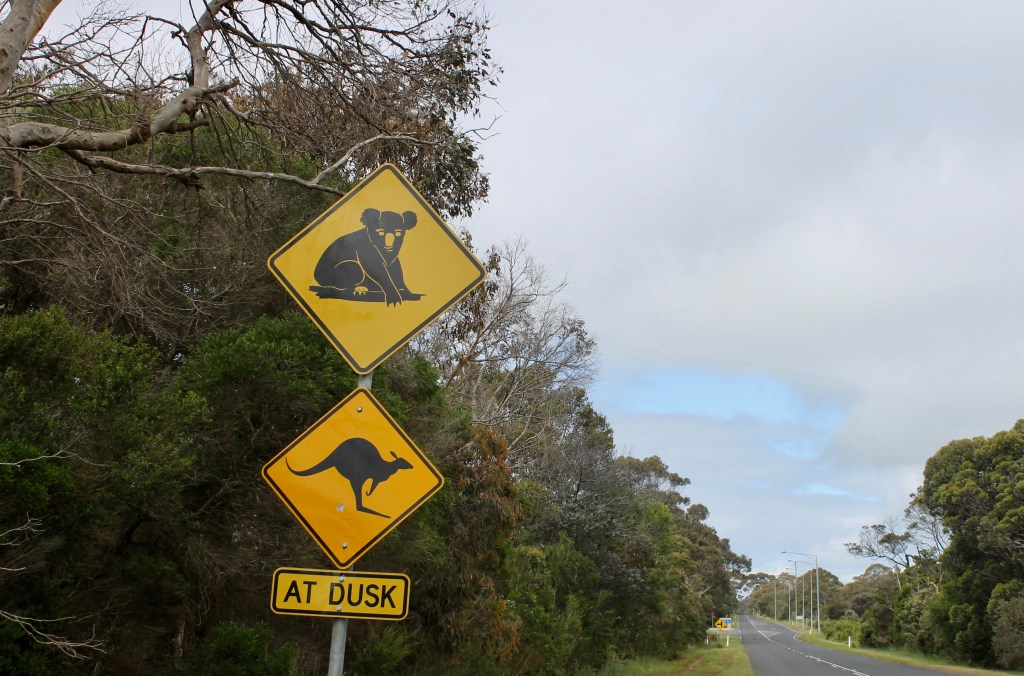
Within five minutes of turning onto the main road back to the Lodge, we came around a bend to find a wallaby sitting in the middle of the road with several of his buddies on the soft edge. According to the Australians we spoke with, wallabies are sensible and will leave the road. Apparently kangaroos are like deer and you have no idea which direction they will run. Mine looked right at me and slowly jumped to the side of the road and stayed there as I drove past. In the next twenty five minutes it took to get to the Lodge turnoff, we saw another 13 wallabies on the side of the road. As we turned off, a pademelon ran across the dirt road in front of the car. Apparently, I drove slow enough down the dirt road that all the wildlife left before we could see them in our headlights.
We got to the Lodge at about 8:25pm and Dawn wanted to check the feeding area. I was still calming down from the nervous energy of trying to spot wildlife in the dark while driving on the left side of the road. But Dawn called me to come out to see the new visitor that evening – a bushy tail possum. At first, it looked to me to be another pademelon because of the fur color, but on closer look, its fur was lighter and its nose was pink. When it turned and showed its tail, the tail was quite bushy. Actually, I thought it was the prettiest possum I had ever seen, certainly better looking than our version.

PS., Lena you will be happy to know that we spent some of your inheritance to research ways to help the Tassie Devil and the quoll (did you know about quolls?) and Mom got a good walk on Cradle Mountain and to see a wombat (even if it was in an enclosure), so she is happy (not at the moment because I am asking questions and she is trying to fall asleep), so I might be in some trouble.
 Ginger Without Borders
Leave a comment