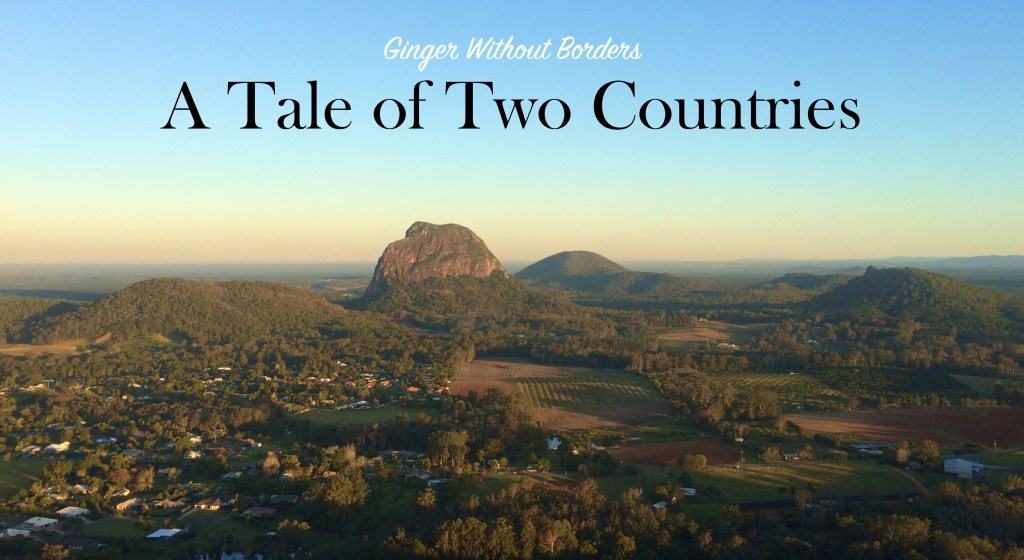
Athough Dutch and Spanish navigators discovered western Australia in the late 1600’s, it was not until 1770 that Captain Cook explored and charted parts of the east coast of Australia and claimed the territory for England. And even though its land mass was bigger than all of Europe (even bigger than the continental US), it was expensive to travel there and the journey took up to six months. So if the US had not won the American Revolution, it may have taken a long time for England to show any interest in its new territory (just as the Dutch and Spanish had showed no interest in Western Australia).
In 1783, an American Loyalist (the name for colonists who supported the King) wrote “A Proposal for Establishing a Settlement in New South Wales” with many of the proposed settlers to be the American Loyalists who were being driven from the newly freed former American colonies. But the British Secretary of State, Lord Sydney, needed a new territory to send the approximately 1,000 convicts annually that he used to send to the American colonies, so the proposal was amended. No American Loyalists ever volunteered to take the long journey to this unknown territory, but in 1788, what is now known as the First Fleet arrived at Botany Bay. The Fleet’s 11 ships carried between 1,000 and 1,500 convicts (male and female), marines, seaman and civil officers.
Botany Bay had no fresh water, so the colony moved north 7 miles to Port Jackson, a site where there was fresh water. Cook had named the site but never visited it. The Governor of this new colony named the sheltered bay around Port Jackson for Lord Sydney. The First Fleet brought with it only enough supplies to last until the colony could became self sufficient (the British Admiralty estimated six months). However, this was not North America (where even the first British settlers took awhile to become self sufficient).
Australia is the oldest, lowest and flattest land mass on the planet. Its soil has been weathered so long that its primary forests are composed of eucalyptus and tree ferns. And plants that grow very well in the Northern Hemisphere do not survive here. In fact, almost eveything about this new settlement was different from anything in Europe (or North America). So the new colony suffered starvation while Britian kept sending more convicts, most of whom had no skills that were useful to becoming self sufficient.
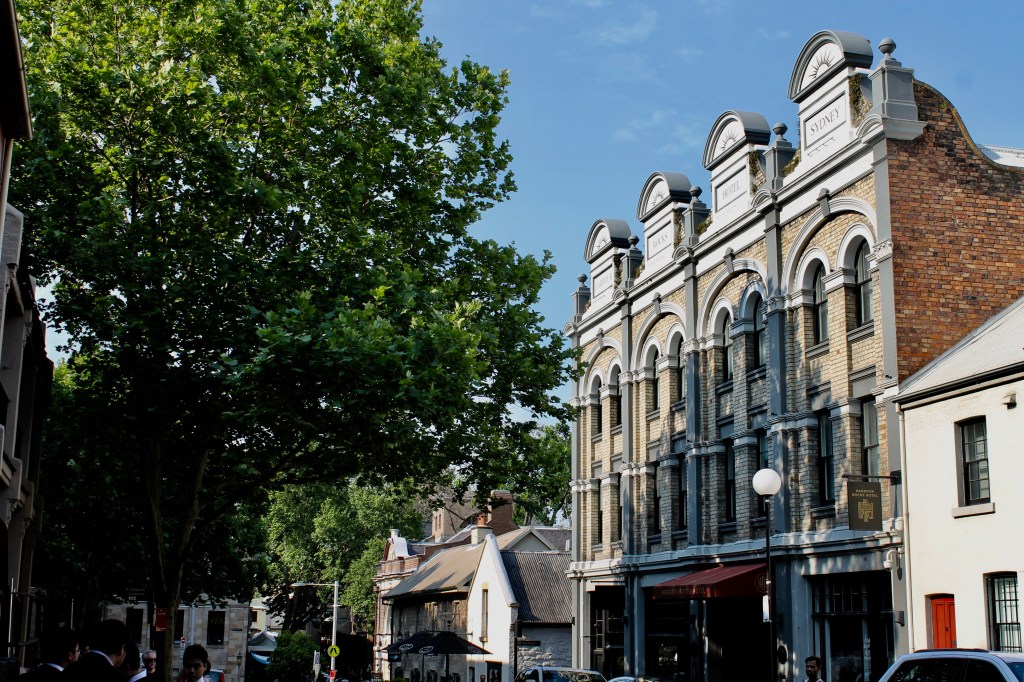
Thanks to enterprising naval officers and civil servants (many of whom ignored their orders not to rehabilitate convicts), the colony (mainly using the trade of rum as currency) developed a wool trade and an animal skin trade. Our hotel is located in a former wool warehouse in an area known as the Rocks. The convicts were housed in barracks (they worked on the land and in the factories during the day) on the west side of Sydney Bay (a rocky site quaried for building material) while the civil servants who ran the colony lived on the heights on the east side of Sydney Bay (and used the quaried rock to build fine houses). When Sydney grew out of its penal colony status in the 1800’s, the Rocks became a very rough area known for its bars (some of which still operate), brothels and street gangs. The area went into steep decline in the early 1900’s and many buildings were demolished to build Australia’s biggest Depression-era project, a new bridge north across Sydney Bay.

And then in 1973, a new opera house was built at the end of the point where the civil servants had built their first homes (and the site of a traditional aboriginal meeting place).

Plans to further demolish the Rock’s historic warehouses and other buildings in the 1970’s were fought by locals, who talked the building trades into a green ban on any demolitions in the area. The locals won and renovations, instead of redevelopment, moved forward. It is now one of the hot tourist areas in Sydney.
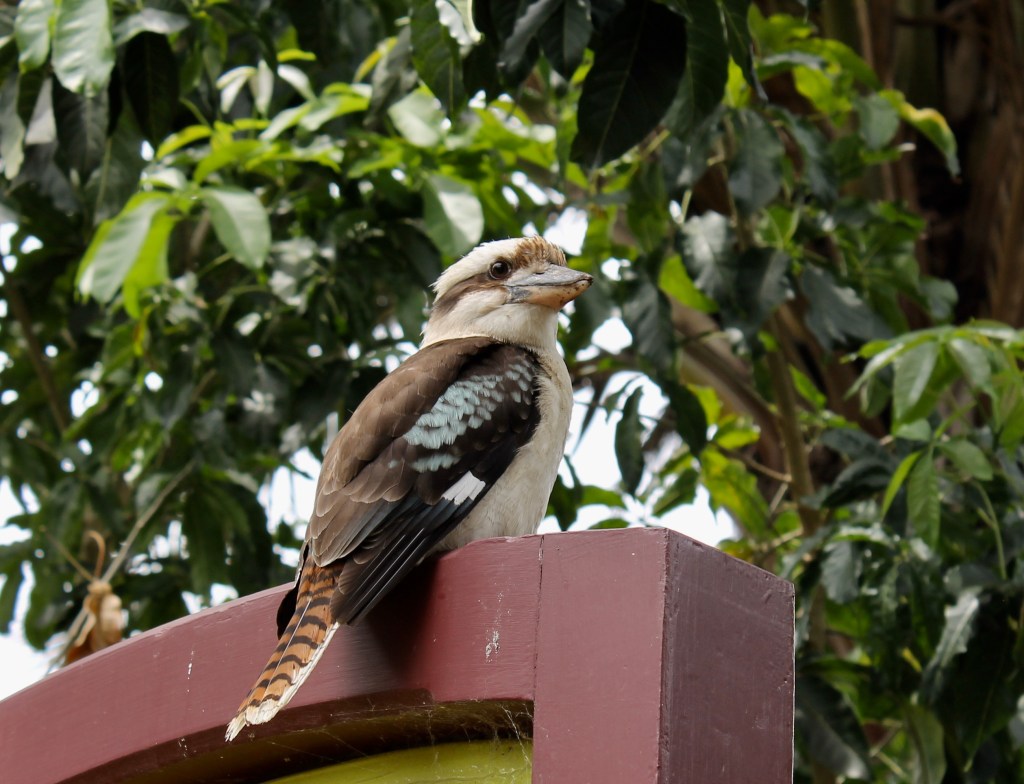
Our first full day in Sydney involved, of course, a visit to view the Opera House up close and then a tour of the Royal Botanical Gardens, which are on the same peninsula as the Opera House and include the site of the Colonial Governors’ walled garden. And just as we left that part of the Garden, we spotted a bird we had been hearing for weeks, the kookaburra. This one would did not “laugh” for us, but he did stay on his roost for almost ten minutes while we (and several others) got some great pictures. They are actually a very large bird (about the size of a seagull).
And that afternoon, as some much needed rain started to drift in and out of Sydney, we boarded a three masted wooden ship to get a better view of the harbor. The rain cleared as we left the dock and I had the opportunity to help raise one of the sails and to steer the ship while the captain talked sailing with some of the other passengers. Even with the sails full, the helm was very loose and I overcorrected several times but apparently not enough to cause the captain to be concerned about my direction. Of course, the rain began again as soon as we returned to the dock but we walked back to the hotel very satisfied with Sydney.
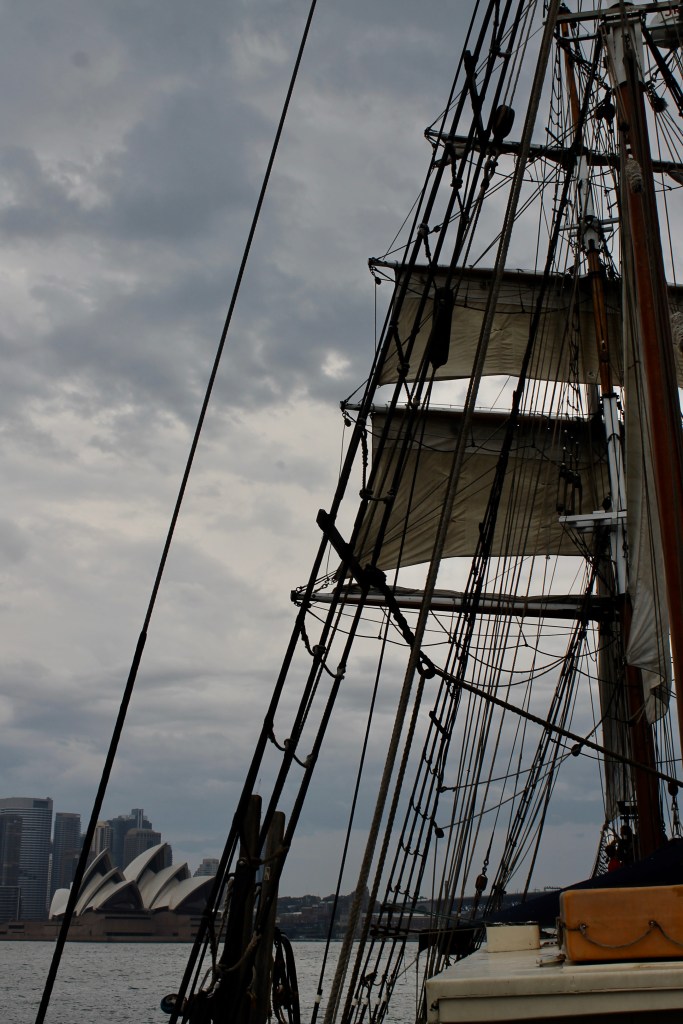
PS., Lena your Dad finally got to work on a three masted sailing ship so your inheritance was well spent today and Mom got to see a kookaburra, so she is happy. I am not asking her a lot of questions tonight so I think I am safe again.
 Ginger Without Borders
Leave a comment