Our Australian adventure has come to its last two days. While we really enjoyed the Rocks area of Sydney, we wanted one more journey into the bush before we head off to New Zealand. When Sydney was first being developed, numerous groups attempted to push further into the Australian interior only to hit the insurmountable cliffs of what they named the Blue Mountains (which includes mountains up to 3,000 feet high and appear blue on the horizon – much like NC’s Blue Ridge Mountains). These adventurers ignored the aboriginals advice that there were only two ways through the Blue Mountains – both of which required going on top of the plateau created by the mountains.

So for 25 years, countless settlers searched the many valleys leading into the Blue Mountians but no short cut through the cliffs could be found. Much like the eastern expansion of the United States was impeded by the Appalachian mountain chain, the colony of Sydney was limited to the 70 or so kilometers west of the Blue Mountains. After droughts in 1812 and 1813, three free settlers (including one born in Australia to Irish parents), decided to listen to the aboriginals and try to cut a way up one of the ridges into the Blue Mountains. Interestingly, they did not take an aborigine with their search party, just four prisoners, five dogs and four horses laden with provisions. They began cutting their way up one of the foothills onto the Blue Mountain plateau. They got to the other side of the Blue Mountains after 21 days blazing a rough horse track through the eucalyptus forests (they returned to Sydney in 6 days on their new trail). Three towns in the Blue Mountains are now named after the three leaders of the expedition (all of whom were granted land in the interior they had opened) – Blaxland, Lawson and Wentworth Falls. The Great Western Road into the Blue Mountains (which we took to our hotel at Sublime Point) basically follows the path they created. As the name implies (this is Australia and they are literal with their place name), Sublime Point has a 330 degree view of the Blue Mountain valleys and cliff walls.
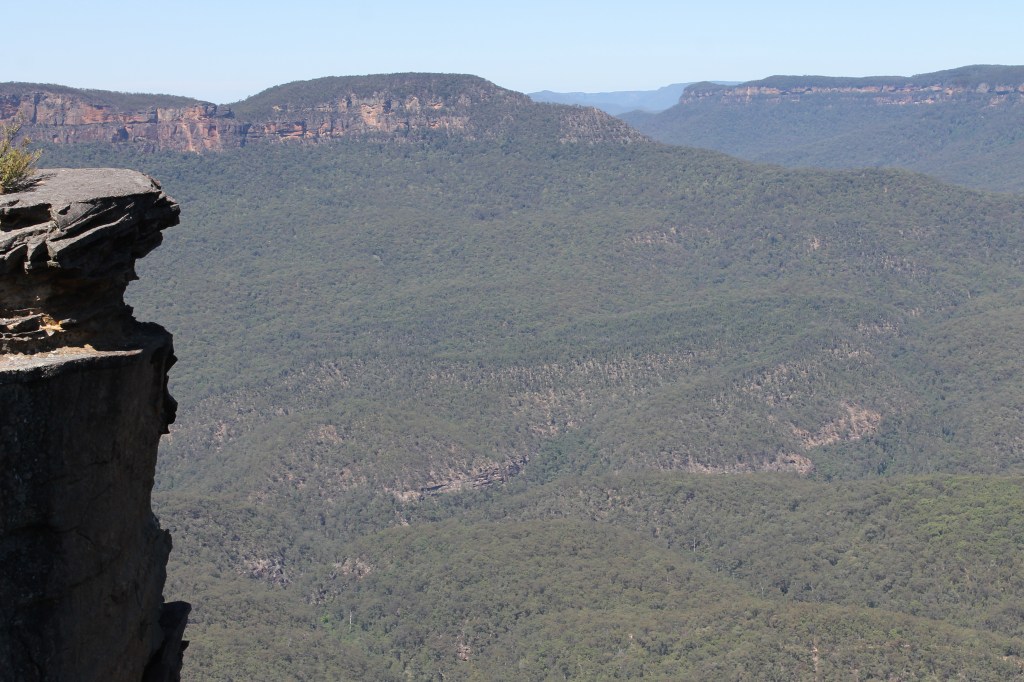
In the view from Sublime Point and only a few miles further into the Blue Mountains is the Three Sisters, three columns of rock exposed by the weathering (and now the chief attraction of the Blue Mountains).
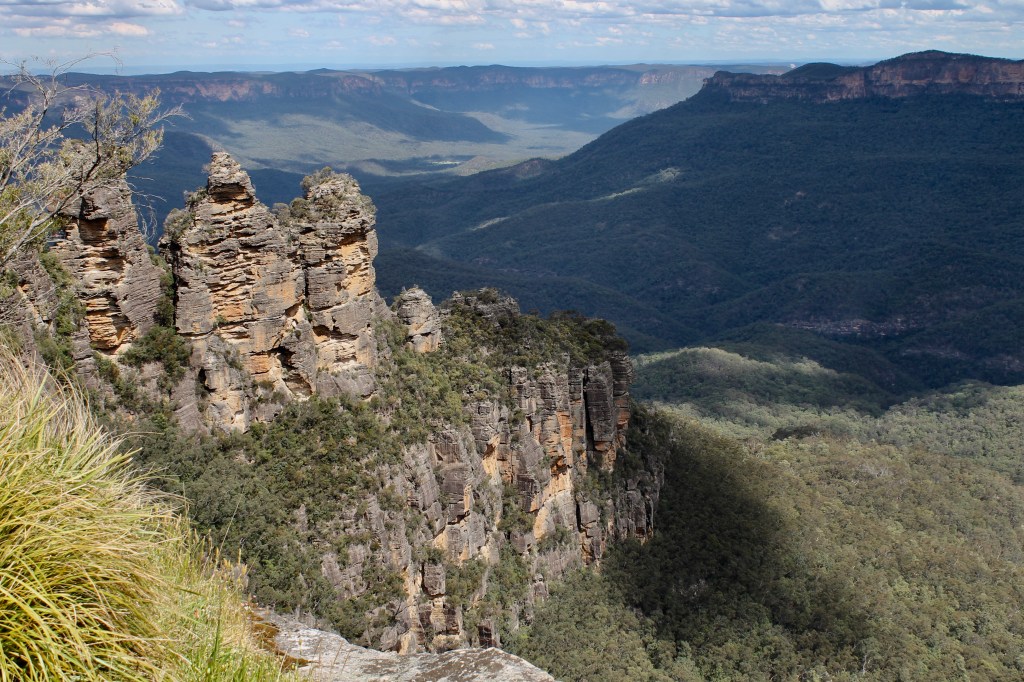
The Blue Mountains area began as a plateau, and over 250 million years, the area weathered into a vast series of valleys and cliffs. Charles Darwin visited the area and made extensive notes about the sediments exposed by the weathered cliffs.
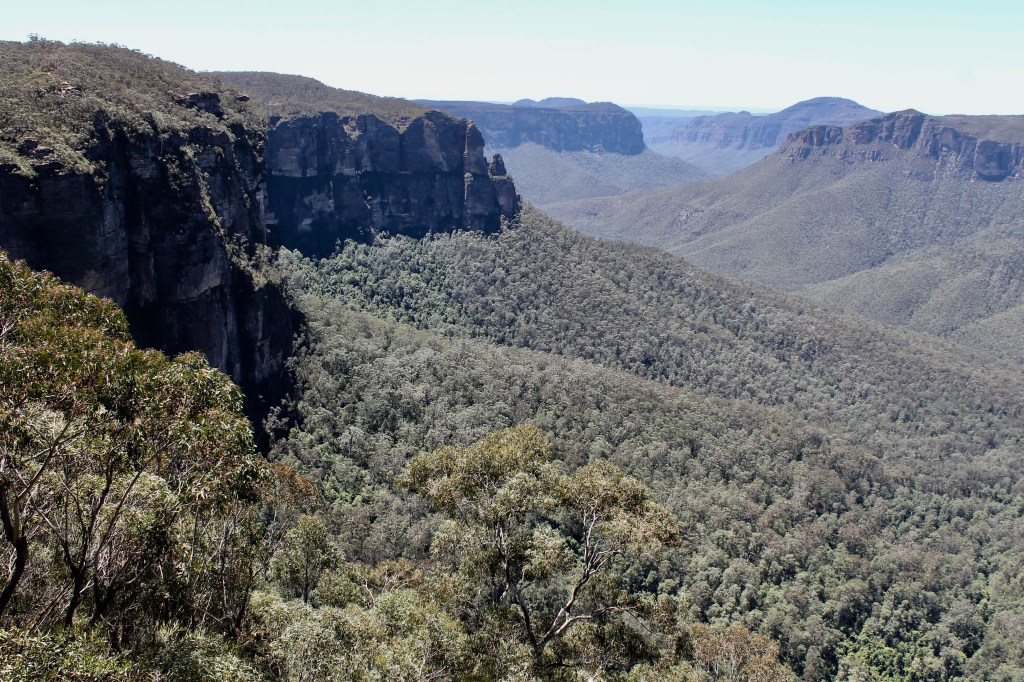
Absent the drought that currently has stricken Australia, we would have seen several magnificent waterfalls. But they have been reduced to mere trickles of water.
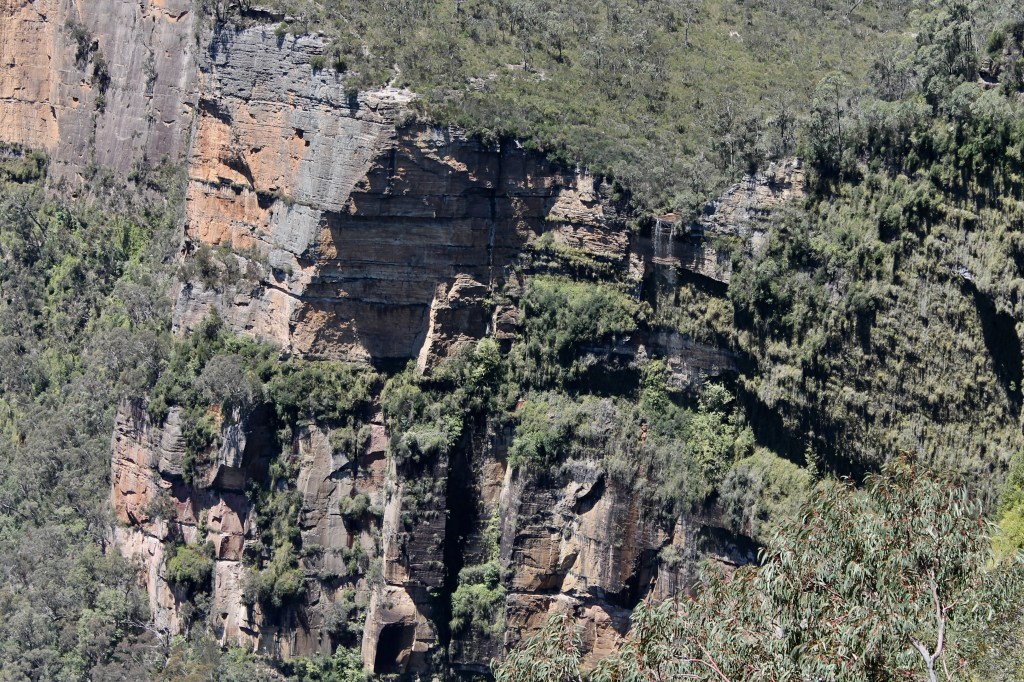
Our last breakfast in Australia overlooked a part of the view from Sublime Point.

Before we left the Blue Mountains for the Sydney airport and our flight to New Zealand, we decided to return one last time to Sublime Point. As we were leaving, we spotted a pair of Sophia Strangers, red parrots, in the trees above the picnic shelter. And three magpies (one of the iconic song birds of Australia) sang us all the way back to the parking area. It was a great memory of our last day in Australia.

PS., Lena, we stayed at a really nice resort our last night (see breakfast picture), so we may have been a little extravagant with your inheritance, but Mom was really happy to finally discover that the bird call she loved was that of the magpie. While it is just a black and white bird (not the prettiest bird to look at in Australia), it does have a pretty call. We are sad to be leaving Australia because we have had a great experience: the lovely people, the iconic animals and plants, and the amazing scenery.
 Ginger Without Borders
Leave a comment