As we wandered through Australia, Dawn and I spent a fair amount of time talking about how much this or that part of Australia reminded us of other places we have been fortunate enough to visit in our years of traveling. But what occurred to me in the shower this morning on our first day in New Zealand (while Australia was still on my mind) was that Australia is The Land That Time Forgot.
It is the world’s oldest inhabited continent. After it split from the rest of the world, Australia continued to host many of the plants that were native during the age of the dinosaurs and some of the animals that arose then (the platypus). The only mammals native to Australia are marsupials, who raise their young in pouches. The only marsupial in NC is our one species of possum (and ours is really ugly compared to any of Australia’s twenty-three species of possum). The last time any other marsupials lived in North America was during the Mesozoic Period. Australia’s forests are dominated by eucalyptus trees. Scientists believe the eucalyptus originated in Australia around the time of worldwide rain forests. There are more than 700 species of eucalyptus native to Australia. Of the 15 species found outside Australia, only 9 do not occur in Australia.

So we could only imagine what the forced settlers (convicts) thought of their new home. Nothing about this place would have been familiar and becoming self-sufficient was a difficult challenge. Returning to England was simply not an option for these folks (absent really good fortune). European plants did not survive the heat and poor soil. For years, cattle and sheep did not add weight because the native plants provided so little nourishment (they had to import European grass). To prevent starvation, these new folks soon overfished the local seas (exterminating seal and whale populations in a matter or decades) and ran away the kangaroo herds that the aboriginals had lived on for 65,000 years (and in the process, dramatically reduced the aboriginal populations as well).
Unlike those settlers, Dawn and I were really lucky that we had no encounters with the many animals in Australia that can seriously injure or kill you. What we saw were the many colorful (and loud) parrots and cockatoos, the bounding wallabies and pademelons that drifted out of the bush at dusk, and (of course) our favorite daytime animal, the echidna (with the platypus, the only living mammal that lays eggs).

The folks that now call Australia their home come from a hardy stock. And they still are a hardy stock. Agriculture is important here. Farms cover 61% of the landmass and contribute 12% of the GDP (agriculture contributes less than 1% in the US). They export almost 80% of what they grow. And there are still family farms. Radio stations still include farm implement adds and agricultural product sales reports. Particularly in the farm areas, you see a lot of working trucks (and not many SUVs).
Most of the homes we saw were modest square boxes (much like the suburbs of the US in the 50’s). Outdoor recreation is much valued. There are long trails in all the national parks and the trails are used (so much so that there is talk of limiting admission to the more popular trails). Due to the lack of regular rainfall, they are way ahead of the US in water recycling. Virtually every public toilet (and they are justifiably proud of the number of free public toilets) has a cistern.

And Australians are almost universally nice and helpful. Not once was I cut off on a road and most often the other driver would slow down to let me move over. If we asked for help or information, we usually ended up with a 20 minute conversation. There are a lot of tattoos (many fairly ornate on both men and women) and almost all adult men have some facial hair.
But this is a very homogenous population. Almost 70% of the population identify as being of English descent (there are fish and chips stands everywhere, except Australian’s use gummy shark for their fish). Irish is 9%. Italian and German are 4% each. Chinese are only 3.5%.
And the aboriginals are less than 3% (native Americans represent only 1.6% of the US population). I was impressed in Adelaide that the aboriginal flag was flown alongside the national and state flags in its central square. I soon noted that many places in Australia also flew the aboriginal flag.

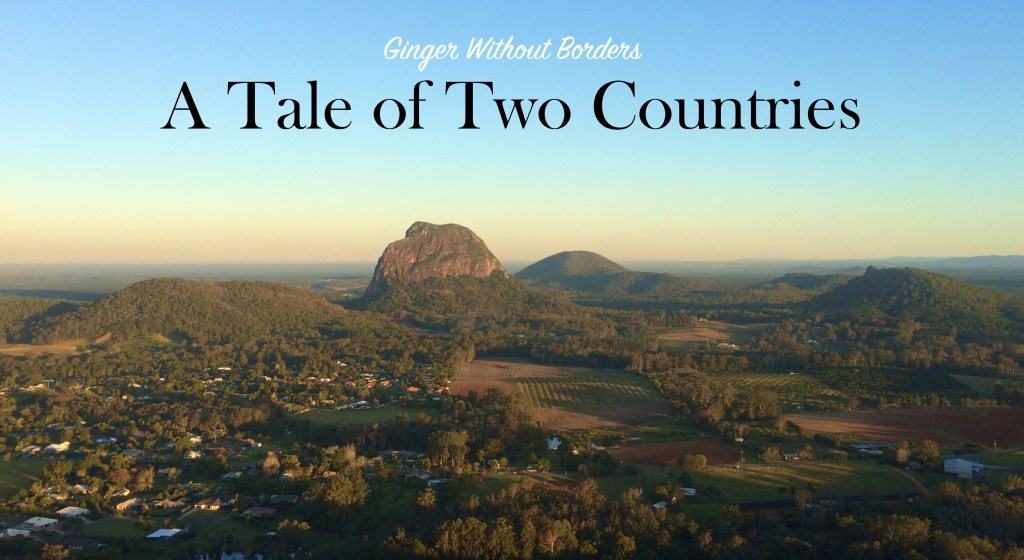
Almost every national park or monument we visited had a plaque honoring the aboriginal clan that used to live there. While we were here, the aboriginal clans who got back ownership of Uluru (the massive red sandstone monolith in the center of Australia) some ten years ago were finally permitted by the national government to stop visitors from climbing to its top since the monolith is sacred to them. But the aboriginal clans in the Glass Mountains are not allowed to prevent visitors from climbing to the top of those sacred spaces. Like in the US, there is still a lot of work to do in understanding and balancing the interests of the aboriginals with today’s Australia. But recent polls have shown that 49% of Australians believe that their most popular national holiday, Australia Day (the anniversary of the landing of the First Fleet in Botany Bay, which aboriginals consider an “invasion day”) should be moved to a new date and not focus on the First Fleet landing but on the date that their first constitution became effective (changing Australia from a British colony to an independent nation).
With a little more time for reflection (I am back to driving on the left side of the road, remembering time schedules and taking new adventures), other Australian impressions will flow back to the front of my mind. Dawn and I both understand more fully why Lena loves Australia so much. We are now among that number.
PS., Lena, thanks for convincing us to spend a nice amount of your inheritance on a trip to Australia. It may not be the last one. I am safe because Mom is asleep after a long day on the train, in a bus and driving to the glacier at Franz Joseph – but that is a New Zealand story.
 Ginger Without Borders
Leave a comment