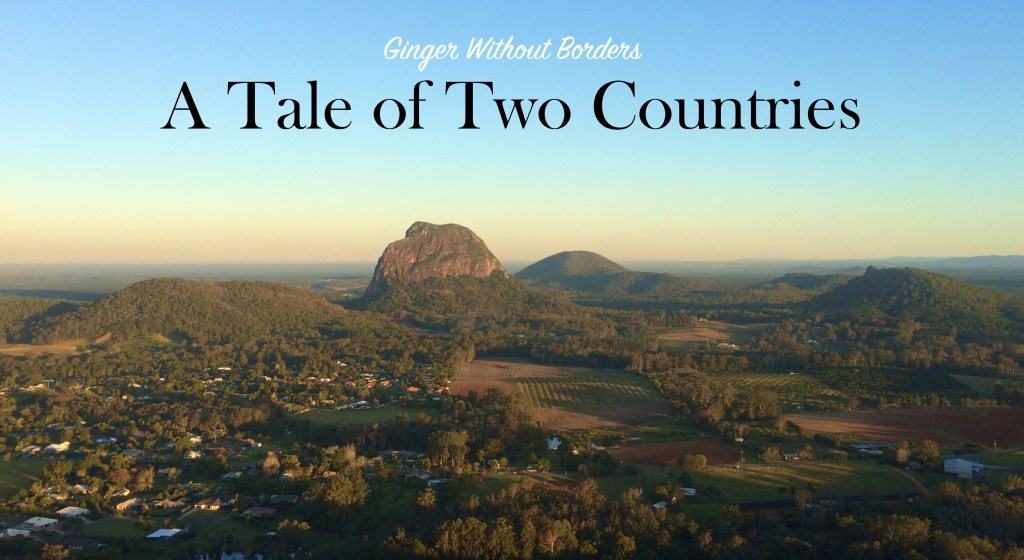
Dawn and I made a startlingly discovery in Queenstown. I was, as usual, reading some history on the origins of the town. It was 1863, and a group of Irishmen read that some of thier countrymen had recently renamed thier port town after Queen Elizabeth – they named it Queenstown. The NZ Irish decided Queenstown would make a better name for their port than the “station” as it was first known. That Irish seaport was Cobh (in Irish – Cove in English). It is the deepwater port south of Cork from which the ill-fated Titanic left Europe for New York harbor. The port was named Queestown when the Titanic set sail. It reverted to Cobh after Irish independence.
Cobh was the host town of the only European folk dance festival at which I performed twice with the Apple Chill Cloggers. It is also where Dawn and I spent the last week of our honeymoon after touring the west side of Ireland. And even with my interest in history and all that time in Cobh (a place that still has a special place in both our hearts), I did not discover it was once named Queenstown until we came to NZ (on a late life honeymoon). Life can be so ironic!
Queenstown sits in the center of an S shaped glacial lake. The north end of the S ends at a little town named Glenorchy, developed to support gold mining. Down a dirt road just above Glenorchy is Paradise (I don’t make this stuff up), where a number of scenes in Lord of the Rings were filmed. Many other famous films have also used the area’s scenery. Loads of tour operators take fans of Lord of the Rings, costumes provided (but not lunch), to Paradise. We didn’t need costumes (and didn’t want to drive on any more dirt roads after Tasmania), so we decided to drive to Glenorchy, particularly when the tourist office said it was the most beautiful drive in NZ. And there was a beautiful blue sky when we left Queenstown and the Remarkables. The Earnslaw was just returning from its first tour of the morning.
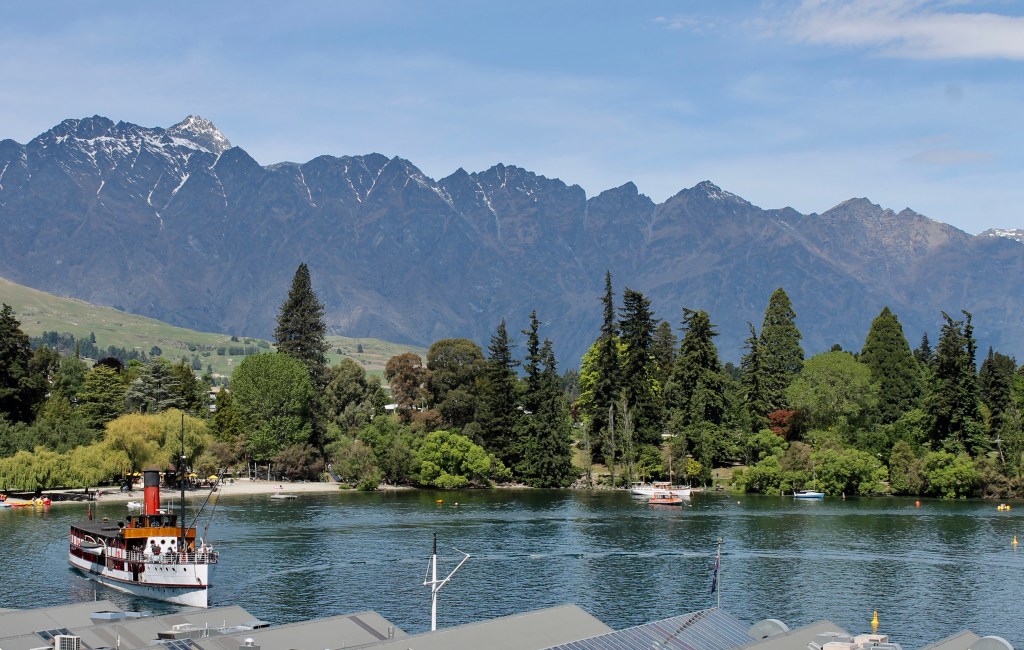
The coal fired twin screw passanger steamer Earnslaw (the only one in operation in the Southern Hemisphere – my son Reece and I rode several such steamers on the lakes of Switzerland) was assembled on the lake in 1912. For many years, it ran supplies to Glenorchy, where there were gold and other mineral mines and was known as the “Lady of the Lake”. The road to Glenorchy was built in 1962 as a part of the Centennial celebrations of Queenstown. The mines had become no longer viable after the Korean War, so she was almost scrapped in 1968. Instead she was put into service as a tourist attraction, now the oldest in this part of the south island.
Just outside of town, we came over a modest sized hill and dropped down to another pebble beach where Dawn found a mountain bike rider’s dog playing on the beach (the hill was developed as a series of mountain bike trails). She had to get her puppy fix. The water was chilly but not much more so than a NC mountain river. One biker took the plunge while we were there.

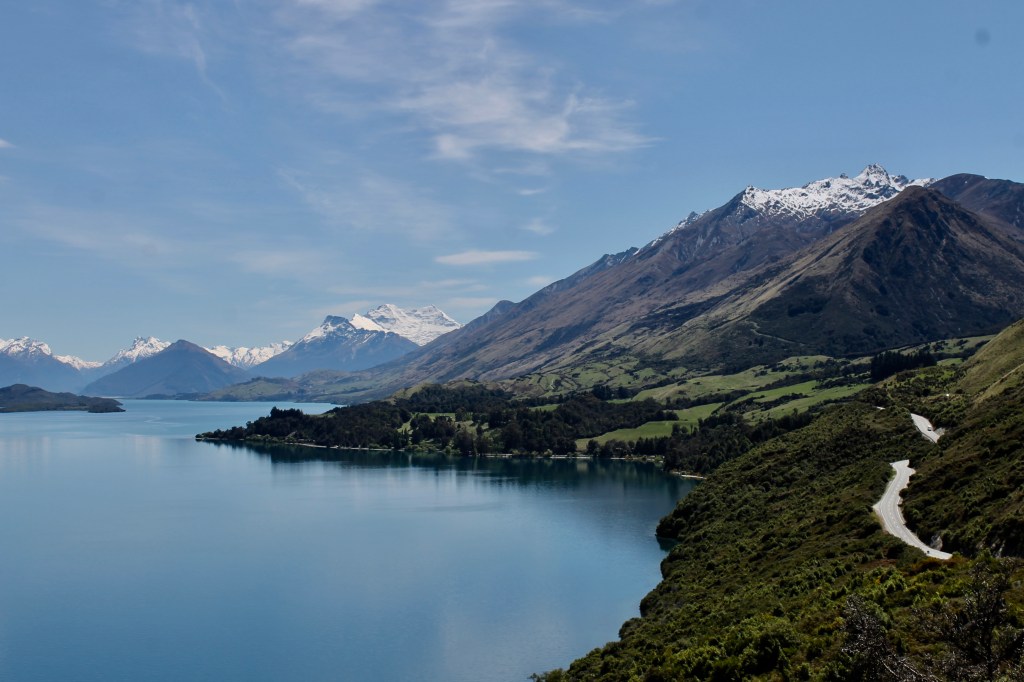
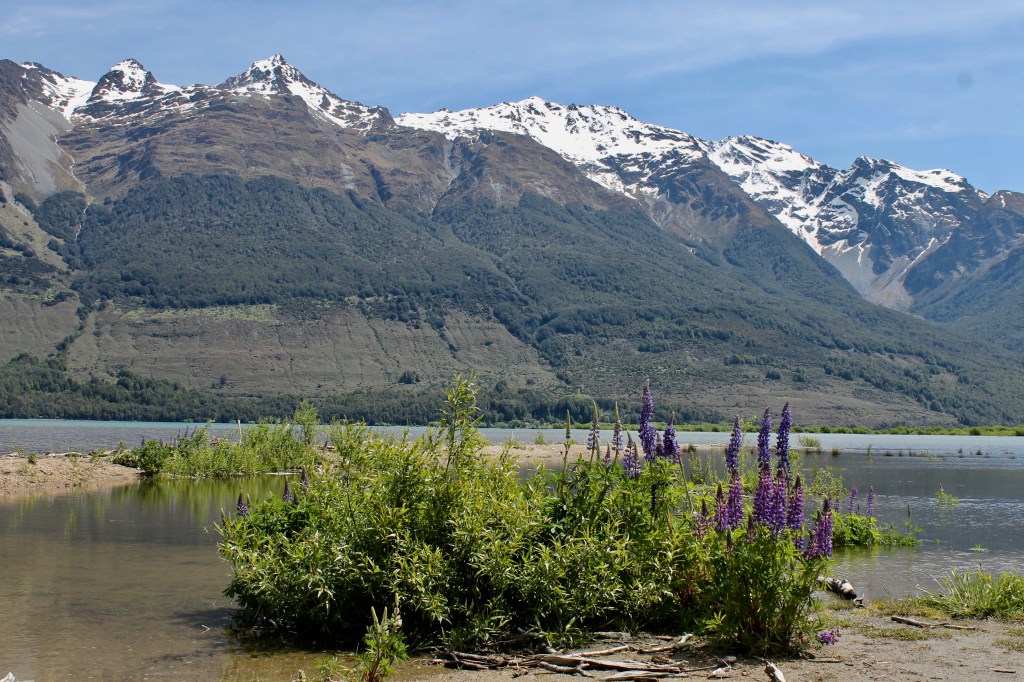
As we progressed down the twisty road along the lake, the snowy peaks became more common. Twice the road narrowed along some of the rocky cliffs and the center lane markings disappeared. We met a tour bus on the longest one of these “narrows,” so I just stopped the car as he made his way past. The bus driver gave us a wave and a smile.

And then we came around a long blind bend and the end of the lake was in sight as were the alpine peaks that made it the most beautiful drive in NZ.

Glenorchy is basically a backpacker town and the gateway for a number of NZ’s best known multi-day hiking tracks. It also is the base for bunches of day hikes.
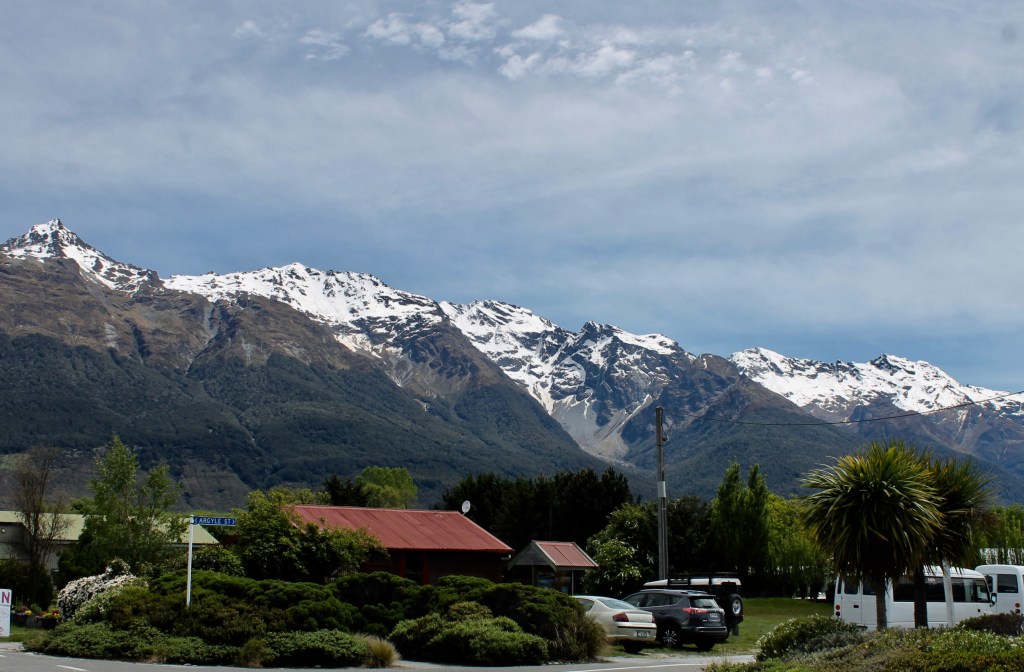
The sun was bright and the air felt like a March day on the Colorado ski slopes. So Dawn and I got a pot of tea and agreed that we didn’t need to dress like a Lord of the Rings character to appreciate Glenorchy.

We toured the shed that used to service the four steam powered ships that serviced the Lake in its industrial time (the other three were scrapped or deliberately sunk). Then it was time to brave the two narrows on the road back to Queenstown. We were rewarded with no on-coming traffic during the “narrows.” So we enjoyed the view of the Remarkables as we drank gin and tonic on the balcony of our hotel room.

PS., Lena, petrol is expensive here in NZ, so even though we didn’t pay for the Lord of the Rings outfits, we did spend your inheritance on 75 miles of gas. Mom got to play with a dog, so she is happy and I am safe another night.
 Ginger Without Borders
Leave a comment