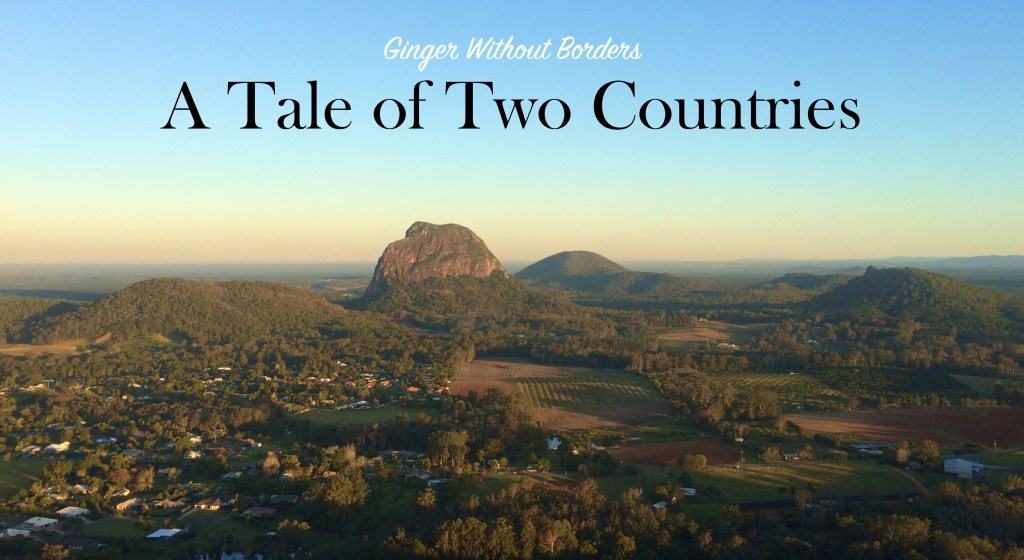
The first draft of our NZ route from the travel agent suggested that we spend four days in Queenstown and travel from there to tour the Milford Sound. That would require a four hour trip to and from Milford Sound, which would have been a tedious ride and not a good day for Dawn’s back. We almost bagged the trip to Milford Sound entirely but then I did some research. The half-way point to Milford Sound is at Te Anau, a tourist village on the banks of Lake Te Anau, the second largest lake in NZ and the largest lake in the South Island. So we decided to keep Milford Sound on the destination list and to add two days in Te Anau and stay only two days in Queenstown. It was a great decision but I am getting ahead of the story.
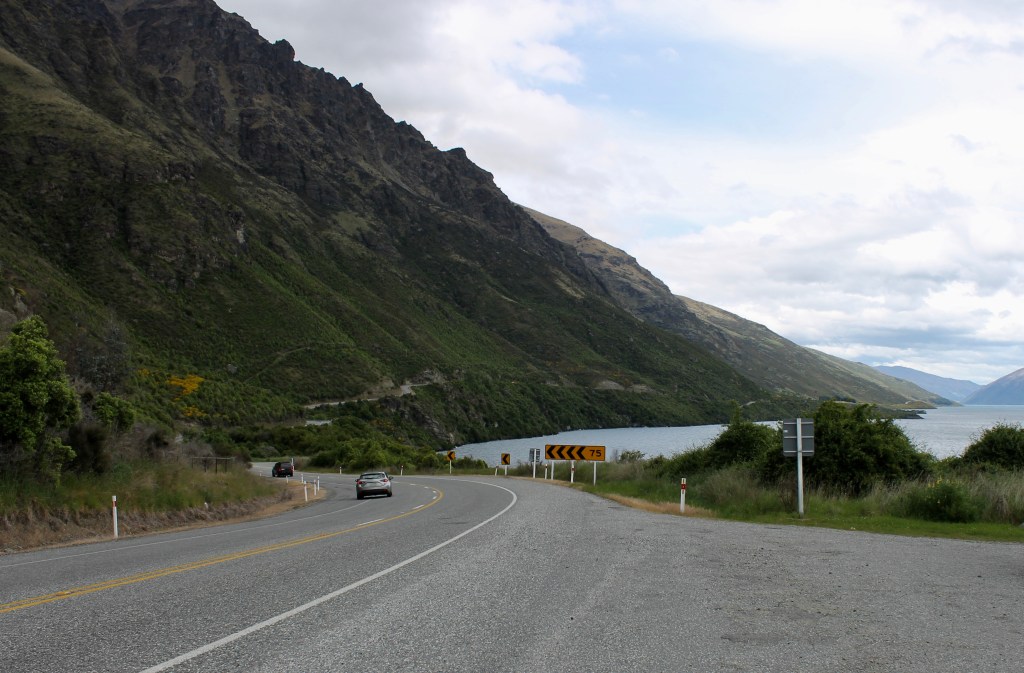
To get to Te Anau, the road is built into the rocky mountainside on the lower part of the S shaped Lake Wakatipu. The Lake ends at a place named Kingston (a stop on the road), so we would get to see the whole lake. Within minutes of one last look at the Remarkables, we had made the turn and were on the lower part of the Lake.

The south end is even more remote than the north end of the Lake. The far side of the Lake had no development apparently due to the steep cliffs. There was one break in the mountains but no sign of human activity in the valley between.

The wind picked up as we drove on along the cliffs, which were not as snow capped as the north end.
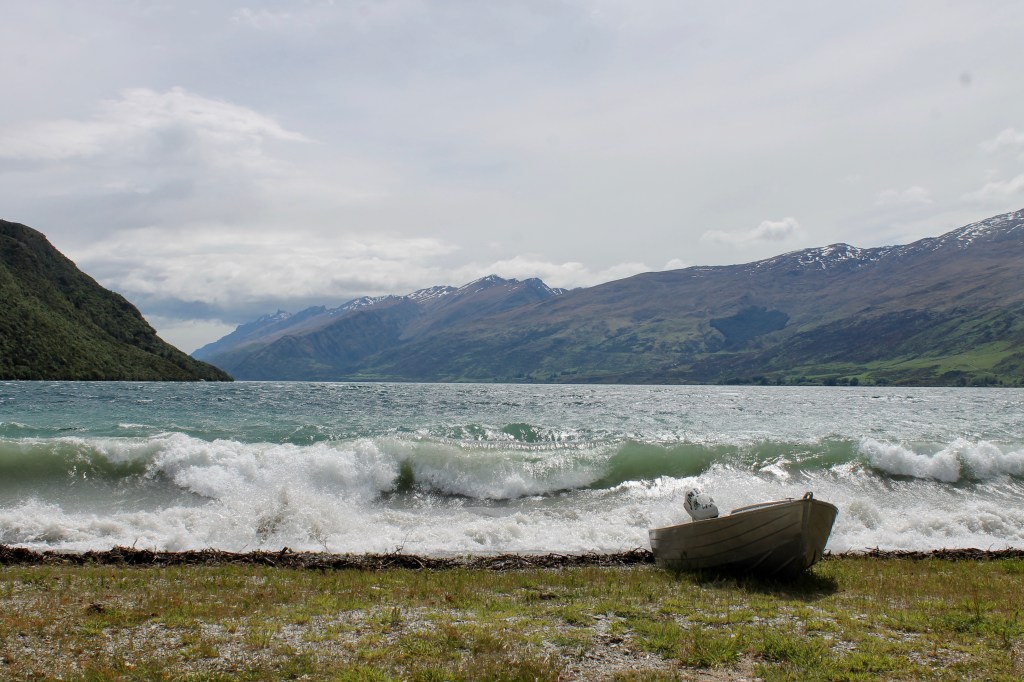
As we were about to arrive in Kingston, the wind was blowing so hard you could barely open the windows to get out to take pictures along the Lake. So we pulled onto the beach at Kingston. These waves are on a Lake, not on the ocean, and entirely created by the wind.
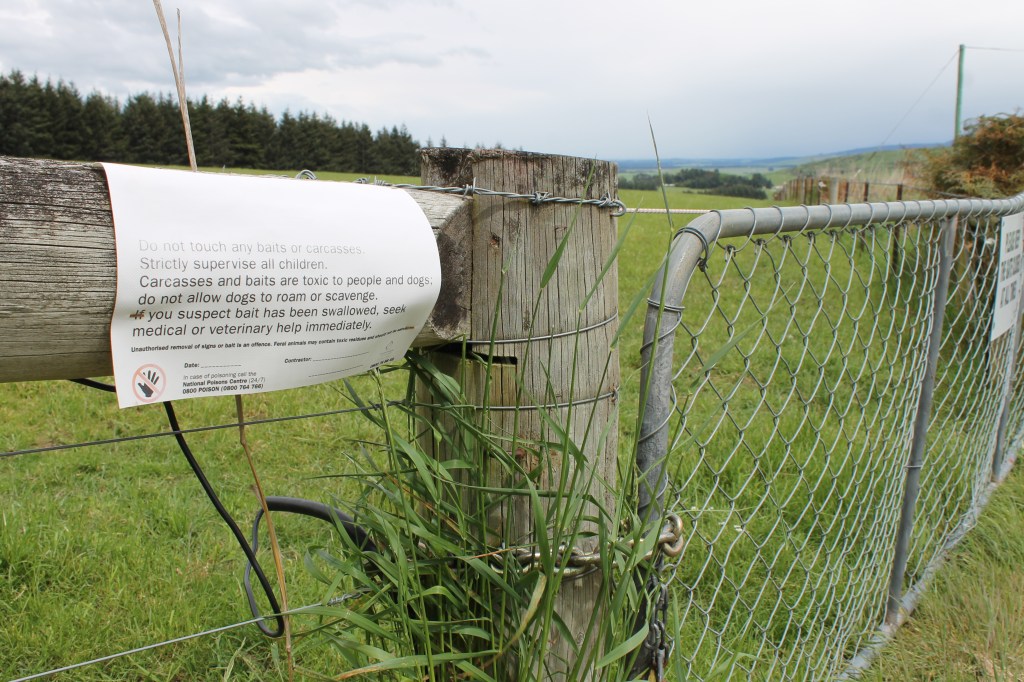
We were about a third of the way to Te Anau. Once we left the Lake, we ran down a series of valleys devoted to farming. NZ has named the route to Te Anau a Herirtage Trail and has stops to point out historical sites. One of those is Mid Dome where NZ is making an effort to preserve the original plantscape of high country tussock. They are also spreading poison to kill the imported possoms and stoats.

Almost as soon as we left Mid Dome, the rain commenced again and it came down hard at times. We arrived in Te Anau in a mild rain. You could see the lake, but the clouds obscured all but the first twenty feet of the forests across the lake. Dawn took a nap and I went to resupply TimTams and gin and tonic. I should note at this point that in Oz and NZ, gin and tonic is sold in premixed cans or bottles, as is bourbon (with coke or ginger ale) (called RTD for Ready To Drink). Talk about being civilized!
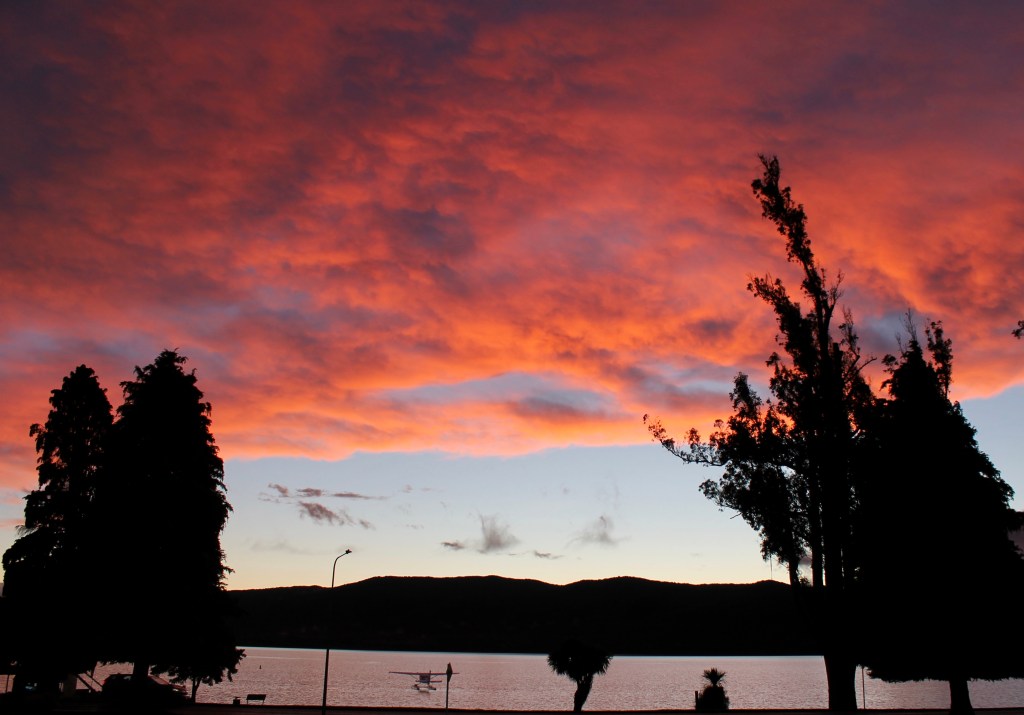
When I finished another dinner of Fiordland venison (we passed several deer farms along the road to Te Anau), I found the rain had stopped and the sky had cleared. Folks were walking the cement footpath along the lake and taking pictures of the geese and their goslings.

Then shortly after 9pm when the sun set behind the mountains, we were treated to a glorious sunset. The weather folks had advised that the sunsets would be enhanced by the wind blow ash from all the fires burning in New South Wales in Australia. The weatherman was correct for once.
PS., Lena, I have been eating venison every night since we left the coast. Spending your inheritance on dinner is expanding my waistline, but it is really good (and this is the source of most venison in the US). Mom is happy because I let her stay in the room (most nights) and eat what she wants, so I am safe.
 Ginger Without Borders
Leave a comment