Before we left Lake Te Anau, we stopped by the free bird sanctuary that is one of the breeding areas for the takahe, a flightless bird though to be extinct for 60 years but rediscovered in 1948 in the Murchison Mountains overlooking the Lake. We were not permitted to view the takahe up close because they had breed and were protecting a nest. There are only 400 takahe known to exist, but the NZ breeding program is increasing the numbers by 10% annually (the birds only lay eggs once every two years, live over 25 years and reproduce until the end of their lives). There are also monogamous.

This was just a quick stop before we headed for Dunedin (pronounced Dun-eden), the second largest city in the South Island of NZ, and just a little smaller than Cary, NC, in population at 120,000. Founded by Scotts in 1848, the name is a corruption of the Gaelic name for Edinburgh, Scotland. It became quite wealthy with the discovery of gold nearby and was the largest city in NZ in the late 1800’s. The nephew of Robert Burns was the first Reverend for the new city, which is now famous for it Victorian and Edwardian architecture (particularly after similar architecture in Christchurch was destroyed by the earthquake).

Built on steep hills surrounding the port, the city is currently fighting to keep its designation as the home of the steepest street in the world. Our historic hotel was converted from a former Catholic Brothers House on the hill overlooking the city center.
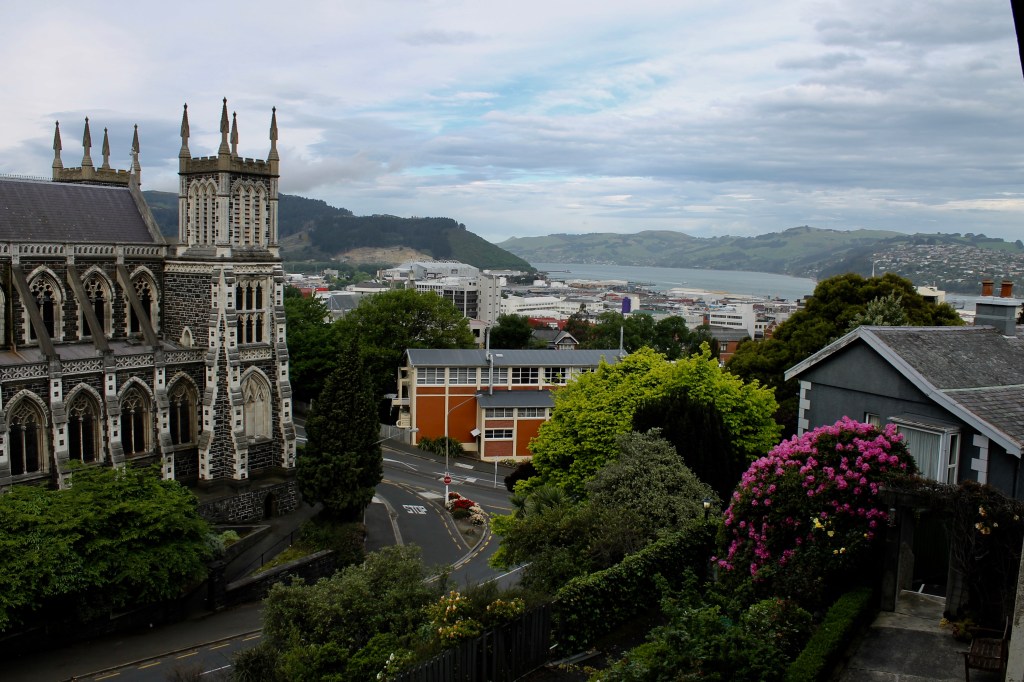
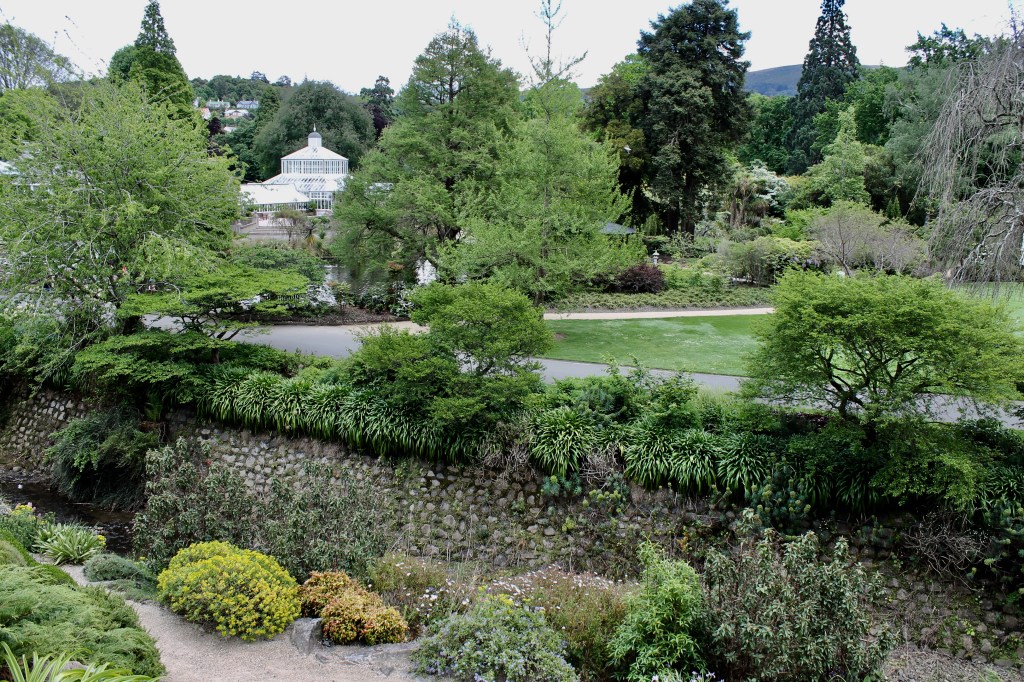
But we were in not in Dunedin for the architecture, but for the birds. In particular, we were here to see the Southern Royal Albatross, the world’s largest flying seabird. Its only nesting spot on a mainland is on a rocky point at the end of the Otago Peninsula west of Dunedin (the only other nesting spot is on an island off NZ). We awoke early because, of course, we had to visit the Dunedin Botanical Gardens first (they were sort of on the way). The avairy gave us a chance to check out some of the native birds.
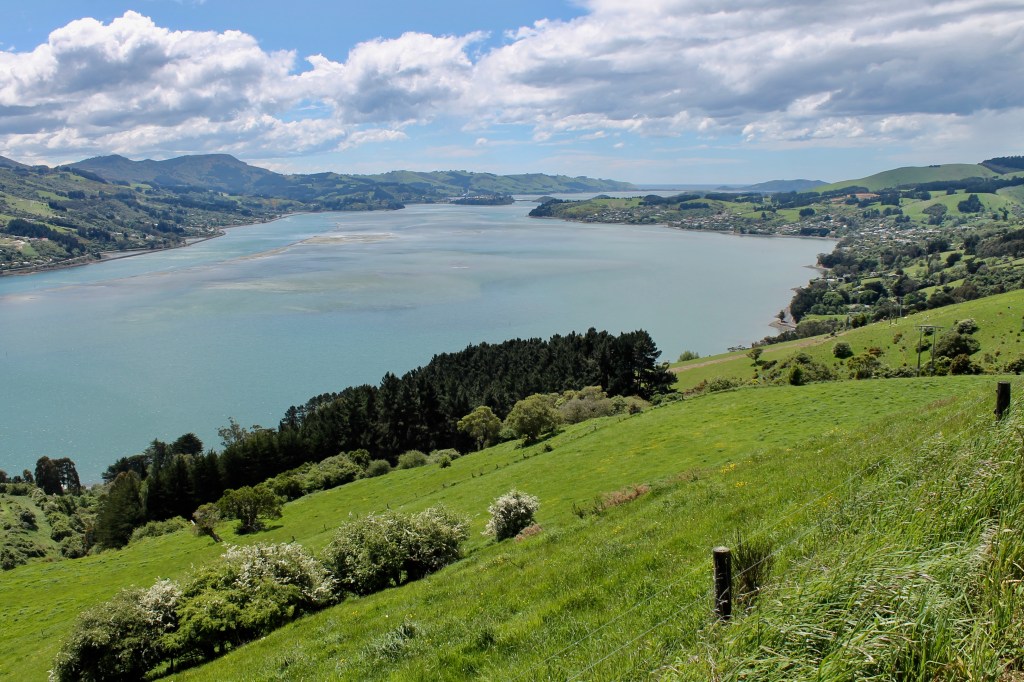
The host at our hotel suggested we take the high road to Harrinton Point (home of the Royal Albatross Center) but warned that the road might be a little crooked. It was more than a little high and crooked (and that is saying something after the roads in the Southern Alps). The views east and west (as we came around the hills) were stunning.
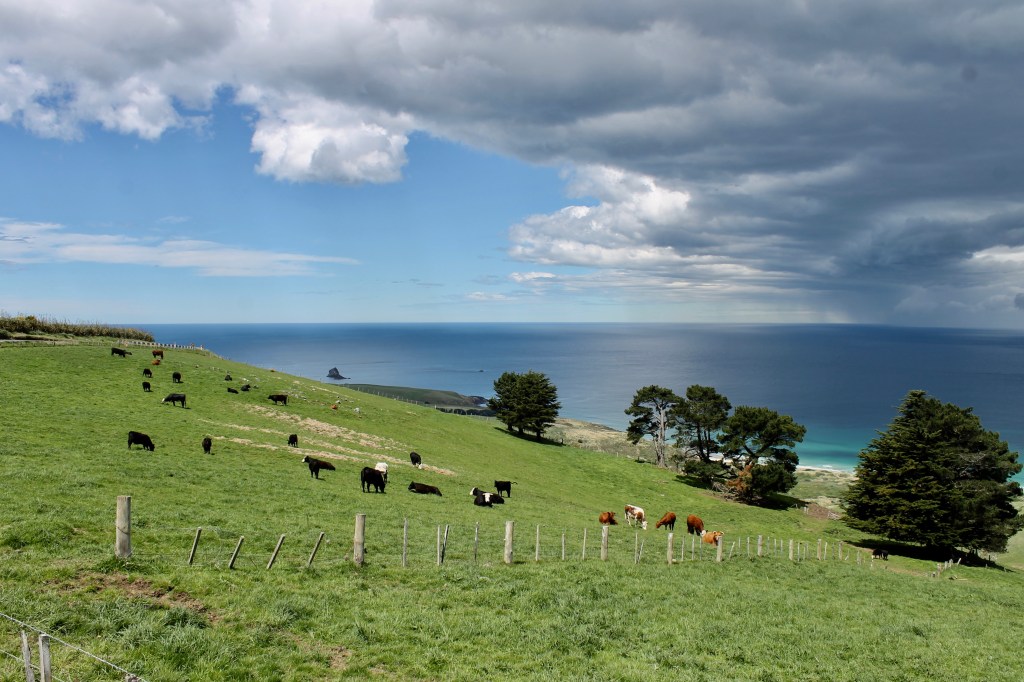

Again, NZ decided not to spend money on roads wide enough for two cars at several points along this road and the wind had become quite strong by the time we came back down to sea level. But a strong wind is what you want if you want to see an albatross. After a short program at the Center, our guide led us through the gate up Harrington Point to a blind overlooking the cliffs.

While we could see the nesting birds, what we really wanted was to see an albatross in flight. After 10 minutes, one was spotted. At almost the same time, the mate of the nesting pair on the edge stood up, took three steps, opened his long wings (nine feet) and simply launced himself into the fierce wind. And he flew right by our blind.

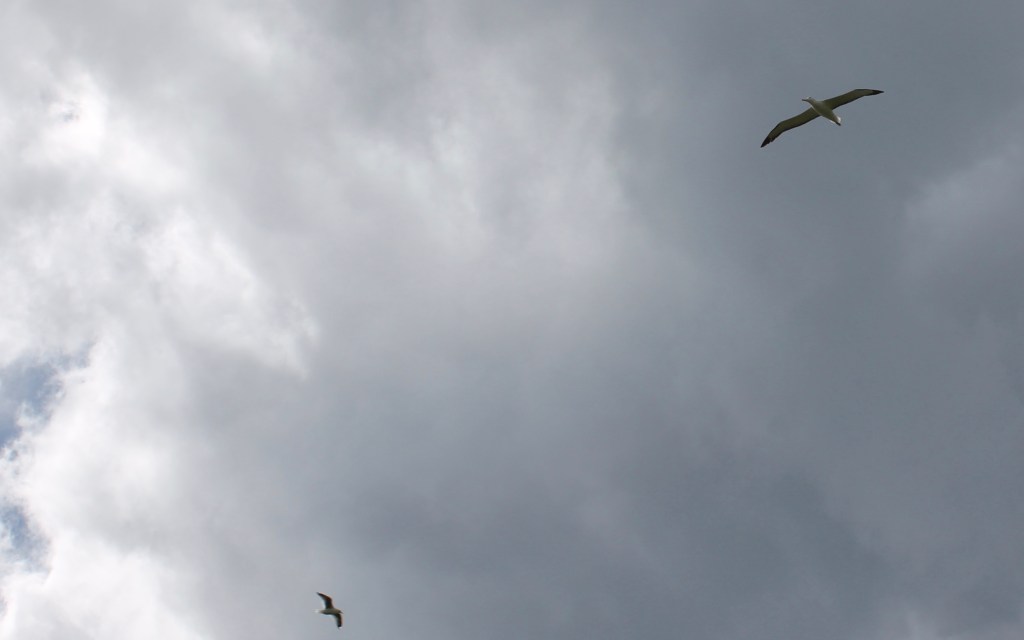
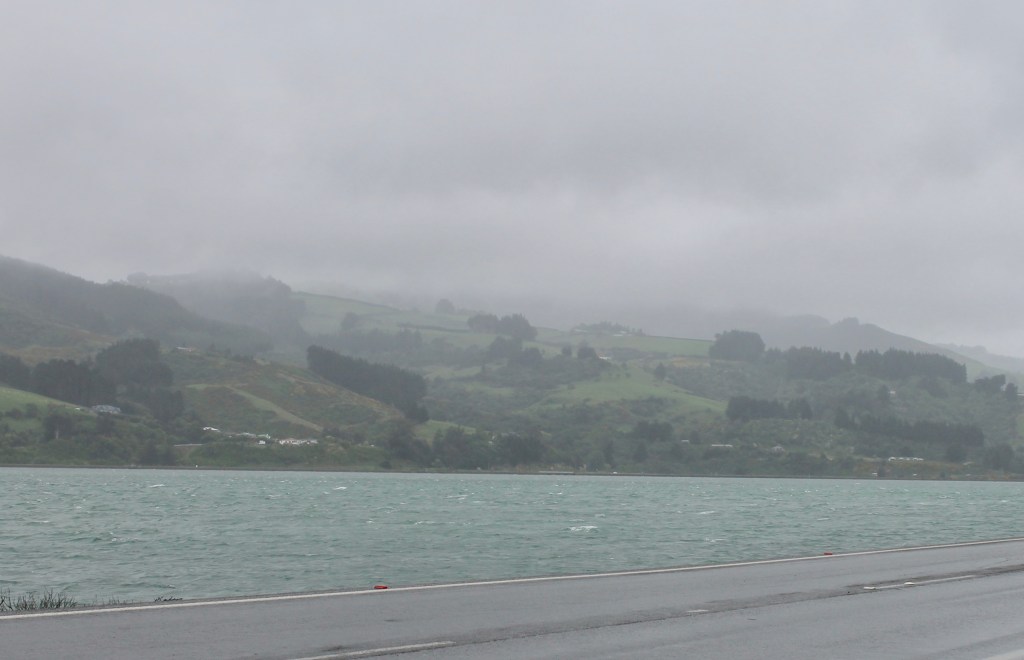
We had hoped to see an albatross when we were in the Galapagos Islands but they were out of season. We had met a couple who visited Harrington Point just days before us but the wind was not strong that day and they saw no flying albatross, so we considered ourselves lucky. The wind brought a storm with it, but it was worth the rain and wind to see an albatross take flight. For the return trip to Dunedin, we took the low road beside the bay.
PS., Lena we spent some of your inheritance on oysters, fish and asparagus at an excellent restaurant suggested by the hotel (and hidden at the port, so only locals knew about it). Mom got to eat what the restaurant called NY cheesecake (we woud beg to differ but it was still good), so she went to bed happy and I was safe for another day.
 Ginger Without Borders
Leave a comment