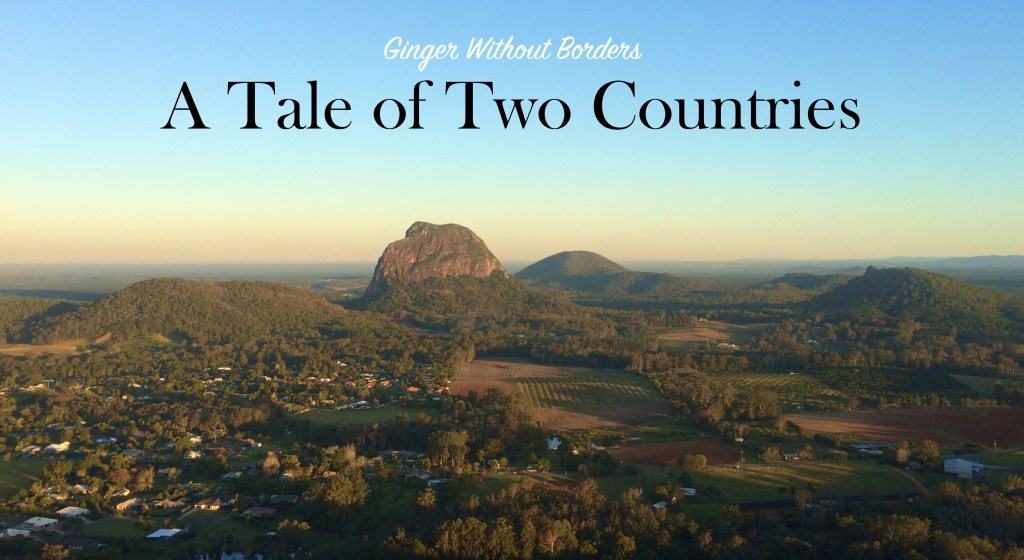
Australia is the world’s oldest continent, while New Zealand is one of the newest islands on the planet. Both have very thin soil lines for opposite reasons – Australia’s has been weathered away while NZ’s plant life hasn’t been around long enough to deposit any great depth of soil. The Maori were the first humans here – the earliest found Maori artifact is only 800 years old (but their oral tradition puts their presence here at closer to 1200 years). Food was so scarce that the Maori hunted to extinction several of the flightless birds that developed here without the presence of any predators other than their falcon and owl cousins (there were no land mammals in NZ other than a small bat before human contact).
Europeans brought grass, sheep, cattle, rabbits, stoats, and rats that changed the face of NZ (by turning it into huge fields of green pasture and endangering the native bird life with the introduced mammals). And they almost hunted to extinction the great whales of NZ. But they arrived after the 1717 earthquake that was the last major movement along the convergence point of the Pacific Plate and the Australian Plate that meet under the Southern Alps of NZ (and helped create them). Scientists predict that a major movement along that fault line is a 200-300 year cyclical event. So it is overdue in the Southern Alps.
So new construction in the alps has to meet earthquake codes. No one in NZ expected a major fault in the coastal plain of Christchurch, so it had no such codes. Scientists were not even aware of the coastal plain fault line until September 2010 when a magnitude 7.1 earthquake hit Christchurch, but that event only caused minor damage. Then at 12:51pm on February 21, 2011, a magnitude 6.3 earthquake hit at a very shallow depth under Christchurch. It turned the soil to liquid and the official report afterward cited “high levels of horizontal ground acceleration.” Because it was the middle of the day, folks were at work downtown when the buildings started falling. Over 7,000 people were injured and 185 killed. Of the 145,000 dwellings in Christchurch then, 3/4 were damaged. Of those, 30,000 had to be substantially rebuilt and 9,100 were totally destroyed. (In our travels here, we met at least 2 hotel staff whose homes were destroyed, so they elected to leave and work in other parts of NZ). In the CBD (business district), 47% of the buildings were deemed unsafe and of the 220 buildings over five stories, half had to be demolished. The estimated insured claims totalled almost $16.3 billion.
As I said in earlier blogs, the city is coming back even if there are still many gravel parking lots and empty spaces downtown. Most of the historic buildings were damaged beyond repair but some survived.

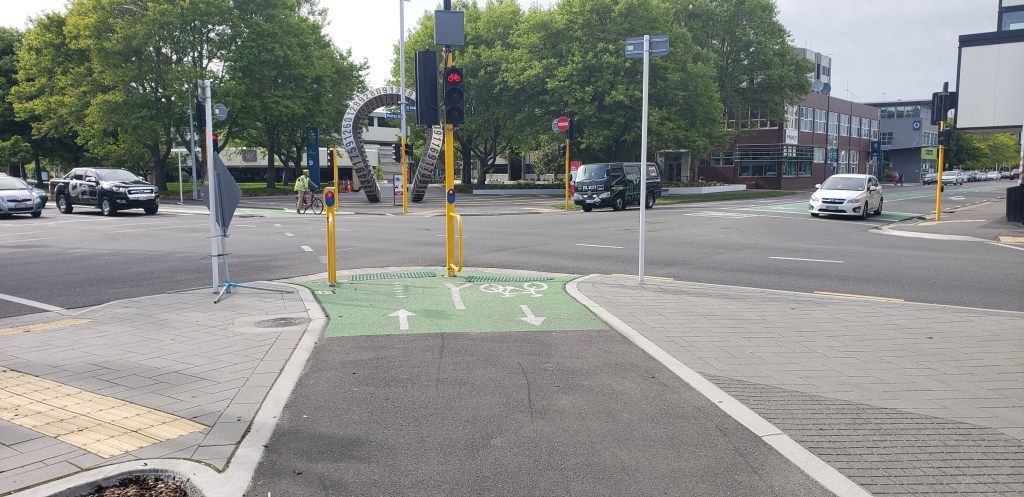
The CBD has a lot of brand new buildings, and most are less than 4 stories tall. The city is taking the opportunity to add dedicated bike lanes to its streets. Even in the residential areas, the bike lanes are separated from the auto lanes with bricks or cement dividers.
All of this is just a poor apology for my initial impression of Christchurch. Given what happened to the city, it is impressive what has been rebuilt in just over 8 years. As one article said, “these New Zealanders are a determined lot.”
What we didn’t realize was that our next destination, Kaikoura, has a history that is unfortunately very similar to Christchurch. We chose it because it is the best location in NZ for whale spotting. The peninsula here protrudes almost 3 miles into the Pacific Ocean just off the Kaikoura Canyon. The Canyon is 3000 feet deep and almost 40 miles long and gives the male Great Sperm Whales the opportunity to dine on the abundance of food that feeds off the nutrient rich waters of the canyon. The whaling stations created on these rocks employed some of the first European settlers in NZ. But surrounded by mountains north and south, Kaikoura was isolated until 1945 when the first railroad came, followed later by a highway. Spotting whales replaced harvesting them as the major local business.
Then on November 14, 2016, a magnitude 7.8 earthquake hit Kaikoura at midnight along ruptures in multiple faults. It is cited as the “most complex earthquake ever studied.” The bay and the surrounding region was uplifted by 6 feet near the town and up to 18 feet in areas north of the town. The damage was massive but only 2 people died. Highway 1 (that we have been driving since Te Anau) was destroyed both north and south of the town. The railroad was also destroyed as was the municipal water and sewer systems. For all purposes, the tourist town of just over 2,000 permanent residents was cut off from the rest of NZ. A naval vessel and an army of helicopters evacuated the over 900 tourists from the town. Our hotel host said it felt like Vietnam there were so many helicopters flying in and out of the town (yes, NZ provided a lot of troups for that conflict).
It took five days to partially restore the water supply and rationing lasted for a year. The sewage system had to be totally rebuilt. The southern end of Highway 1 opened by December 19 but it took a year to open the northern route of Highway 1. NZ found an alternate route north through a mountain pass but had to substantially improve that road to handle the traffic (the previous version probably resembled some of the crooked roads we have driven). The railroad opened for freight in September 2017 but not for passengers until December 2018. The insurance claims for this earthquake damage topped $1 billion.
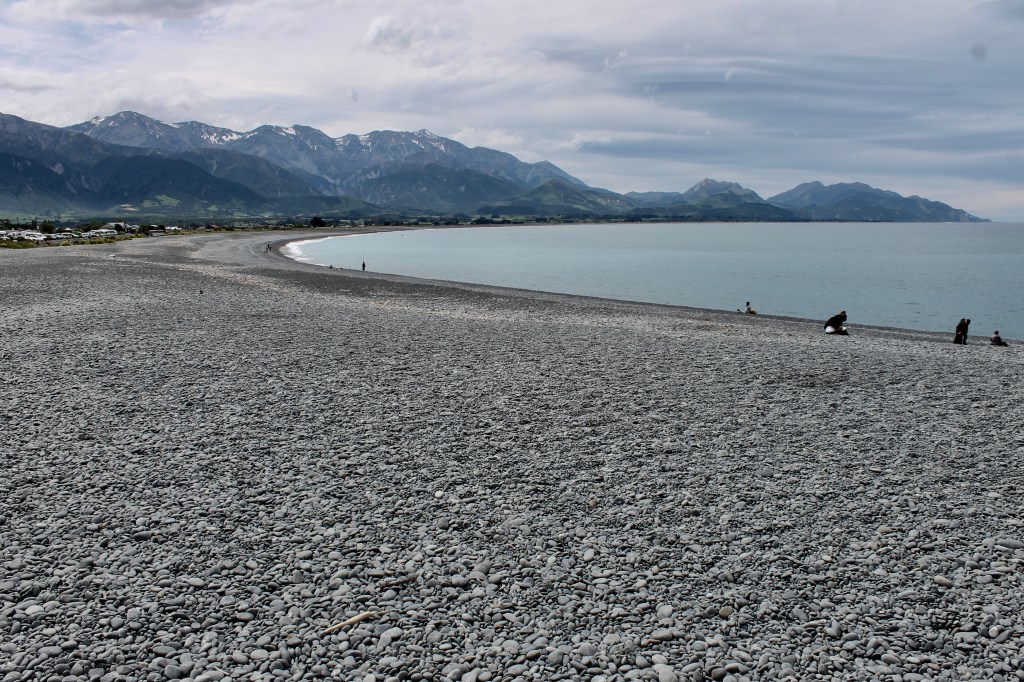
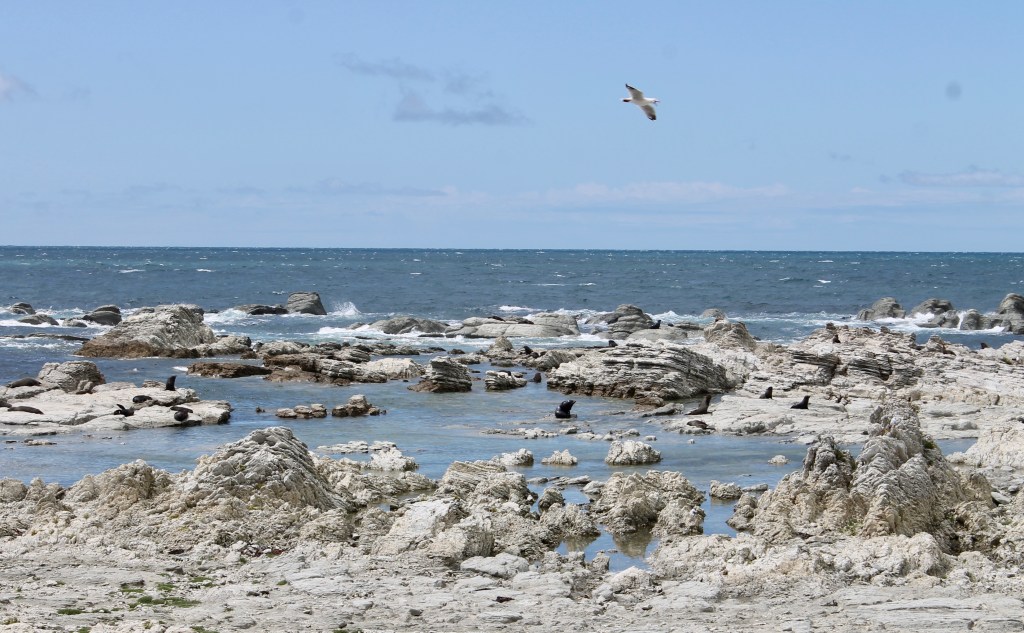
Fyfffe Country Lodge where we are staying was closed for two years for repairs. There are still buildings under construction in the CBD. But like Christchurch, these folks are back and open for business. The long beach in town is composed of grey stone pebbles. At the head of the peninsula around which the town is built is a white rocky outcrop with a huge seal colony. To the south of the peninsula is a black stone beach. So you have a choice of colors for your beach (but don’t expect any sand).

And when the sun goes down, there is a lovely red to the sky.

PS., Lena, your Mom and I ate a great dinner together tonight, so your inheritance paid for more good food. Her cold is a little better today and watching the young seals playing in the water uplifted her spirits, so I am safe for another day.

 Ginger Without Borders
Leave a comment