This was our last day in the south island. We left Nelson early to allow us time to enjoy the scenic route to Picton. We could have retraced our journey down Highways 6 and 1 through wine country, a distance of about 60 miles from Havelock to Picton. Although the scenic route (named “Queen Charlotte’s Drive”) would take the same amount of time as the drive down Hwys. 6 and 1, it was only 21 miles long. By this point in our journey, we now fully appreciated the signs along the NZ roads that say: “Leave plenty of time, roads in New Zealand are different to the rest of the world.”
Our first stop on the road to the ferry terminal in Picton was Havelock. It sits at the head of the Pelorous Sound, one of the many sounds of the Marlborough Sounds (still don’t quite understand why there are sounds in a sound). It is also the “Greenshell (green lipped) Mussel Capital of the World.” With only 450 residents, it has an enormous dock that is as big as the town (I guess to handle all those mussell boats). Like Nelson, the tidal flats are also quite extensive at lower tides.
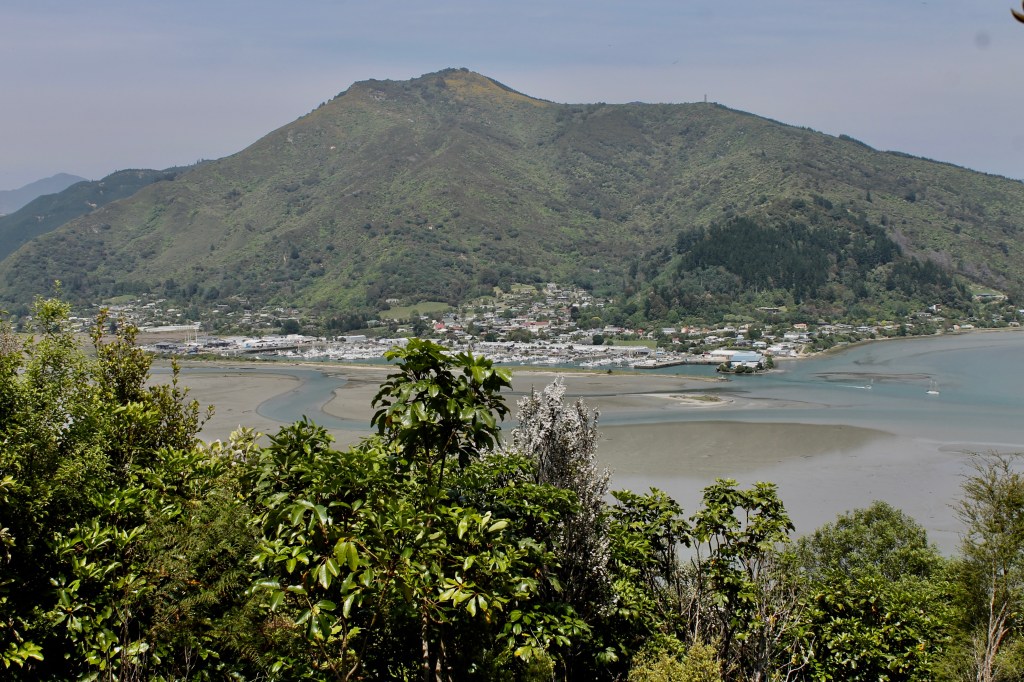
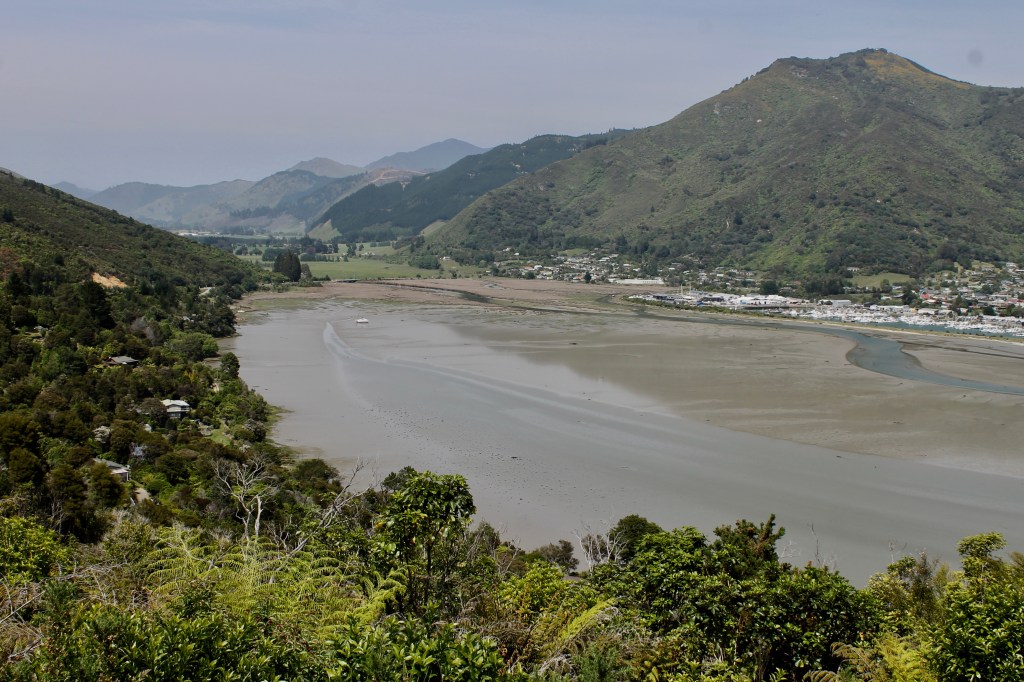
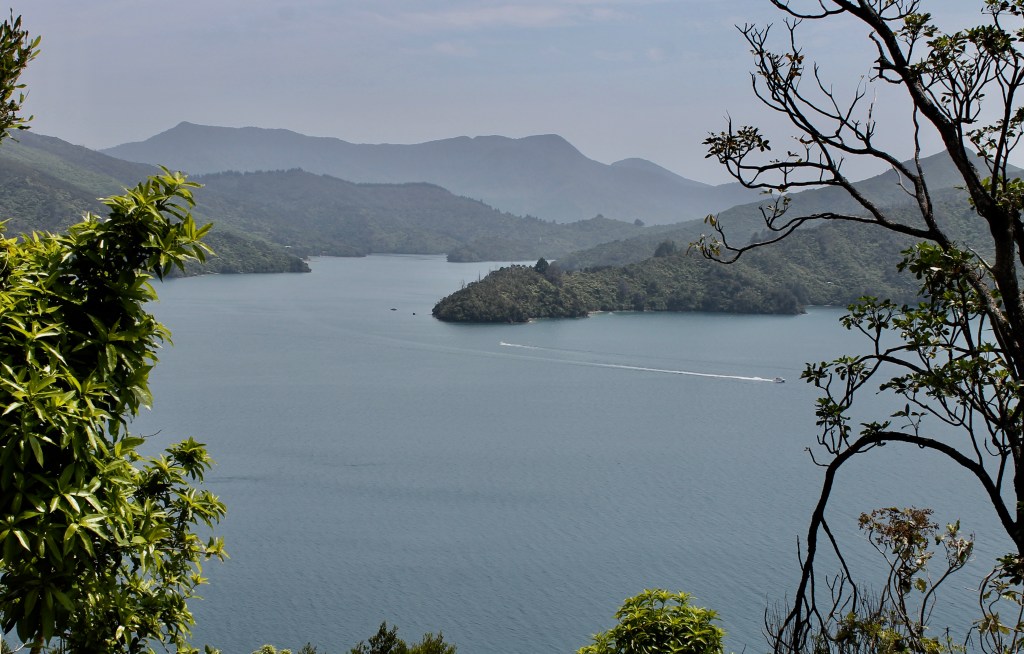
The Queen Charlotte Drive begins at Havelock. It is built on the slopes surrounding the Queen Charlotte Sound. It is reputed to be one of the most scenic drives in the world (and the AAA of NZ lists it as one of their dangerous roads). Queen Charlotte Sound is the easternmost of the main sounds in the Marlborough Sounds. Captain Cook named it after King George’s wife, who was one of his patrons (she was an amateur botanist). She is the same person for whom the NC city of Charlotte was named. It was from an Island here that Captain Cook first saw the passage to the Pacific Ocean from the Tasman Sea. That passage is now called the Cook Straight and we were about to cross it.
Sorry Lena, but I had to provide a little history lesson because it will be important later in this story. The road was as twisty as advertised with great views of the upper end of the Queen Charlotte Sound.
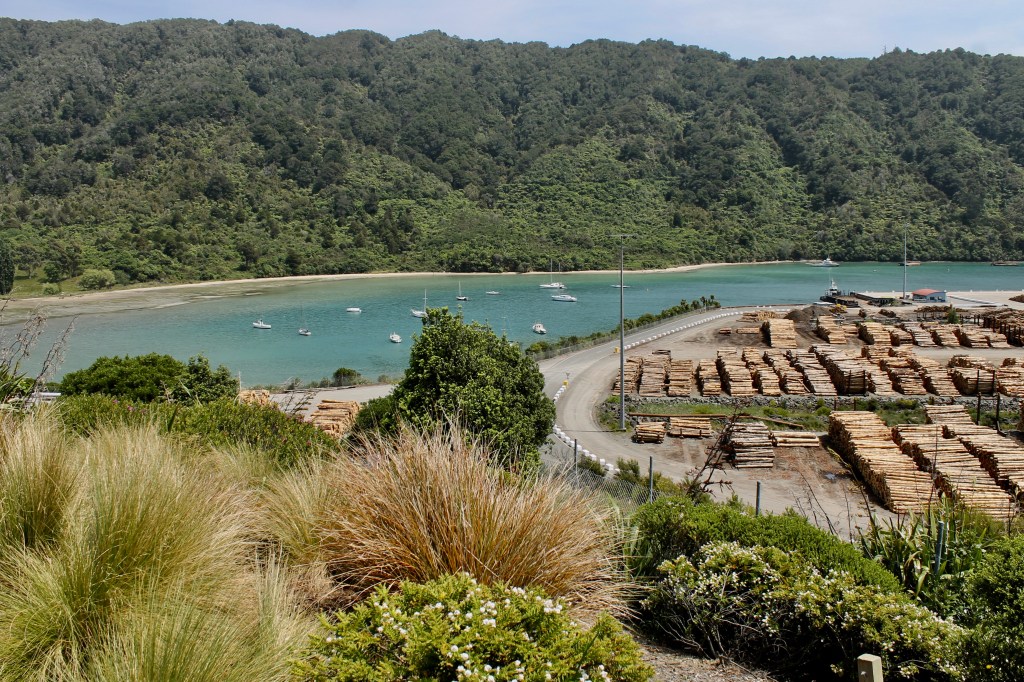
Just outside of Picton, we came upon a wharf where many of those trees we saw being logged were being shipped to Australia and China.
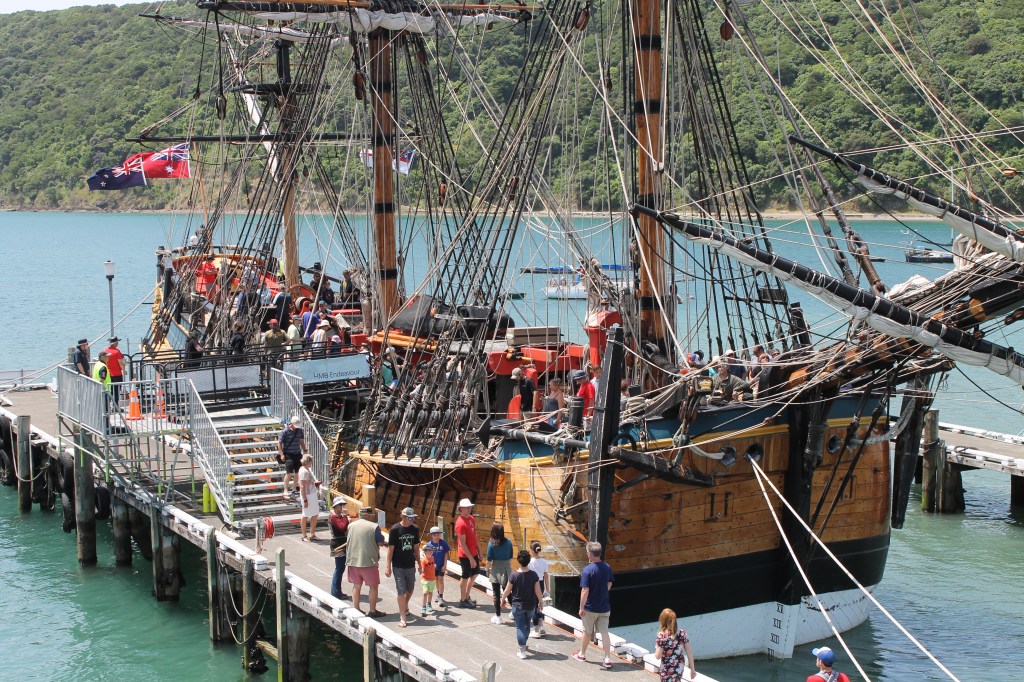
In the Picton harbor, I noticed that there were a couple of three masted sailing ships at the wharf next to the Interislander’s facilities. After taking a couple of pictures, I looked at the sign on the gangway which read “HMB (His Majesty’s Barque) Endeavor.” This was the replica of Captain Cook’s ship, built by the Australians in 1994 as a “working museum” with its home base in Sydney’s harbor. It was in Picton for NZ’s celebration of the navigation of the Maori and the European’s to NZ (called the “Tuia 250 Celebration”). The Endeavor had left Sydney on September 12 while we were at the Great Barrier Reef. The original Endeavor had been built and used to ship coal. Cook chose it because of its shallow draft (the amount of water it needed to float) and the blunt bow. That blunt bow made the Endeavor almost unsinkable (it would bob like a cork in heavy seas) but also made it sail very slowly.
Then the Interislander ferry arrived from Wellington and discharged its passengers. Passenger service was begun between Picton and Wellington in 1875 by a private company. That company decided the route was unprofitable by 1962 and allowed the railroad to take over the service. The railroad (owned by the NZ government) purchased a “roll on roll off” ship so that rail loads would not need to be reloaded between rail and ship. Tonnage shipped rose from 14,000 tons to 181,000 in the first year and passenger traffic rose from 60,000 to 207,000. The railroad added two more ships and more daily sailing times and now transports over one million passengers annually. The route is considered one of the most beautiful ferry journeys in the world and the ferries are one of NZ’s iconic symbols.
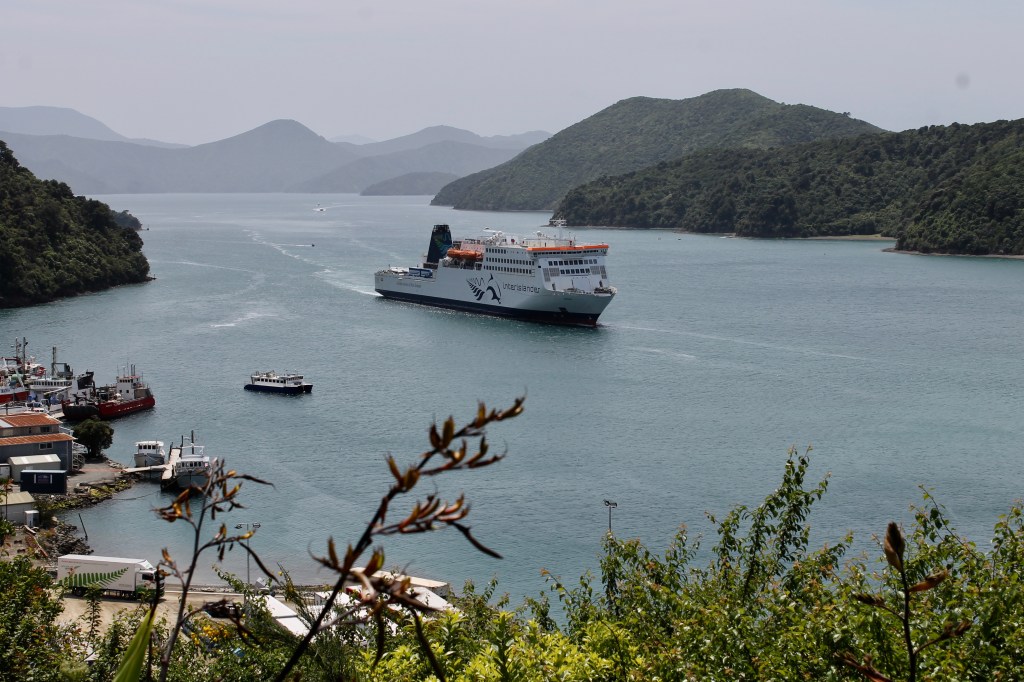
As soon as we were on board (about 2:15pm), lunch was served in our lounge (the Interislander now has competition, so they have upped thier game), which was a very good lamb shank with chutney (it and the beer were free with our lounge ticket). After lunch, I went up on the 10th floor “viewing deck,”(our lounge was on the 7th floor). The wind was not particularly strong and the views were great.
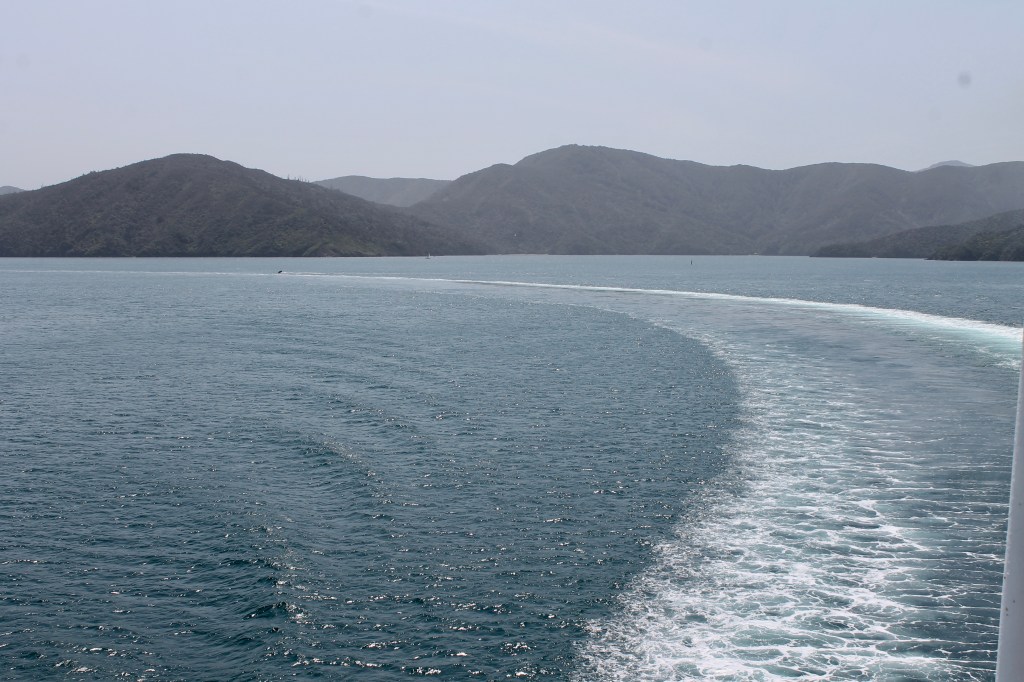
We passed numerous bays as we progressed down the sound.
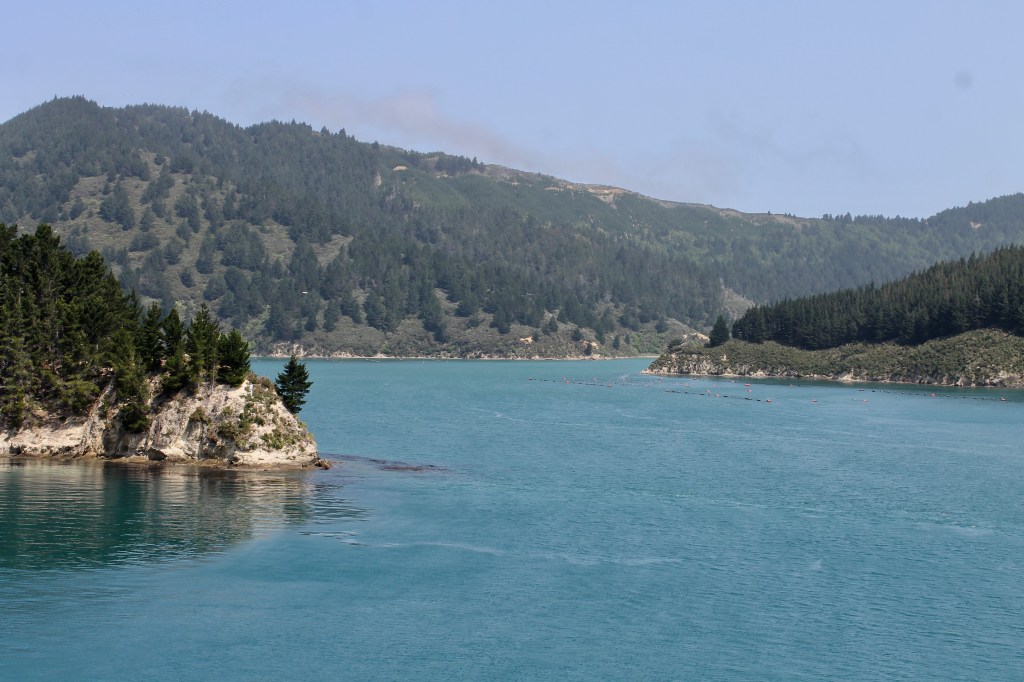
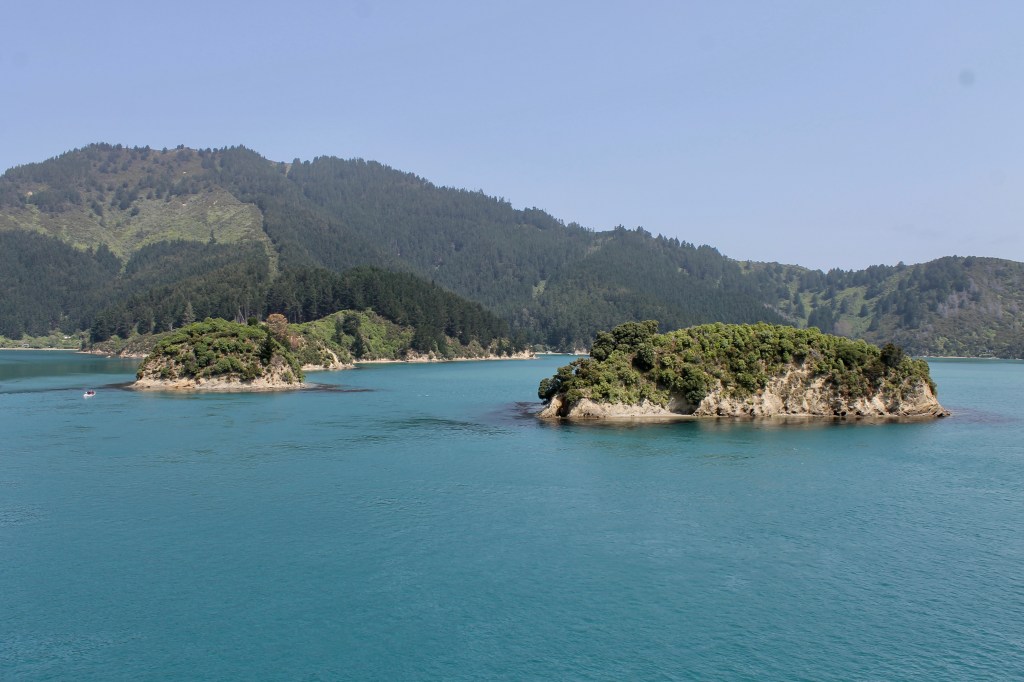
Then we passed the cliffs that guard the entrance to Queen Charlotte’s Sound.
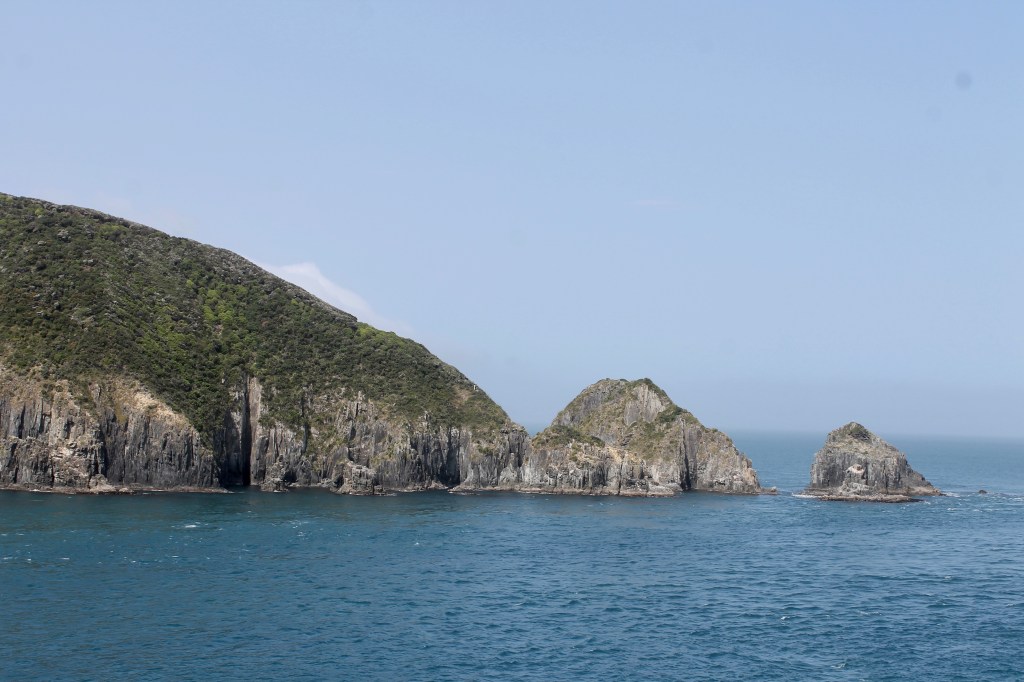
Past the point, you could see further up the island. We had to say our final goodbye to the south island of NZ.
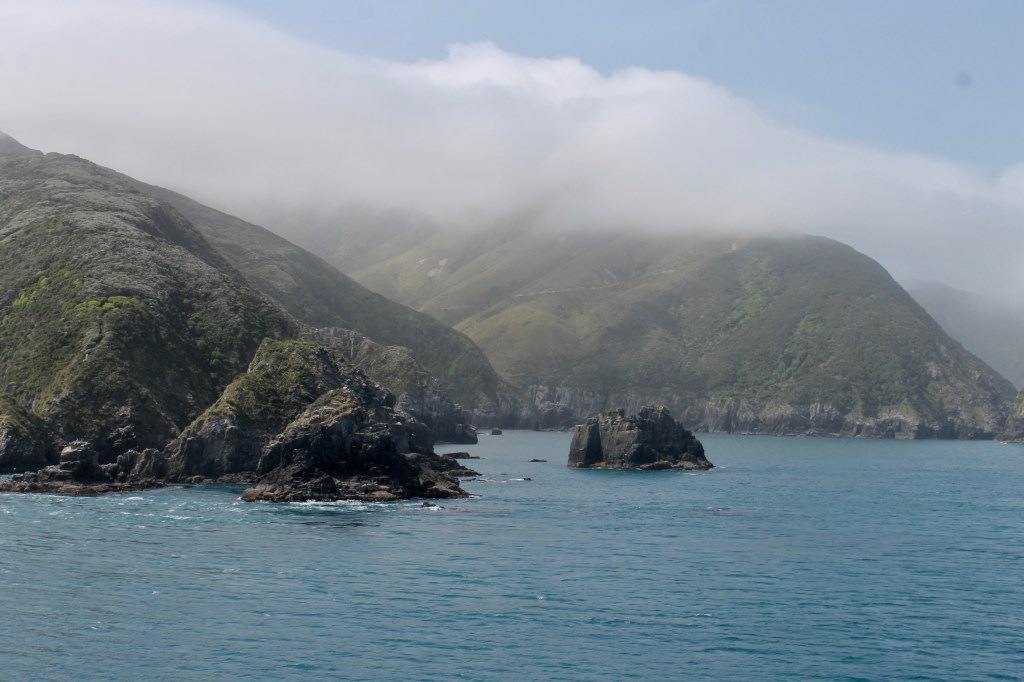
At this point we could feel the gusts of the Cook Straight on the viewing deck. Just then, the captain announced that the high winds of the Cook Straight would make the viewing deck unsafe. We were told to return to our lounges. The Cook Straight (14 miles wide at its narrowest point) is considered one of the most dangerous and unpredictable waters in the world. All the Interislander ships bear a graphic of a Risso’s dolphin because between 1888 and 1912, a Risso’s dolphin named Pelorous Jack escorted all the ships across Cook Straight and none were lost.
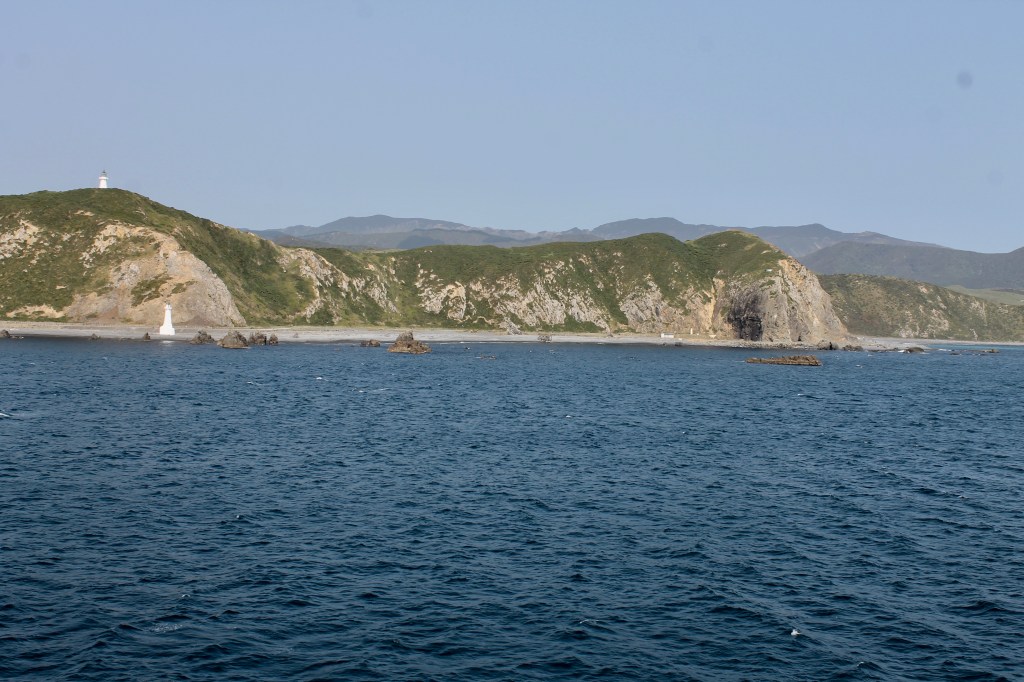
I retreated to the lounge comfortable in the prediction at Picton that our crossing would be “mild.” It was. I loaded my pictures onto the computer while watching the whitecaps of Cook Straight out the window and began to write this blog. Before I could finish, the white lighthouses on Pencarrow Head were off the starboard side of the ferry. And we were soon at the dock in Wellington harbor. Welcome to the north island.
PS., Lena we really saved a lot of your inheritance today. Lunch was so big we didn’t even go out to dinner (we were also pretty tired from the last few days in the south island). So we will contact Lauren for dinner tomorrow night and get to bed early. Mom got a little ticked at me again today but I think I can make it through the night.
 Ginger Without Borders
Leave a comment