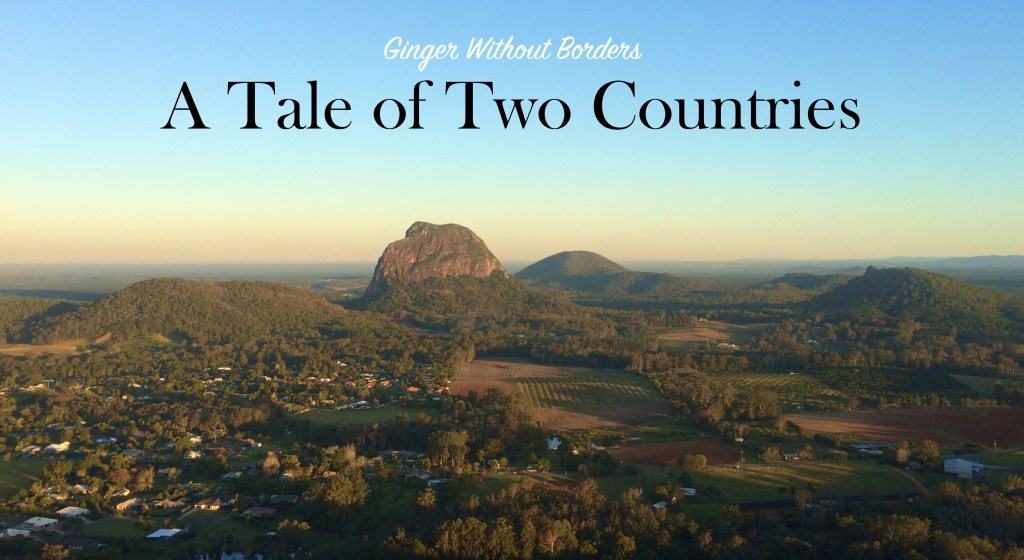
Wellington is on the southwest shore of Wellington harbor, a huge body of water at the south end of the south island surrounded by hills over 900 feet high on all sides. It’s water has excellent depths. The harbor’s entrance is almost one mile wide, making it the perfect escape from the winds of the Cook Straight. When Wellington was declared a city in 1840, it was estimated that the entire British fleet could be moored in the waters of Wellington harbor. While those cliffs protect the harbor, Wellington is still the windiest city on the planet (by average wind speed). The city was named after the hero of the Battle of Waterloo, the Duke of Wellington.
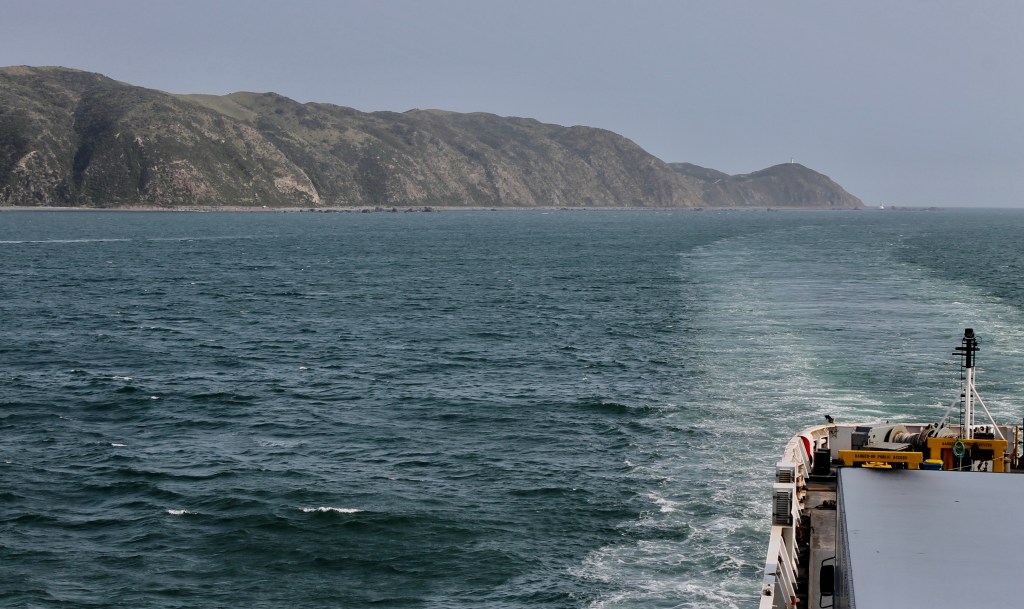
In 1865, the City was chosen as the capital of the colony of NZ in a compromise. The first royal governor of New Zealand wanted Auckland to be the capital, but there was concern that the south island (which due to the gold rush at the time was more populous than the north island) might decide to become a separate colony. Since Wellington was in the middle, a committee (including “impartial” Australians) decided Wellington was a wiser choice.
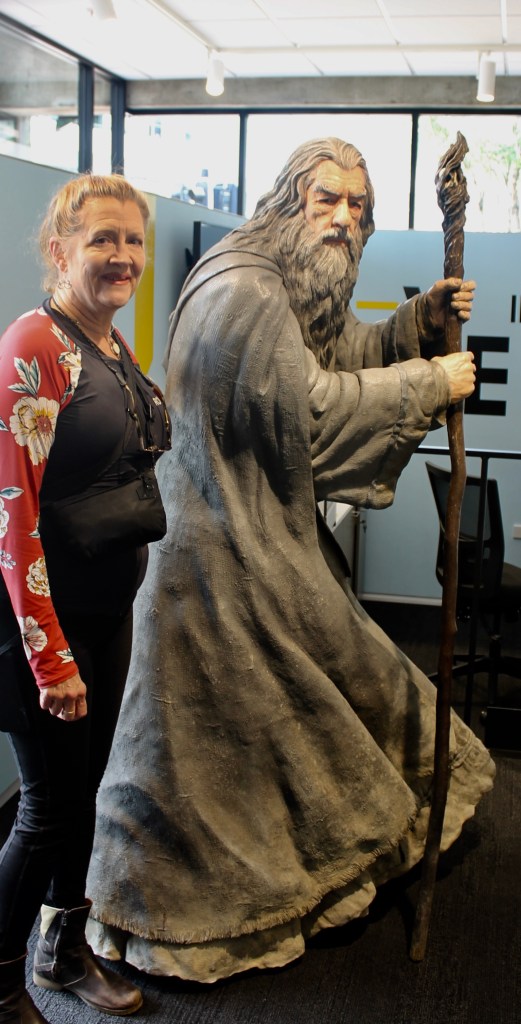
Today, almost 77% of the population of NZ lives in the north island. Wellington is the second largest city in NZ with about 420,000 folks, just slightly smaller than Raleigh. In 2013, Lonely Planet called it the “coolest little capital in the world.” Part of this vibe is that Wellington is home of the animation studios that created Lord of the Rings. There is a life size statute of Gandalf in the tourist information office at the port.

Wellington is also home to the world’s first ecosanctuary. It was here in Wellington that scientists experimented with various designs before designing the stainless steel mesh fence that is also used at the ecosanctuary in Dunedin. As I have mentioned before, prior to the arrival of humans, Aotearoa (New Zealand) was isolated and unique – it had no land mammalian predators. So this ecosystem of remarkable flora and fauna had evolved. There were flightless birds because many birds found it was easier to hide from hawks and eagles on the ground. So there were birds that could be found nowhere else in the world and birds dominated NZ.
Sadly, when humans began arriving some 800 years ago , they (the Maori) hunted some of these birds to extinction, as did the Europeans that came later. The mammals the humans introduced by accident or on purpose enjoyed the birds as food or competed with them for the plant life. Since human arrival, at least 51 bird species, three frog species, three lizard species, one freshwater fish species, one bat species, four plant species, and a number of invertebrate species have become extinct.
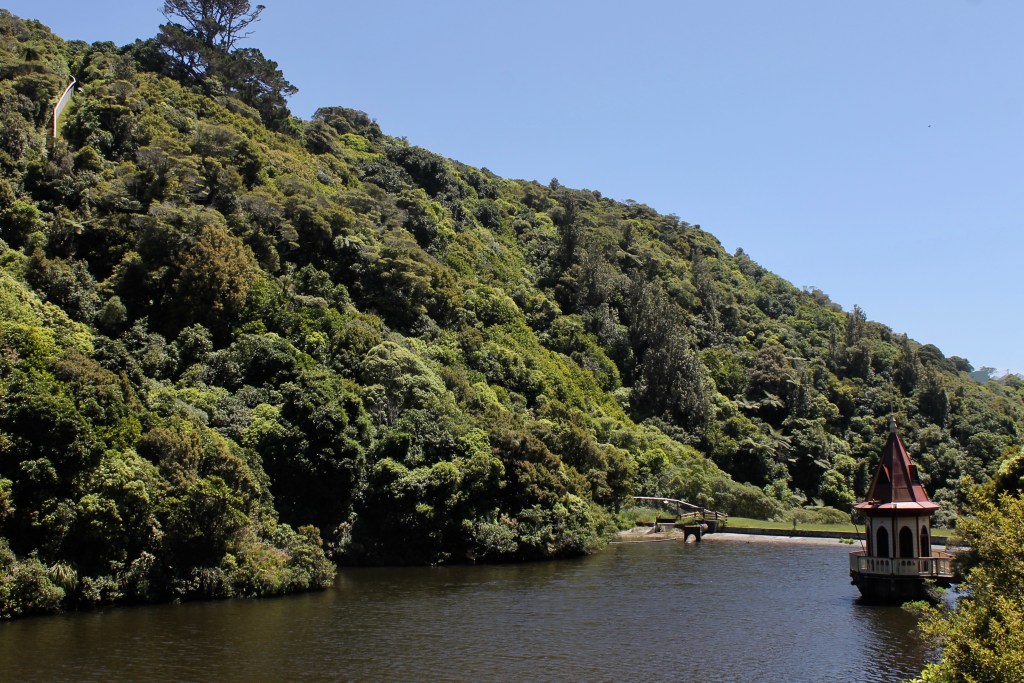
To counter the predator threat, Zealandia fenced in the valley of the original resevoir of Wellington with 5.5 miles of mesh fence (and were not sure that just fencing out the predators would help the birds reproduce). They are gradually replanted the whole valley with only native plants. They reintroduced 18 native bird species (including the kiwi and the takahe) within the fence.
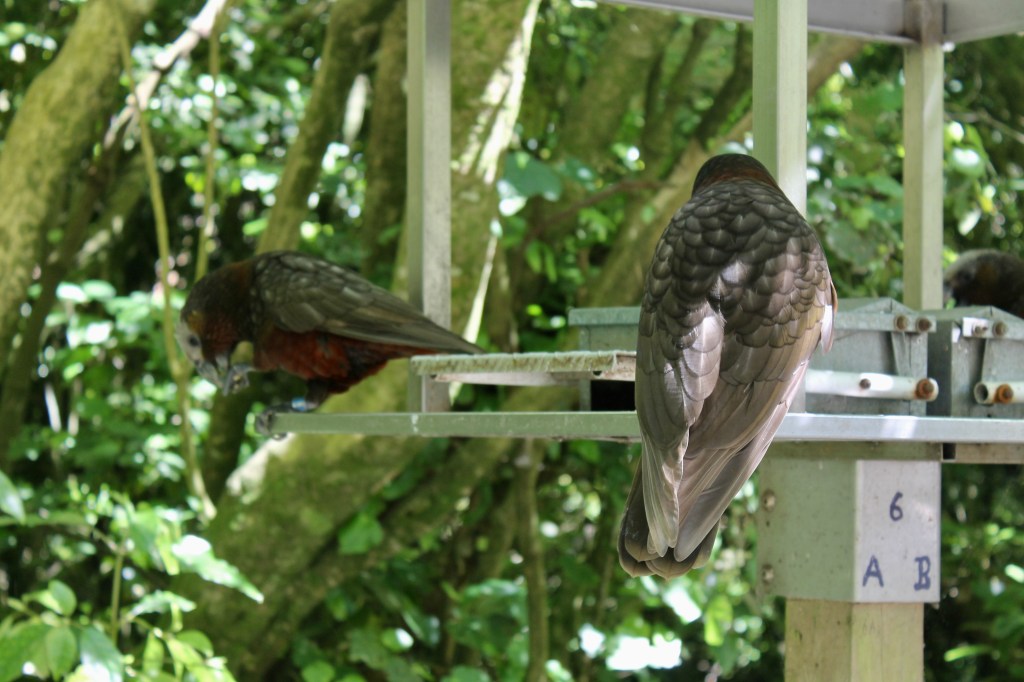
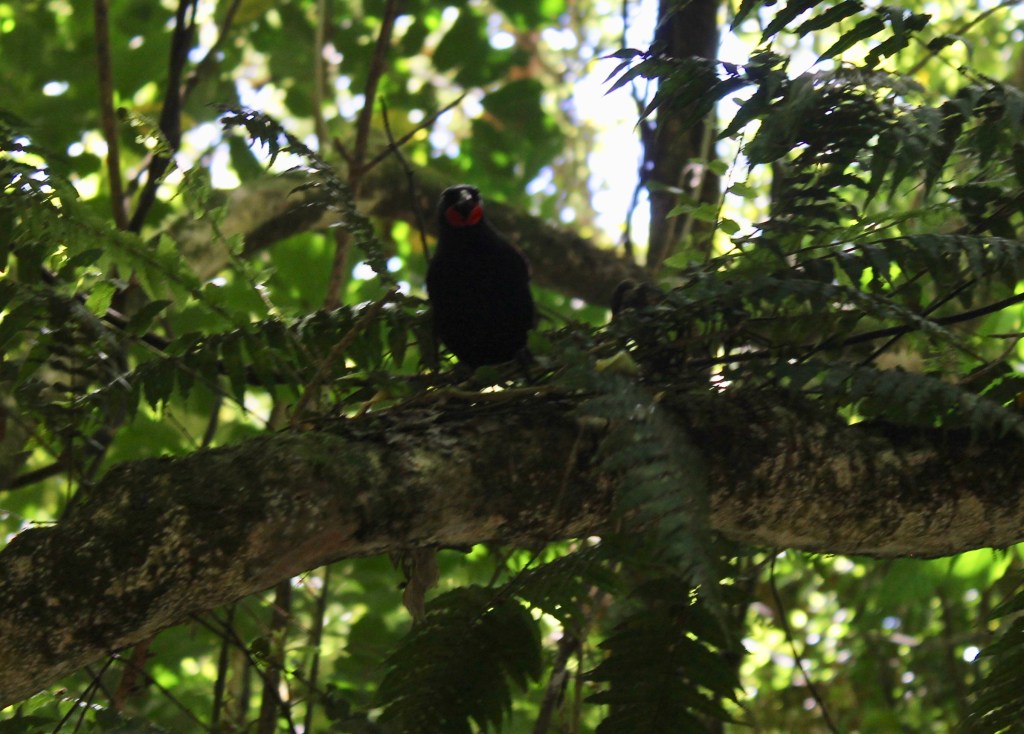
The fence was completed in 1999 and the last possoms and rabbits were removed in 2000. In 2019, they announced the birth of the sanctuary’s 1000th hihi chick (one of NZ’s rarest birds which was almost extinct before reintroduction to Zealandia). The success of their hihi breeding program and other breeding programs has inspired over 30 other predator fenced sanctuaries in NZ. At Dunedin’s version, we saw one kaka at the feeder. Here, we saw five at a feeder. We were having a great time (Lena, we know you don’t care about birds or plants, but your parents do), but we had another four hour drive (this time to Napier in Hawke’s Bay). So we just ignored the clock and kept watching the kaka and following other rare birds (saddlebacks). Napier will come soon enough.
PS., Lena, we went to Zealandia on Lauren’s recommendation, so we spent some more of your inheritance there, but Mom is so happy, I am no longer in the doghouse. I am happy too. It was a special place to spend a morning. (It is named in Time’s 2019 list of the world’s 100 greatest places.)
 Ginger Without Borders
Leave a comment