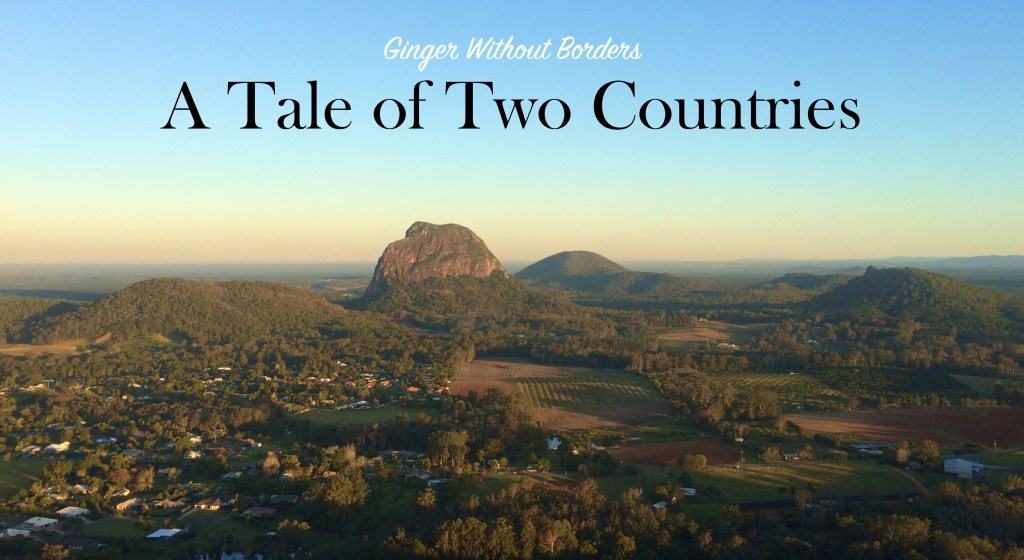
When we arrived in Paihia, we knew we were in a place that liked dolpins because this is the wooden sculpture in the center of the town:
The weather report for the next day predicted rain in the morning, so we called the sailboat tour operator to make sure that there we would be a sailing. She said they don’t go out only when the wind is expected to be too strong, so a little rain would not be an issue. We were supposed to snorkel on this tour, so getting wet was going to happen to us anyway. Sure enough, the rain was falling hard when we woke the next morning. It continued to fall as we ate breakfast, but you could see a little spot of blue in the clouds on the horizon. About the time I ordered my second flat white (which the folks in NZ claim they invented – the Aussies will differ with that opinion – it tastes similar to a cappuccino but no one has been able to tell me exactly how it is different), the sun broke out in town. So we walked over to the wharf and watched the horizon as the next batch of rain headed toward us.
This boat had an all female crew (we have had several female captains but this was our first all female crew – Dawn told me it was OK to point this out). After the usual saftety routine, we motored out past the harbor islands and pulled up the sails. The rain held off for us but we could see the clouds pouring rain on other parts of the Bay of Islands.

Under NZ’s Bay of Islands regulations, there were two maritime sanctuaries where we could not sail to view dolphins. In the other areas, dolphin viewing could not begin until after 12:30pm. NZ is home to nine different dolphin species. According to the NZ Department of Conservation, there are currently 31 bottlenose dolphins (the most common type of dolphin and the type we see at the NC coast) living in the Bay of Islands. We could also maybe see a Risso’s dolphin because they like to hang with the bottlenose. But we had three hours of sailing before we could look for dolphins, so the captain headed for the outer islands.
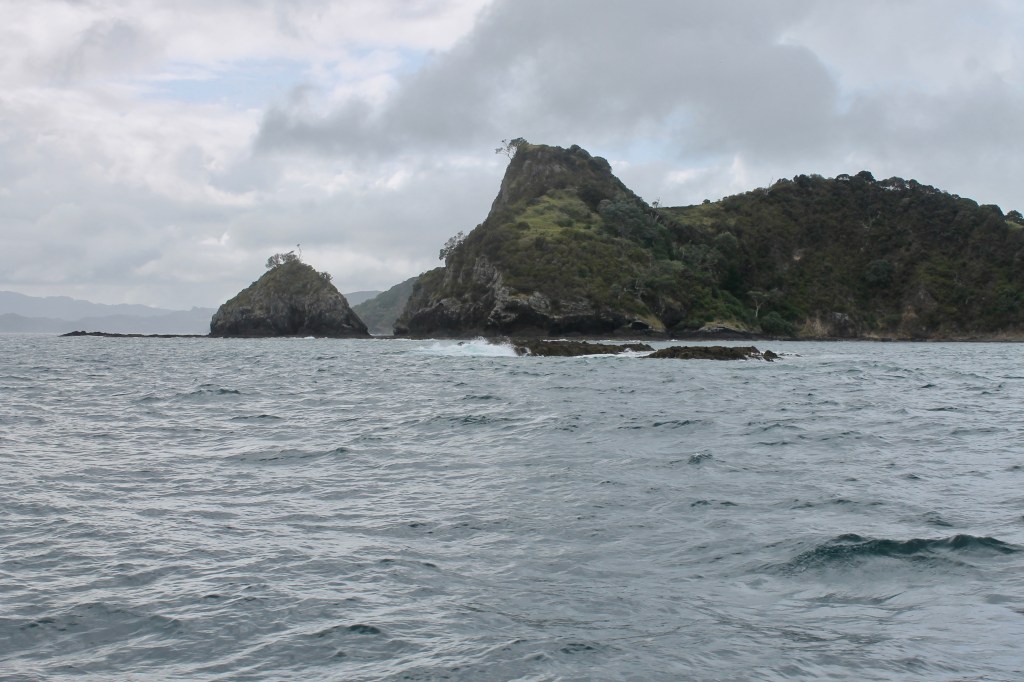

For our lunch stop, she selected the island known as lover’s island by the locals but officially as Robertson’s Island. It is one of the islands where Captain Cook reacted to the powhiri of the island’s 300 Maori by firing a cannonball into the side of the cliff (making repairs to their garden, one of the private owners of part of the island found a cannonball). The Maori scattered and Cook beached the Endeavor onto the shore of one ot the island’s coves to make repairs to his ship. That shore is now known as Cook’s Cove. Robertson Island becomes three islands on really high tides and the central island is now owned by the Dept. of Conservation. It is one of their pest free islands and home to brown kiwi, dotterels, and variable oystercatchers. There were oystercatchers nesting on the shore when we arrived.
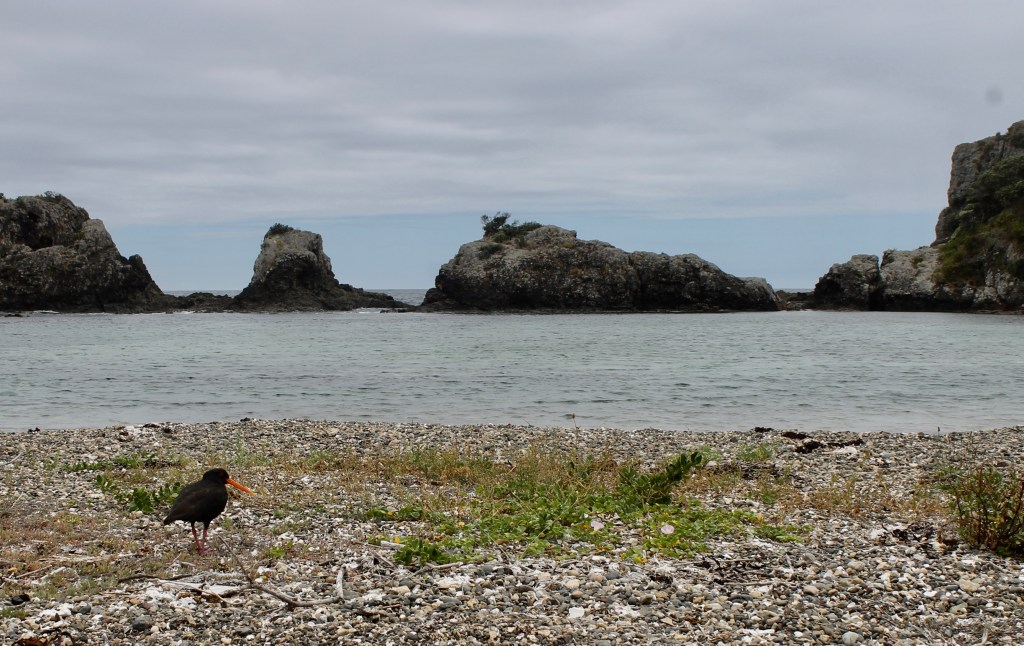
Dawn and I took separate journeys to the island. She chose the dingy. Since this was our last day on a beach in the South Pacific, I decided to snorkel to shore even though the captain warned that the water “would be bracing.” She also spoted a small ray just before we hit the water. Jumping off the back of the catamaran was fun. The water was initially bracing, but as soon as I started swimming toward shore, my body adjusted and it felt really good. The catamaran did not have prescription facemasks (and I didn’t want to bother with putting in my contacts), so my biggest concern was I couldn’t see very far and might just stumble upon another ray. I bagged any further snorkeling when I got to shore. Good thing, because as soon as Dawn came ashore with the dingy, the captain yelled out “dolphins.”
It was not yet noon. The dolpins must not have realized it was daylight savings time. They started jumping out of the water and circling our now empty sailboat (except for the captain). I still didn’t have my glasses, so I grabbed the plastic bag Dawn brought to shore in the dingy with her. It had my glasses and camera. But the dolphins were not waiting for me. They had moved on to the next boat anchored in the bay. They continued down the bay ship by ship and we were able to get a few pictures.


After about 20 minutes, they just disappeared. While they breached the water a few times, they were not nearly as acrobatic as the dusky dolphins we saw in Kaikoura. With no more dolphins, Dawn and I made our last climb up the cliffs of NZ. As usual, even though we had to climb more than 100 steps, it was worth the view.

Dawn grabbed the dingy and I made my last snorkel in the South Pacific back to the sailboat for a “barbie lunch.” As we ate, the sun came out. The water around the boat turned turquoise.
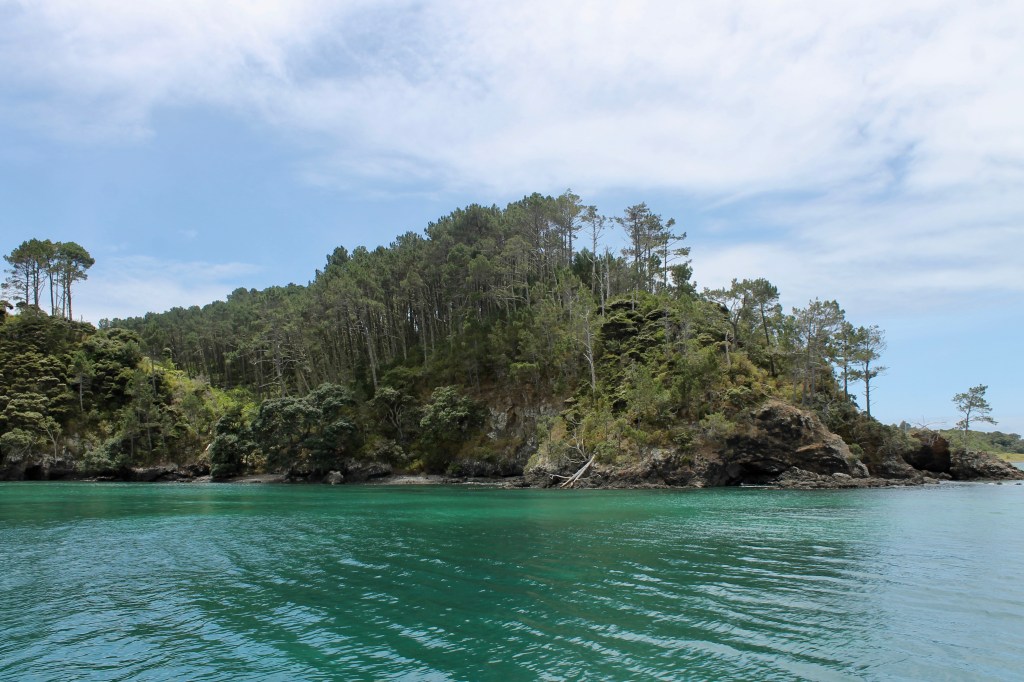
The captain spent part of lunch on the phone with some of the other captains trying to figure out where the dolphins may have gone. After lunch, we began the search (much like the search for the sperm whale in Kaikoura except we did not stop for soundings). The wind picked as we left the shelter of the Island and the sea swells rose. We did get to see a reef heron, a bar tailed gotwit (the bird that flies from Alaska to NZ without ever touching land or water – the longest such flight of any bird), several gannets sitting on the waves, and three blue penguins also just sitting on the waves. But no more dolphins in sight.
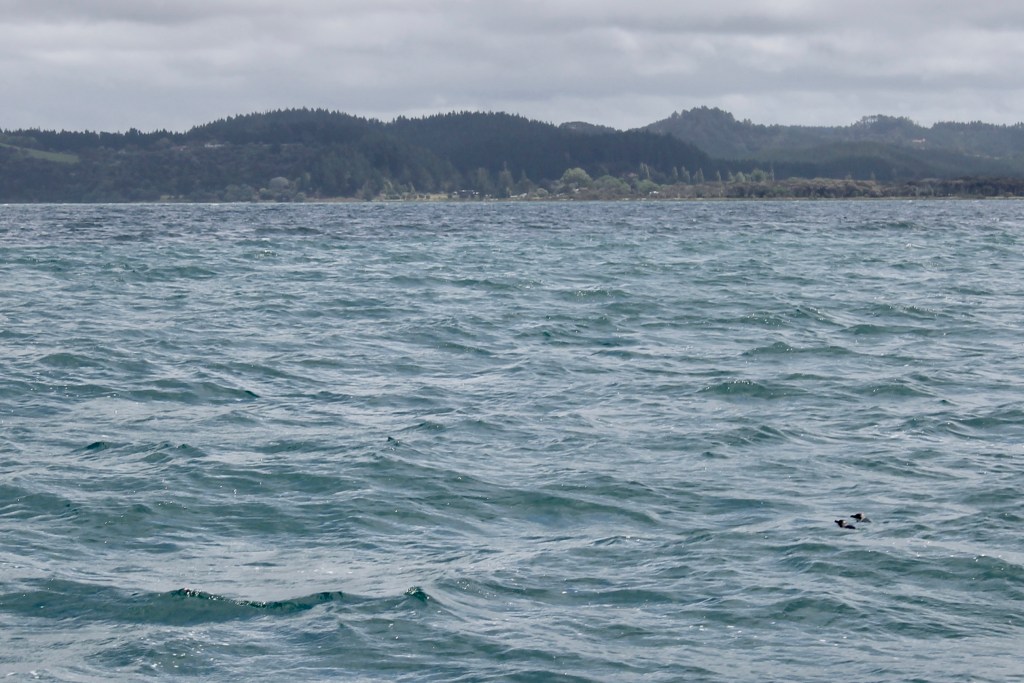
As in Kaikoura, our seach was ultimately fruitless. After about an hour or so, the captain pulled up the jib. Running downwind in heavy winds, we were soon back in the harbor. We had sunny skies the whole way back.

While we were disappointed not to see the dolphins again, for a day that began with heavy rain, it had been a glorious sail to end our two month journey. At a very nice dinner together, we agreed it was time to go home.
PS., Lena, we spent a nice part of your inheritance on dinner tonight, but your Mom saw dolphins, so she is happy. I got to pull up some sails today, so I am also happy. Since we are both happy, I am safe (and only have one more night to survive the whole trip).
 Ginger Without Borders
Leave a comment