As those living through COVID understand, travel is not very easy. Which means travel blogging is equally difficult. Thus, this blog has had very little attention over the past two years (how has it already been two years?!).
Whats more, the demands of American law school makes it almost impossible to travel. There just isn’t time.
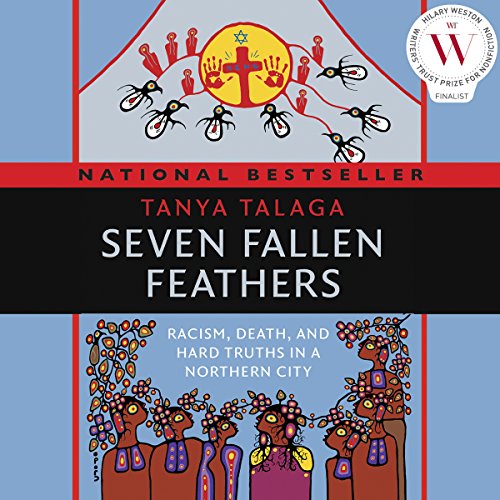
But now I am a dual-degree student with a Canadian law school, which surprisingly is less demanding. And I also have assignments that may be interesting to those who read this blog. So I’ve decided my first post since Fall 2019 should be a recent review written for a 2017 book about Indigenous people in Canada: “Seven Fallen Feathers” by Tanya Talaga.
The seven were hundreds of miles away from their families, forced to leave home and live in a foreign and unwelcoming city. Five were found dead in the rivers surrounding Lake Superior, below a sacred Indigenous site.
Tanya Talaga
To describe this book in one word – alarming. In any other setting, with any other group of people, the number of deaths within a single population and the similarities between those deaths would cause the local—or even federal—law enforcement to react. Yet, as the author shockingly notes, little has been done about these deaths. Nor does it consider the number of attacks that did not end in death, including the poor teenage soul that was beaten, thrown into the river, and left for dead. As the author notes, the similarities trigger a fear—and intense suspicion—that there may be a serial killer in the region.
Nevertheless, law enforcement seems unphased by the violence. Even after the pattern was noted by the affected Indigenous community, and even after an investigation into the prior deaths, two disappearances within a day of each other are still treated as non-suspicious.[1] At the end of the book, the reader is left flabbergasted at the lack of action.
Chanie Wenjack
This death is unlikely to be linked to any of the deaths that have occurred since 2000. However, it is nevertheless a good starting point for understanding the level of distress caused in the Indigenous community by the more recent deaths. The poor young child lost his life over 50 years earlier after fleeing the—likely sexual—violence in the residential schools. That said, it is truly shocking, though not entirely surprising for that time, that the only true reaction from law enforcement was to deride the adults for not sending Chanie Wenjack back to the school. There did not appear to be an investigation into why Chanie and so many others that night left the school. This is particularly poignant given the recent discoveries of another mass grave.[2]
Robyn Harper & Paul Panacheese
These two deaths equally do not appear to be linked to the modus operandi of the potential killer. That said, the fact that the cause of Paul’s death was never discovered—and will never be discovered, even that all the material from his death was destroyed within two years—is appalling. This feeling is compounded by fact that his mother’s sister (his aunt) and another family member—Viola Panacheese—are two of the many missing Indigenous women.[3] The reader can do nothing more than feel deep sorrow for his mother and family, since there really is nothing more that can be done for them.
Robyn Harper, on the other hand, seems to be a preventable death. It is clear she died of alcohol poisoning.[4] This is the only case in the book that appears to really be due to carelessness and neglect for Robyn, likely on the part of her host family and the community that was supposed to assist her. Such a lack of care is much more surprising given the fact that her host family was related to her.
Unfortunately, deaths like Robyn’s are not an uncommon occurrence. In the United States, the Center for Disease Control estimates that there are 2,200 deaths caused by alcohol poisoning each year.[5] Moreover, the Canadian Institute for Health Information notes, of the Canadians who die from substance abuse issues in hospitals, 75% are alcohol related.[6] Further studies show Canadian Indigenous youth are highly susceptible to excessive drinking.[7] These statistics add to the conclusion that Robyn’s death was completely preventable.
The Boys
Jethro Anderson. 15 years old. 2000.
Curran Strang. 18 years old. 2005.
Reggie Bushie. 15 years old. 2007.
Kyle Morriseau. 17 years old. 2009.
Jordan Wabasse. 15 years old. 2011.
All found in the water. All died by drowning. Many with unexplained injuries. Many with suspicious circumstances surrounding their disappearances. Many similarities exist between these deaths, as well as the poor boy who survived his attack. Yet none of these deaths have ever been solved. Though an inquest was held, many questions were left unanswered.[8]
Two More
Tammy Keeash. 17 years old. Disappeared: May 6, 2017.
Josiah Begg. 14 years old. Disappeared: May 6, 2017.
Both found in the river. Both disappeared on the same day, after the inquiry into the seven poor souls noted above. Police quickly noted both deaths did not “appear to be suspicious.” Neither death resulted in charges.[9]
The Others
The book notes many deaths, more than those explained above. These included explaining the notorious serial killer in Port Coquitlam, British Columbia (who will not be named, because he does not deserve to be named) that killed a disturbing number of Indigenous women. It also included other—older—Indigenous people found in the rivers around Thunder Bay. It even notes the disturbing number of suicides, and their severe impact on the community. Overall, the book provided a comprehensive overview of the truly distressing situation of violence against indigenous people.
Conclusion
Though highly depressing, the book was extremely informative about the treatment of Indigenous deaths in Canada, particularly in Thunder Bay but also throughout Canada. While the book ended in an open question as to whether there would ever be proper investigations into indigenous violence, the author does note the federal investigation into the actions of the Thunder Bay police. In 2018, this final report made international news for its scathing review of the Thunder Bay police.[10] Moreover, in February 2022, the Ontario Civilian Police Commission announced another review into the Thunder Bay police.[11] Given these developments, maybe there will be true change in the local police force.
Further, while the book ended in an open question as to whether there would ever be justice. However, after the book was published, one case—a young woman killed in 2017 after being hit in the stomach with a trailer hitch—did end with justice. Brayden Bushby was convicted and sentenced to 8 years in prison for manslaughter.[12] Given this development, maybe justice will be found for the others as well.
[1] Jody Porter, Death, disappearance of First Nations teens reignite concern about police practices in Thunder Bay, CBC News (May 18, 2017), https://www.cbc.ca/news/canada/thunder-bay/death-missing-thunder-bay-1.4120577.
[2] Canada: Indigenous community finds 93 potential unmarked graves, Al Jazeera (Jan 25, 2022), https://www.aljazeera.com/news/2022/1/25/canada-indigenous-community-uncovers-93-potential-unmarked-graves.
[3] Missing and Murdered: Sarah Skunk, CBC News, https://www.cbc.ca/missingandmurdered/mmiw/profiles/sarah-skunk (explaining the story of the missing sister, Sarah Skunk); Missing and Murdered: Viola Panacheese, CBC News, https://www.cbc.ca/missingandmurdered/mmiw/profiles/viola-panacheese (explaining the story of the missing sister, Viola Panacheese); Matt Prokopchuk, ‘A history of trauma’: Families of 2 missing women from Ontario First Nation address Thunder Bay MMIWG hearing, CBC News (Dec. 6, 2017), https://www.cbc.ca/news/canada/thunder-bay/thunder-bay-mmiwg-mishkeegogamang-1.4434963.
[4] Jody Porter, Homicide ruling recommended in death of First Nations student in Thunder Bay, CBC News (May 26, 2016),
https://www.cbc.ca/news/canada/thunder-bay/homicide-first-nations-death-inquest-1.3600214.
[5] Alcohol Poisoning Deaths, CDC (Jan. 2015), https://www.cdc.gov/vitalsigns/alcohol-poisoning-deaths/index.html.
[6] Camille Bains, Alcohol-related deaths remain a ‘silent epidemic’ in Canada: expert, Global News (June 13, 2019), https://globalnews.ca/news/5386829/alcohol-deaths-hospital-study.
[7] Sherry Stewart et al., Hopelessness and Excessive Drinking among Aboriginal Adolescents: The Mediating Roles of Depressive Symptoms and Drinking to Cope, NCBI (Oct. 11, 2010), https://www.ncbi.nlm.nih.gov/pmc/articles/PMC3003989.
[8] Jody Porter, First Nation student deaths inquest: 5 things revealed so far, CBC News (Nov. 16, 2015), https://www.cbc.ca/news/canada/thunder-bay/first-nation-student-deaths-inquest-5-things-revealed-so-far-1.3318357.
[9] Leith Dunick, Charges not expected in deaths of Tammy Keeash, Josiah Begg, TB News (Nov. 23, 2017), https://www.tbnewswatch.com/local-news/charges-not-expected-in-deaths-of-tammy-keeash-josiah-begg-773987.
[10] Selena Ross, Canadian police force slammed for handling of dozens of indigenous deaths, Washington Post (Dec. 15, 2018), https://www.washingtonpost.com/world/the_americas/canadian-police-force-slammed-for-handling-of-dozens-of-indigenous-deaths/2018/12/15/9642d860-ffef-11e8-a17e-162b712e8fc2_story.html.
[11] Ian Kaufman, OCPC announces investigation into Thunder Bay Police Service,TB News (Feb. 11, 2022), https://www.tbnewswatch.com/local-news/ocpc-announces-investigation-into-thunder-bay-police-service-5054699.
[12] Matt Vis, Brayden Bushby, convicted in trailer-hitch death of Indigenous mom Barbara Kentner, to serve 8 years in prison, CBC News (June 7, 2021), https://www.cbc.ca/news/canada/thunder-bay/brayden-bushby-barbara-kentner-sentencing-1.6056010.
 Ginger Without Borders
Leave a comment