
Kingston and his folks came over to check out our resort on Day 9. As Mom was walking the grounds, she recalled walking through this former coconut plantation as a child. The plantation coconut field was her short cut to the local movie theater from her house (and this land route saved her the cost of what otherwise would have required a boat ride). She was amazed at the transformation of a field of coconut trees into an upscale tourist resort. Kerala literally translates as the “land of the coconut (Kera)” because its long growing season yields a coconut crop every 40 days. One of Kingstons’ favorite drinks is the liquid straight out of a coconut. While refreshing, it was not my favorite. (I prefered the crushed sugar cane drink that is available on almost every street in India.) Most folks in Kerala have coconut trees on their plots of land. They drink the cocunut juice, eat the coconut meat, make rope from the husk fiber, ladles and spoons from the husk, and mats and roofing from the palm fronds. Coconut meat is an essential ingredient in most Keralan delicacies. Kerala produces about 45% of India’s coconuts (and along with the other southern Indian states, almost 92%).
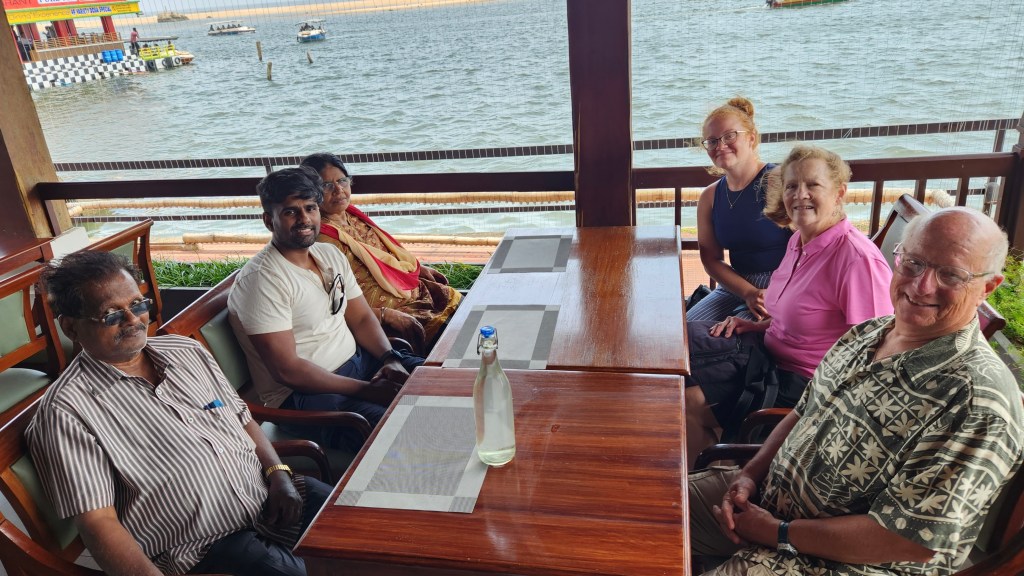
Often compared to the bayous of the Mississippi River, an Indian “backwater” is where the salt water of the Arabian Sea meets and mixes with the fresh water flowing down from the Western Ghats mountain range. The low barrier islands (see top right of the photo above) have inlets that admit the seawater into a large network of interconnected natural and man-made canals, lakes and rivers. There are over 560 miles of these waterways in Kerala and they have been used for centuries for transport, fishing and agriculture. They are also home to an amazing variety of unique species. And our afternoon was spent on a boat ride through these backwaters.
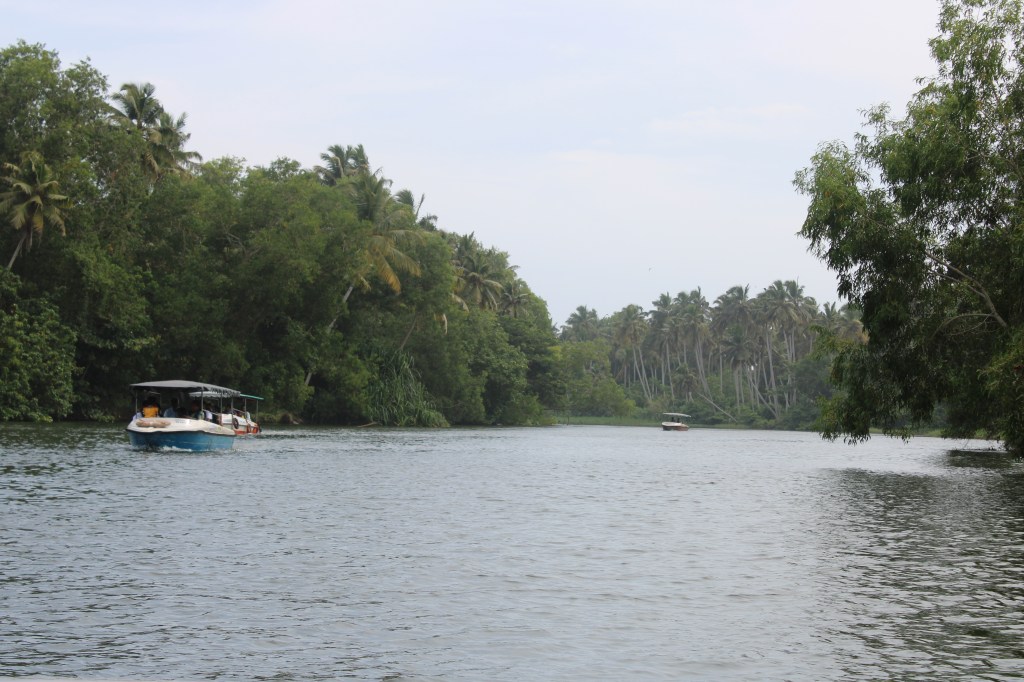
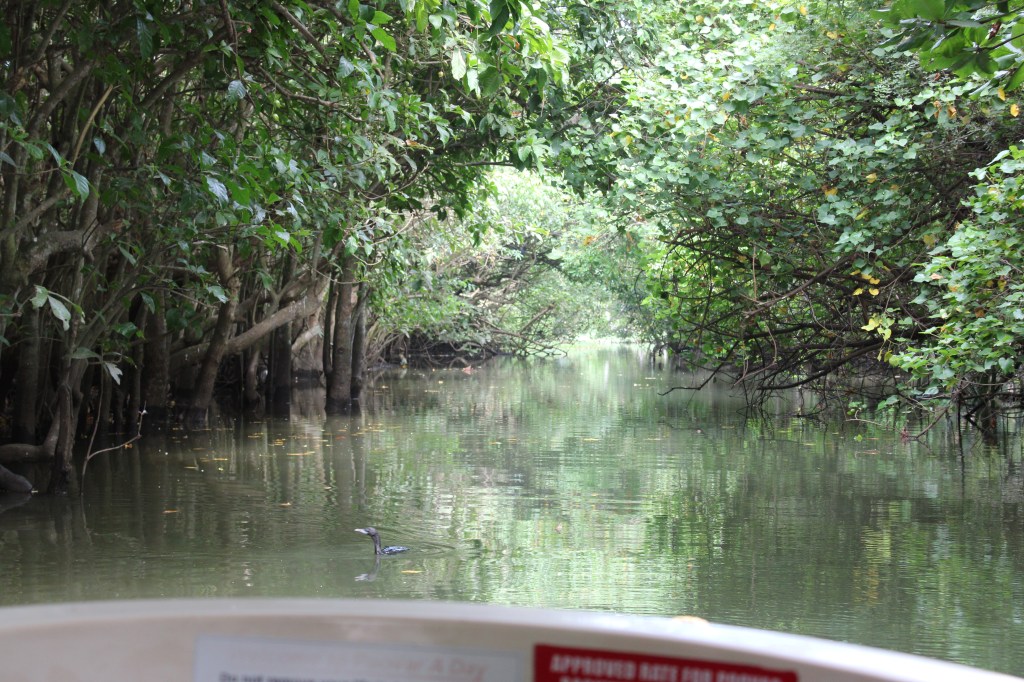
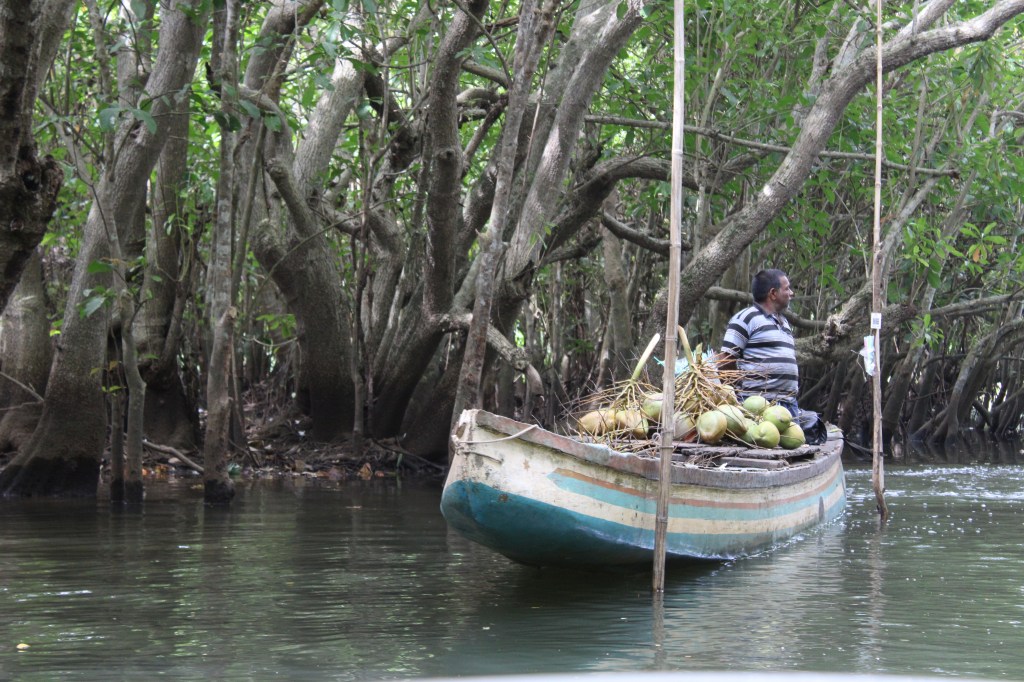
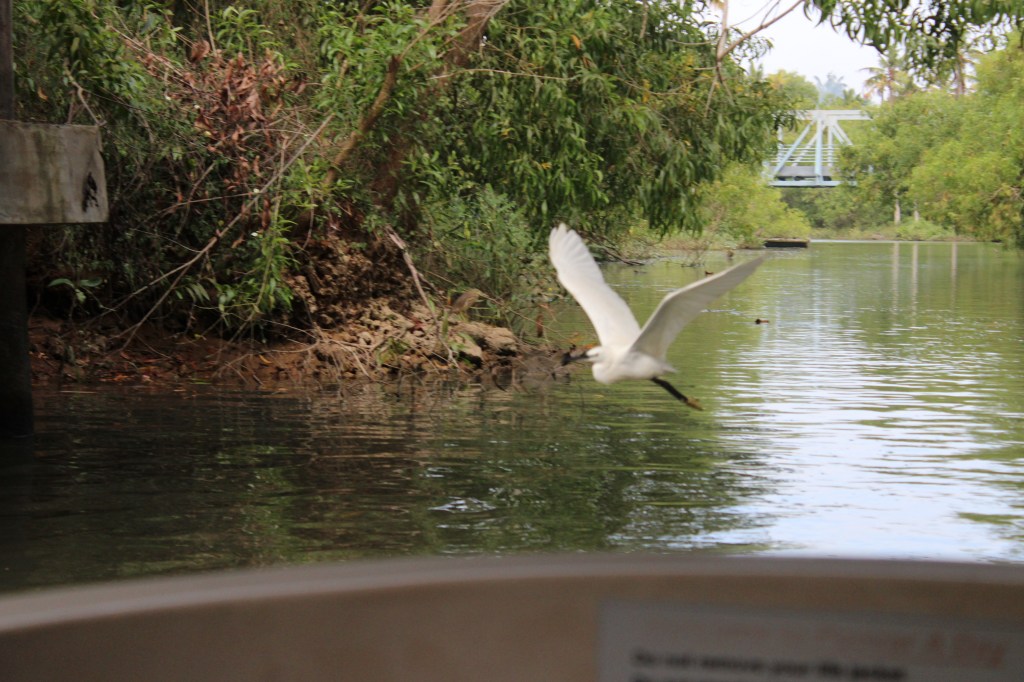
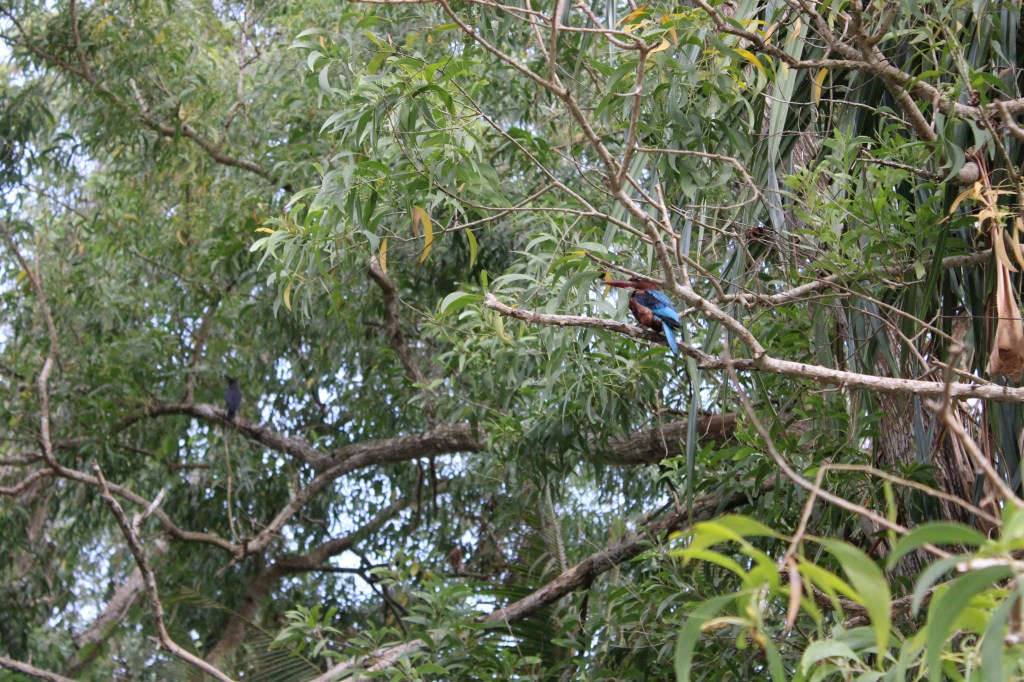
As soon as we loaded into the boat, the guide headed directly accross the river above and into one of the narrow canals, usually about 25 feet wide but sometimes narrowing to no more than 10 to 15 feet. The shoreline is generally tree lined but it does open into small fields occasionally. Almost at the beginning of our trip, we rounded a canal corner to find a Hindu temple built directly on the shoreline. There were several men bathing in the water next to the temple. Swimming in the backwaters is discouraged by local governments because tests have shown that 27% of the slow moving water is completely polluted and another 46% is considered partly polluted largely because most wastewater entering the canals is untreated.
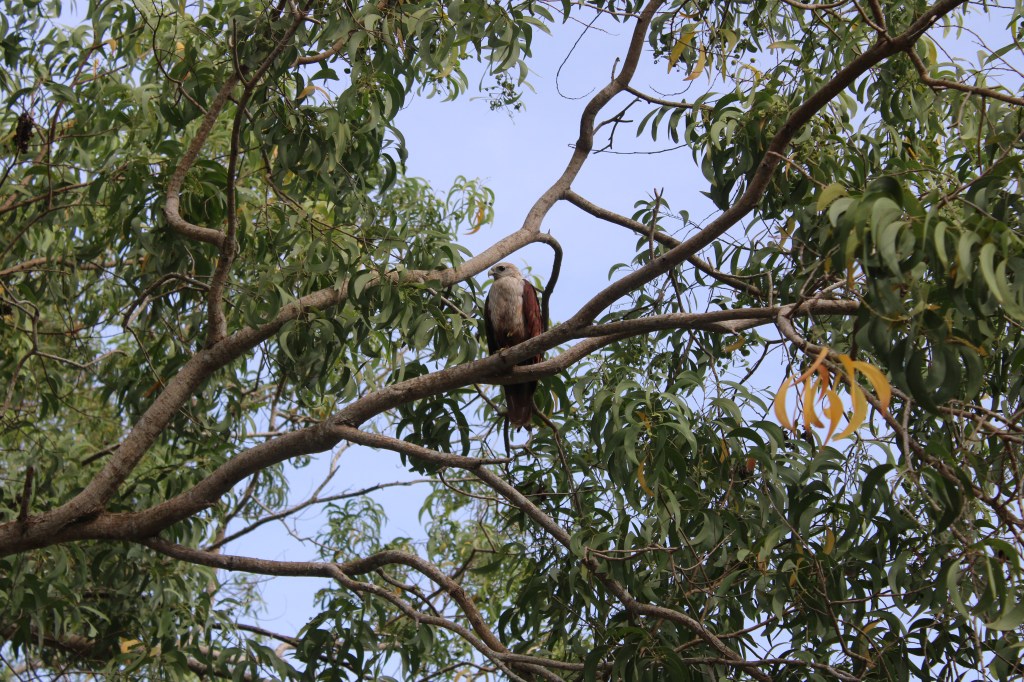
We exited the canal system in the lagoon where our resort was located. Most of the beach on the sandbar opposite the hotel was closed off due to the rough seas. But there was an area at the north end of the beach where folks were allowed to gather. So we had the boat stop there so we could at least claim that we had walked on the beach. Almost as soon as we arrived, a fairly large family suddenly converged around Lena and began to take pictures with her in the center. Kingston had discouraged other attempts to make Lena a photo op and tried to stop this attempt. But he acquiesced this time after he spoke to a couple of the family members. Then a large wave broke on the beach, dreched us all and scattered the photo family. Kingston explained later that the family was from a remote village and had likely never seen a Western person, much less a redhead. He was convinced that the photos with her would be treasured family possessions for many years.

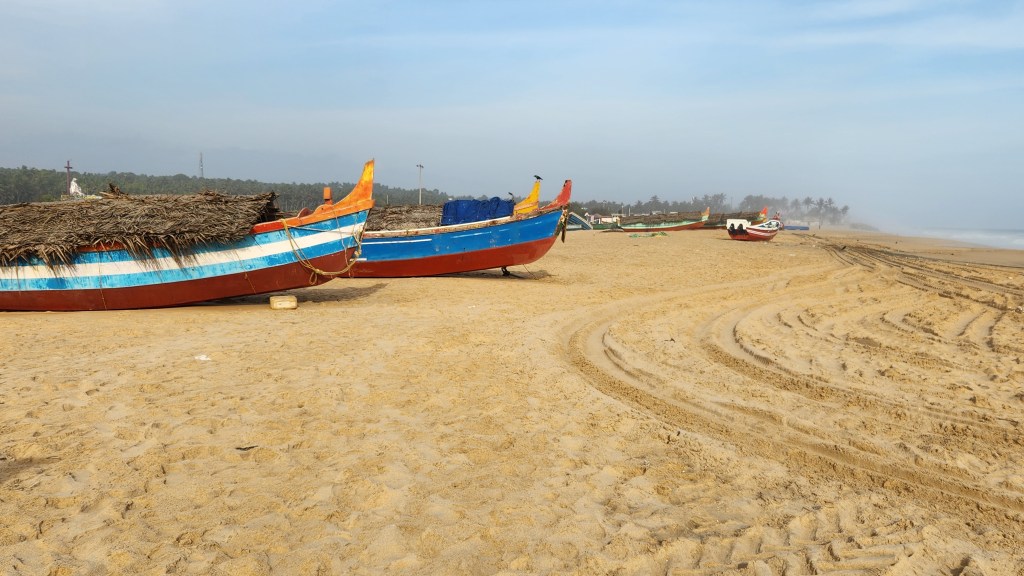
The waves were quite large, so we did not tempt another drenching by staying too long on the beach. We returned to the boat and had the guide take us to the south end of the lagoon where all the colorful fishing boats were left every night. Kingston’s Mom grew up in the village that used to be near these boats. The house she bought is inland some distance from the beach and at a higher elevation. Uncle picked us up near the fishing boats and we returned to Mom’s house for another home cooked Indian dinner.

 Ginger Without Borders
Leave a comment