
Anamudi is the highest peak in the Western Ghats (and south of the Himalayas in India), rising to over 8,800 feet. It is within the borders of Eravikulam National Park, the oldest National Park in Kerala. India did not gain its freedom from the British Raj until 1947 (more on this later), so National Parks in India are a recent development. The area that is now Eravikulam was originally a hunting preserve for British planters, in part because it is home to the reclusive mountain goat, the Nigiri Tahr. Found only in India, hunting (and poaching) had greatly reduced the Tahr populations during the colonial period. After Independence, the area remained a game preserve until 1971, when the State of Kerala took control of the area. Kerala declared it a wildlife preserve in 1975 to protect the remaining population of Tahrs. Three years later (1978), it was proclaimed the first National Park in Kerala. There are now an estimated 700 mountain goats in the 60 square miles of the Park.
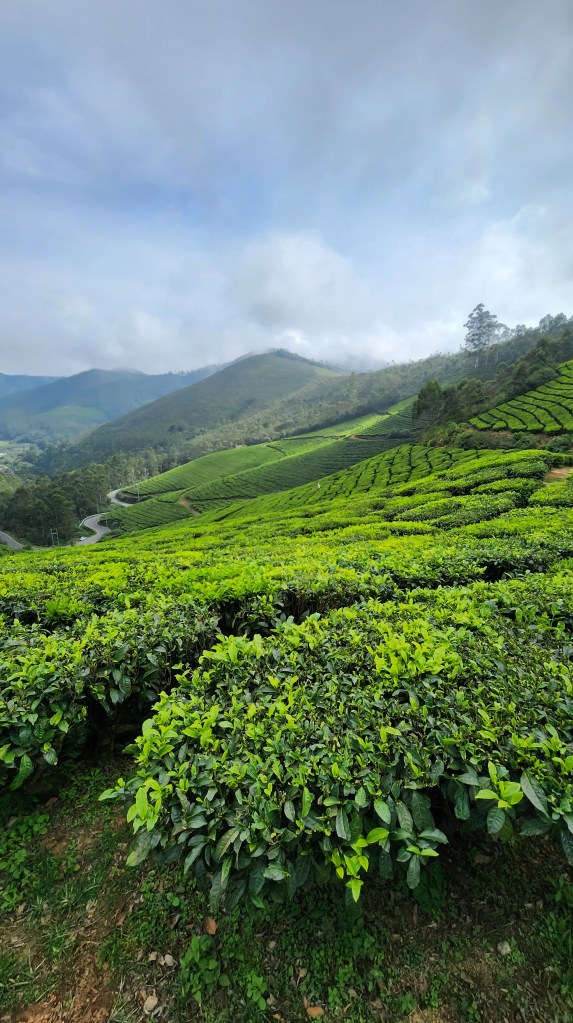
Once we transferred from the jeep back into the van, we headed further up the mountains, through acres of tea plantations, to the National Park’s entrance. We parked along the road (there was not a parking lot for the Park). Access to the Park is only permitted with bus transportion. So we bought our tickets and boarded the bus. About half an hour later we arrived at the bus stop at the base of Naikolli Mala, a “satellite” peak of Anamudi, at “only” 7,900 feet above sea level. From the bus station, there was a paved path ascending the base slopes of the mountain.
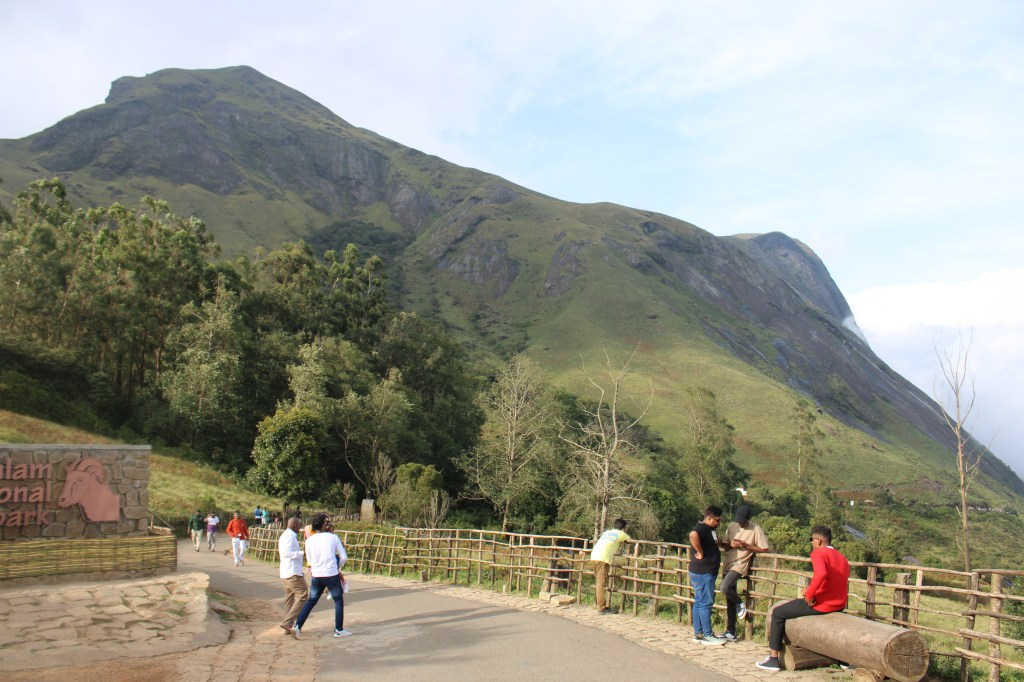
Above 4,500 feet, the wind action stunts the growth of the patches of evergreen trees scattered between undulating montane grassland, which is ideal for the goats and other wildlife. These patches of trees are called Shola Forests and play a very important role in the area’s microclimate. The tree areas retain most of the monsoon rain and release it slowly into the streams coming off the mountain. They also maintain a constant temperature of 58 to 68 degrees Fahrenheit morning to night all year while the surrounding grasslands can vary from freezing to 100 degrees Fahrenheit. I can verify that the water coming out of the Shola Forest below was as cold as any Western NC stream, even though it was a warm Indian day at this time. I only felt the water to determine its temperature. I dared not drink any.

It was not an easy climb up the pathway (Dawn only went to the second pathway switchback while Mom stayed in the bus station) but we finally made it to the end of the pathway after about half an hour. A rocky road continued for park rangers’ vehicles but the end for vistiors was clearly marked with signs and a covered picnic table. It was also a great area for pictures of the mountain.

But in spite of all the signs about how to be careful around the Nigiri Tahr (the covered sign to Lena’s right), we had not seen any evidence of one. So we reluctantly started back down the trail for the ride home. Then on the trail we chanced upon some New Zealanders with a guide. The guide had spotted a goat on the mountainside and was directing his clients where to aim their cameras. I gave Lena my telescopic lens (she is the better photographer) and strained my eyes to find the goat in the scramble of rocks and grass.
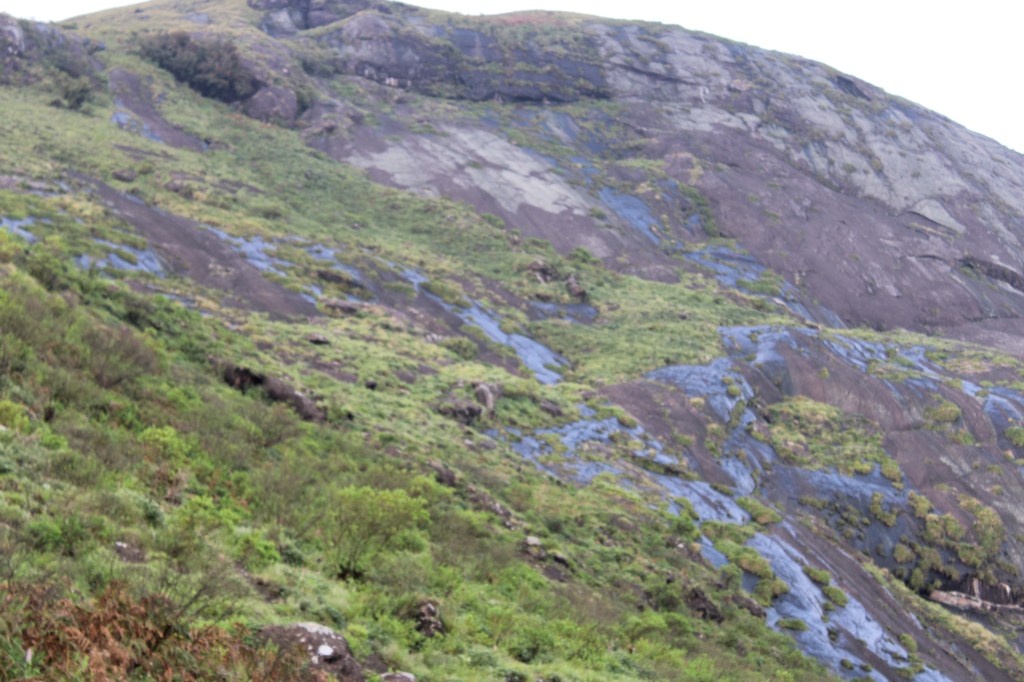
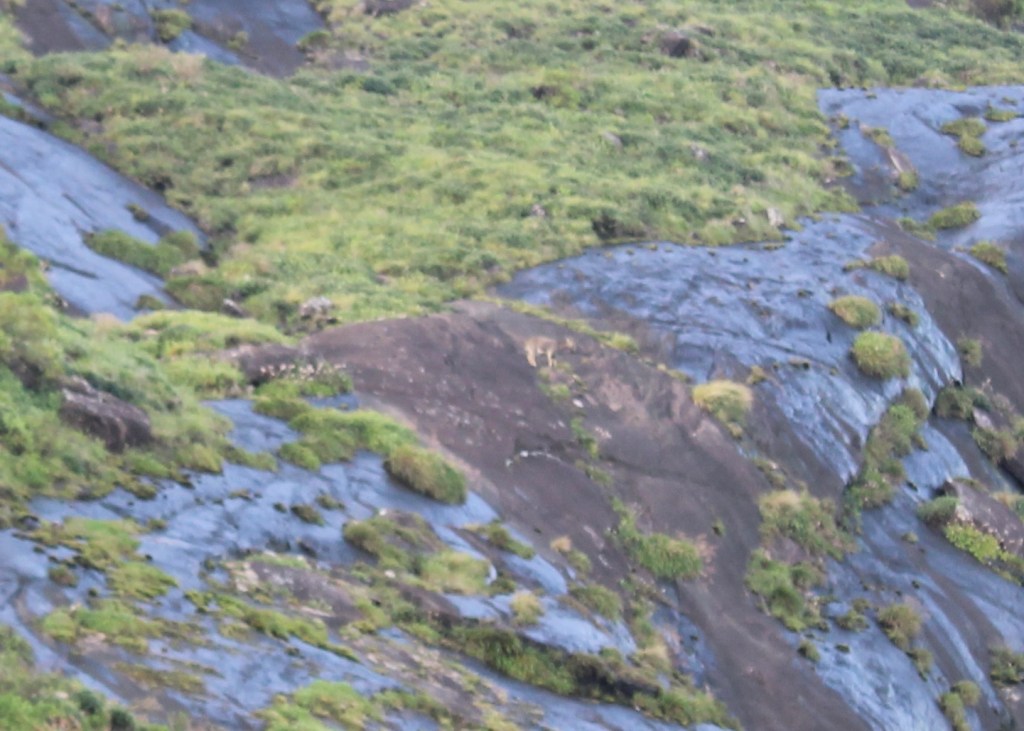
Part of what made the effort to photograph the mountain goat more difficult was that the weather had decided to move in. The clouds had pretty much obscured the view of the valleys during our climb up the mountain.

Misty clouds now came in at our level in waves until they finally closed off any clear view of the mountains as well.
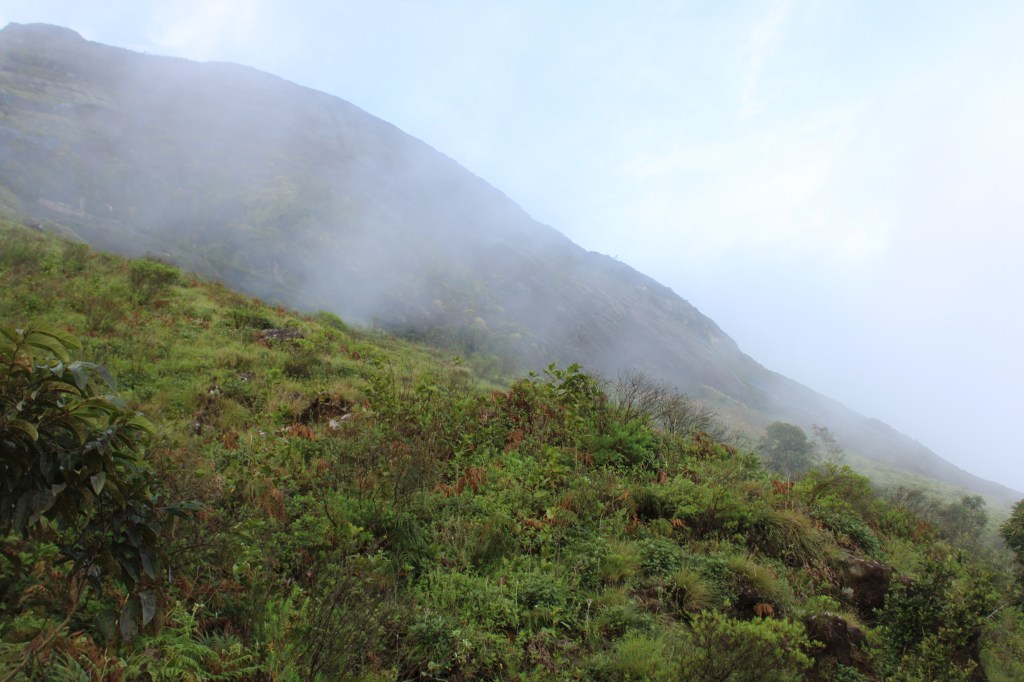
The clouds totally blocked the view for most of our journey out of the Park and only began to rise again once we left the Park.

It had been a long day and we were all happy to return to the hotel even if there was going to be another night of Bollywood videos at dinner. We had seen the elusive Nigiri Tahr!
 Ginger Without Borders
Leave a comment