
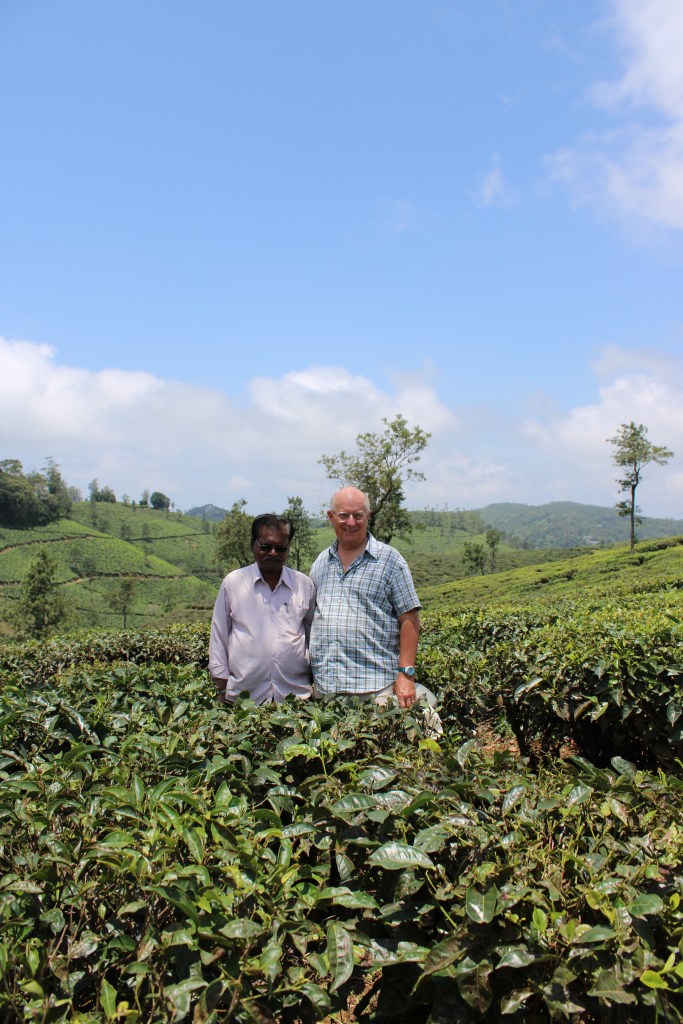
After seeing the mountain goats, monkeys and wild elephants of the Western Ghats, it was time to return to the backwaters of coastal Kerala, this time to the northern section of Kerala. Our journey down the two lane roads from the mountain took us by fields of tea plantantions and rubber plantations (yes, natural rubber has not been completely replaced by synthetics). It appeared that the driver took a number of back roads from what I could follow on the map function on my phone, but we were also not heading to the main city of Cochin just yet.

Our destination was Alleppey (or Alappuza) on the shores of the Vembanad Lake, a natural lake and the longest lake in India, and one of the top tourist attractions in India. It is the rice bowl of India. One section of the rice fields is among the few places in the World where cultivation of rice occurs below sea level. A unique feature of the Lake is the man-made 4,100 foot long salt water barrier designed to prevent the tidal action from the sea from introducing salt water into the fresh water flow from upsteam rivers into the Lake. The road to our hotel took us accross the top of this steel barrier. It is the largest mud regulator in India and essentially divides the lake into two parts: one with perennially brackish water (salt/fresh water mix like the intercoastal waters in North Carolina) and the second of fresh water from the upstream river flow. Maintaining the fresh water lake allows farmers to plant additional crops in the dry season. Like with the dams of the Western US, the main drawback of the barrier is that fish and prawns cannot migrate upstream. An additional issue created by the barrier is that it encourages the rampant spread of Water Hyacinth in the fresh water section of the lake.
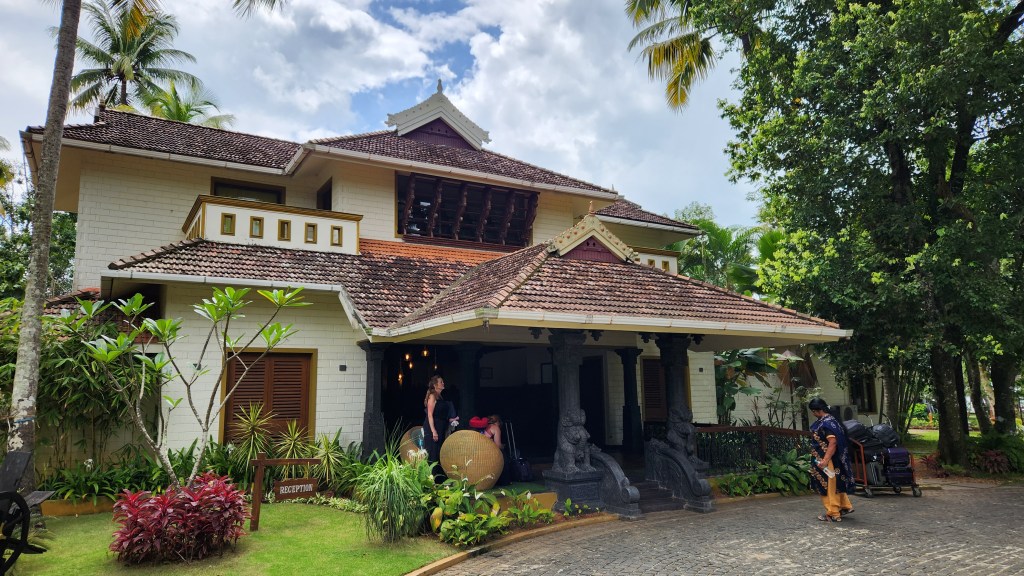
We again navigated through a residential area to arrive at our hotel, but, for a welcome change, we arrived at the hotel not too late in the afternoon. The hotel is built along the lakeside. The reception area was enclosed on three sides (which maintained a cool interior from the lowland heat outside), but the front entrance was open air. Once we checked in, as with the estuary hotel in Trivandrum, they brought a golf cart to carry our luggage but this time to separate bungalows.

We elected to have a “rest day” and Kingston, Lena and I changed into our swim trunks.

We had not seen other Western folks for several days and apparently we were the only ones at the hotel that afternoon. The hotel was doing some promotional filming and asked us if we would be willing to be photographed. Lena was still in the pool with Kingston and declined. I had changed and Dawn and I agreed. They set up a table with food and drinks for the photographer to get some photos but then a guy with a drone appeared. We spent the next 15 mintues being repeatedly buzzed by the drone as it zoomed around the pool and us (I believe it got some shots of Kingston and Lena in the pool). The drinks looked great but they had ice in them so we touched them to our lips but did not drink. The appetizers were quite good. Mom and Dad had gathered under the palm trees further down the lawn at a little table (upper left in the photo above) overlooking the lake and were just fine not to be a part of the film project.

Each year between August and September (after we had left the area), there is a famous series of paddled boat races, Vallam kali, during the harvest season. It is the oldest series but there are many boat races that occur on the lake at various times of the year. This is the district where St. Thomas, one of the 12 disciples of Jesus Christ, landed in India in 52 CE and preached Christianity. When the Portuguese arrived in 1498, they attempted to convert these ancient Christians to Catholicism. They had only with limited success since almost 20% of the population of Kerala still identify as St. Thomas Christians, not Catholics.
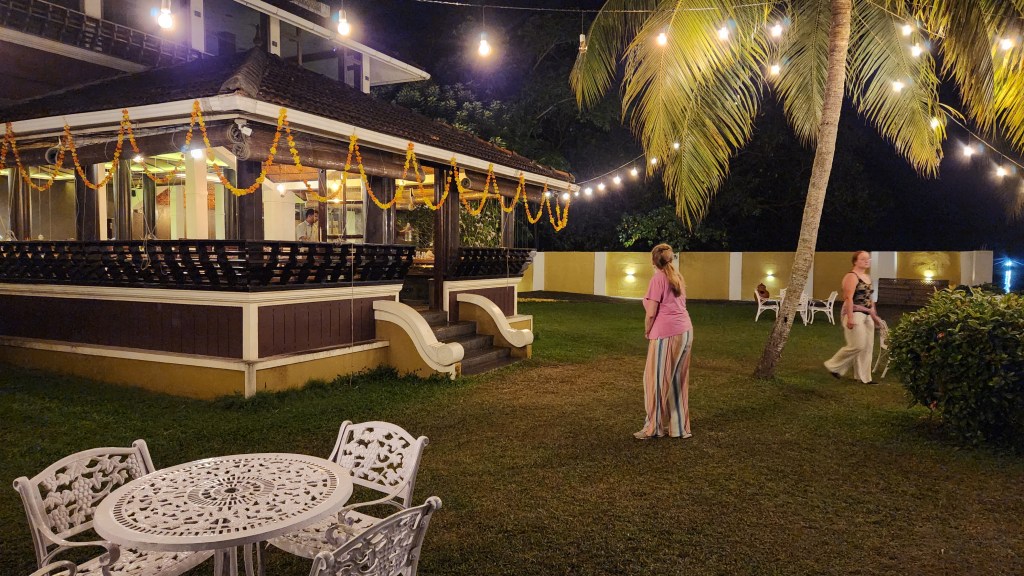
We had definitely left the cool mountian air but there were plenty of breezes coming off the lake this night, so it was a very pleasant way to end a travel day.
 Ginger Without Borders
Leave a comment