
The time had come to say goodbye to beautiful temperate Kerala. Even though this was August monsoon season in Kerala, we only experienced the rainy afternoon journey up the mountain to Periyar and the occasional nighttime cloudburst in Munnar. Otherwise we had clear to lightly cloudy days. Our last breakfast buffet with Kingston’s folks was in the hotel’s charming wood paneled restaurant with a lovely blue morning sky out the window. Kingston’s folks were taking the train back to Trivandrum for another week while we were taking a plane to New Delhi for our week long trip around india’s Golden Triangle.

We said goodbye to our Sprinter van and its driver/guide who spoke very little English at the very modern Cochi International Airport. He had been a very careful driver who had long conversations with Dad (sitting up front in the van) in Malayalam. According to Kingston, the driver slept in the van at night and our hotels provided him with bathroom facilities (along with the other drivers of its guests). Dad would give him rupees to buy food locally. We invited him to eat with us at various lunch stops but he always declined.

Kochi’s first airport was an airstrip built by the Kingdom of Cochin in 1936 just to serve government officials who were expanding the Port. The Kingdom allowed the British to turn it into a military airport during the Second World War to thwart possible Japanese air raids. After the War (and Independence), the Indian Navy operated the airport but allowed limited civilian use. When significant numbers of Indians (particularly from Kerala) began to be recruited to the Persian Gulf during its economic boom in the 1980’s, Kerala decided to support the interests of its expatriates working in the Middle East by building a modern airport.
In 1994, Cochin International Airport (the name of the town did not formally revert to Kochin until 1996) is the first public-private airport partnership in India. The Government of Kerala owns 33.36% and is the largest single investor. Foreign companies own 5.42% while 38% is owned by more than 10,000 individual investors in 29 countries, mostly non-resident Indians. The rest is owned by various Indian companies.
What is even more remarkable about this public-private partnership is that it is a project proposed by Kerala’s ruling party, the Left Democratic Front. The Front is the popularly elected coalition of left-wing parties and the Community Party of India (Marxist), the oldest communist party in India which was founded in 1925. There are now various communist parties in India. The Indian states of West Bengal and Tripura also have democratically elected Marxist governments. The Front has been in power in Kerala since 1980. Kerala is the first state in Asia and the second in the world to have a democratically elected fully communist-led govenment. Prime Minister Modi’s party, the Hindu Nationalist BJP, only got its first seat in Kerala in 2016. It failed to win a seat in the 2021 elections even though 55% of Kerala’s population is Hindu.

A Local Committee Office of the Communist Party in Munnar. Communist party flags (like this one) are a frequent sight in Kerala.
And there is more to this remarkable economic development airport. Opened in 2015, it is the first fully solar powered airport in the world with the first solar powered carpark in the world. In 2018, the United Nations named the airport a Champion of the Earth, its highest environmental award. It is the third busiest airport in India in terms of international travel, carrying over 8.8 million passengers in 2023 by serving 31 international and 22 domestic destinations.
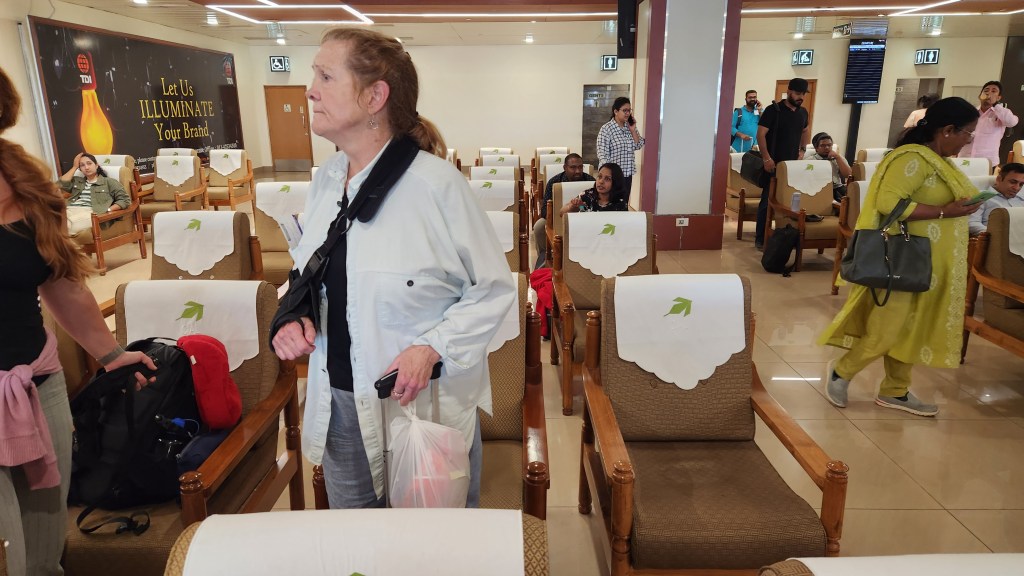
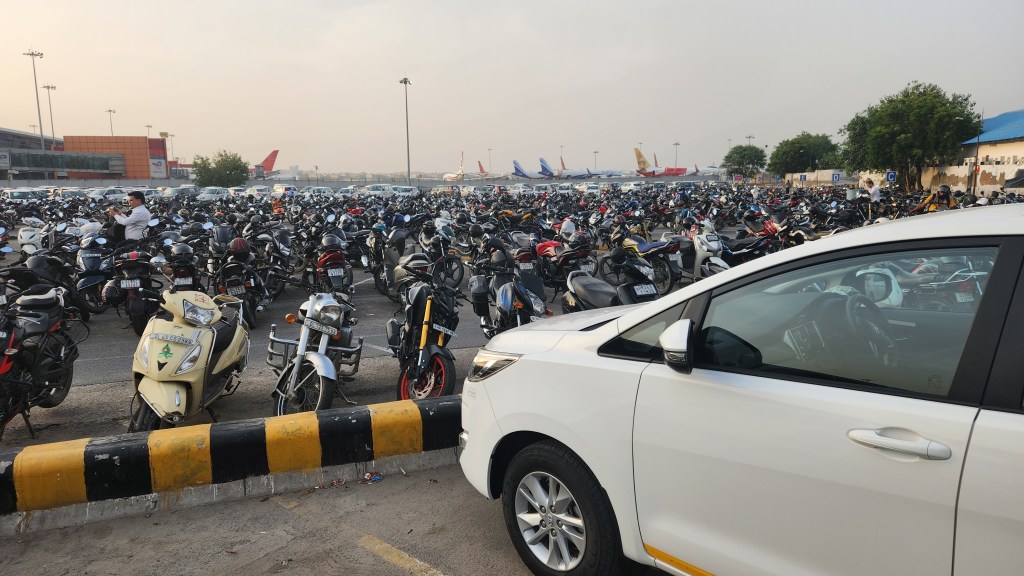
The distance from Kochin to New Delhi is 20 miles further than Raleigh to Denver, so we had over 4 hours in the air before we landed at Indira Gandi Airport. It is India’s largest and covers over 5,100 acres. It has separate parking lots for automobiles, rickshaws (the three wheeled taxis), and motorcycles.
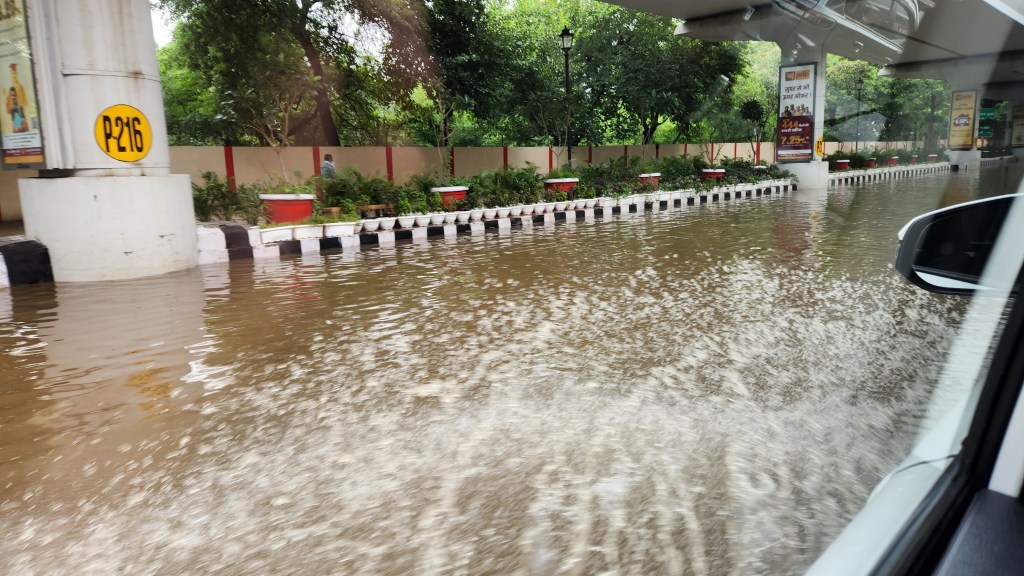
To this point during our visit to India, we had suffered very little from the monsoon season. However, New Delhi had experienced significant flooding in July. Over 6 inches of rain fell in just one day and the river reached an all time record. Over 16,000 residents had to find new shelter and the city’s water treatment facilites were forced to close. We had seriously considered deleting our trip to the Golden Triangle when we saw these news reports. Luckily, the rain had fallen off in early August while we were in Kerala, so we did not cancel our reservations. However, our taxi to the New Delhi hotel was delayed by the traffic jams caused by some of the remaining water in the roads.
By the time we checked in to the hotel, it was time for the dinner that was included with our stay. Knowing that Kingston would have a full day of sightseeing planned, we opted for an early bedtime. Before I get to that though, I will need to dive into a little more Indian history. That will be the next entry.
 Ginger Without Borders
Leave a comment