
On our return trip to Jaipur, we took a route along the Man Sagar Lake that borders Jaipur. In the center of the lake is a Rajput palace that was originally built in 1699, the Jal Mahal or “Water Palace.” The building and the lake were later renovated and significantly enlarged when Jai Singh II decided to build his new capital fortress at Jaipur.
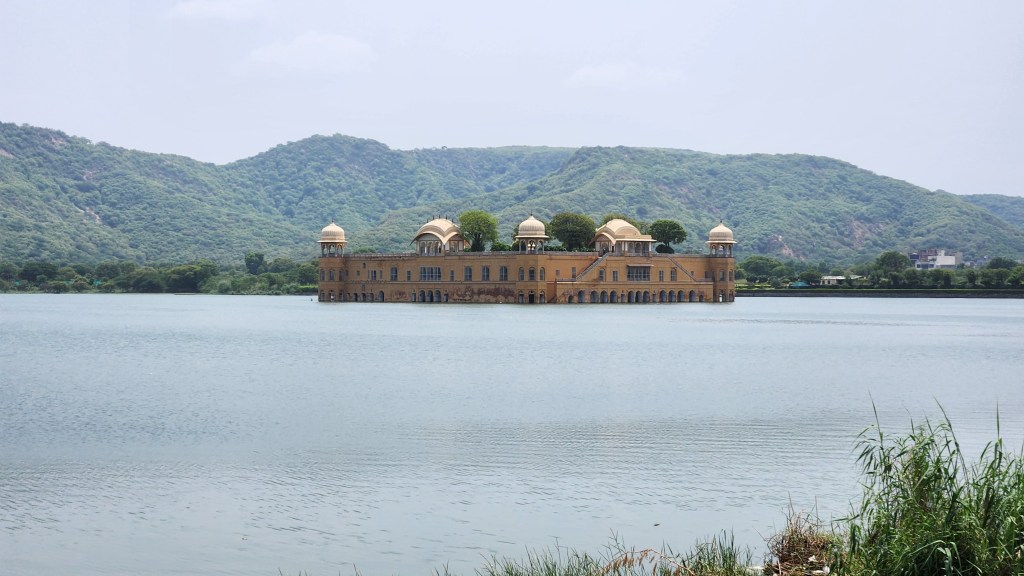
We stopped our van along the boardwalk of the lake to take pictures of the Water Palace. While we were standing there, I noticed a car unloading some women dressed in the traditional costumes of Rajasthan. They immeditely headed in the direction of our cameras, and held out their hands for money (if we wanted to take their pictures). Like the snake charmer, we passed and headed in the opposite direction and their car soon came by and picked them up to search for more receptive tourists.
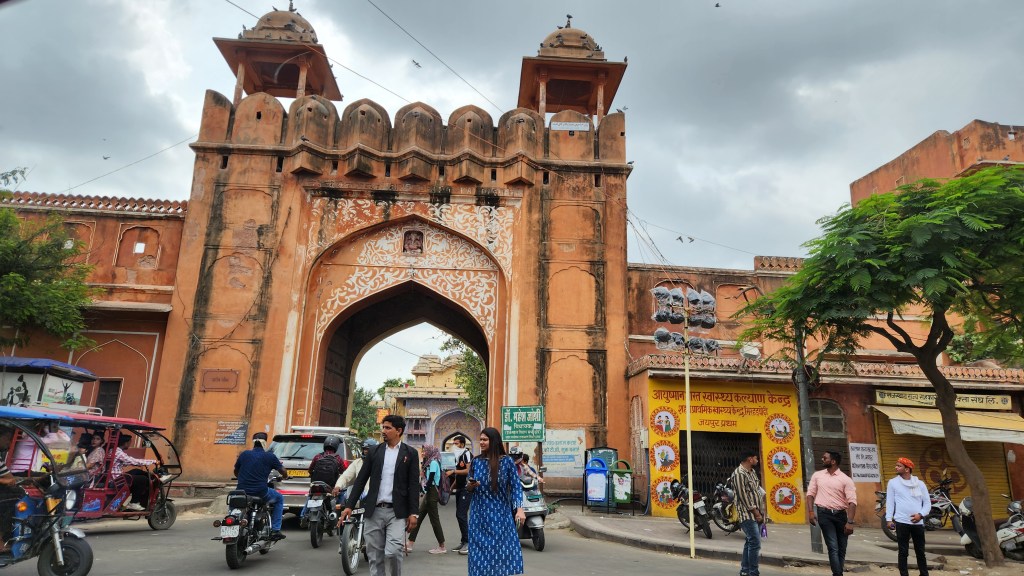
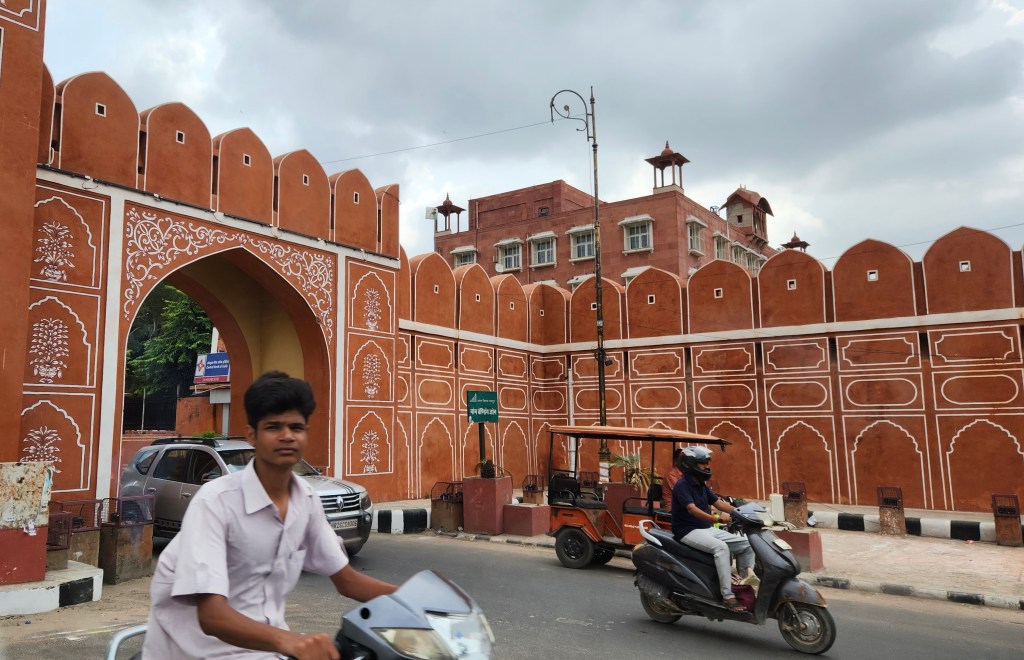
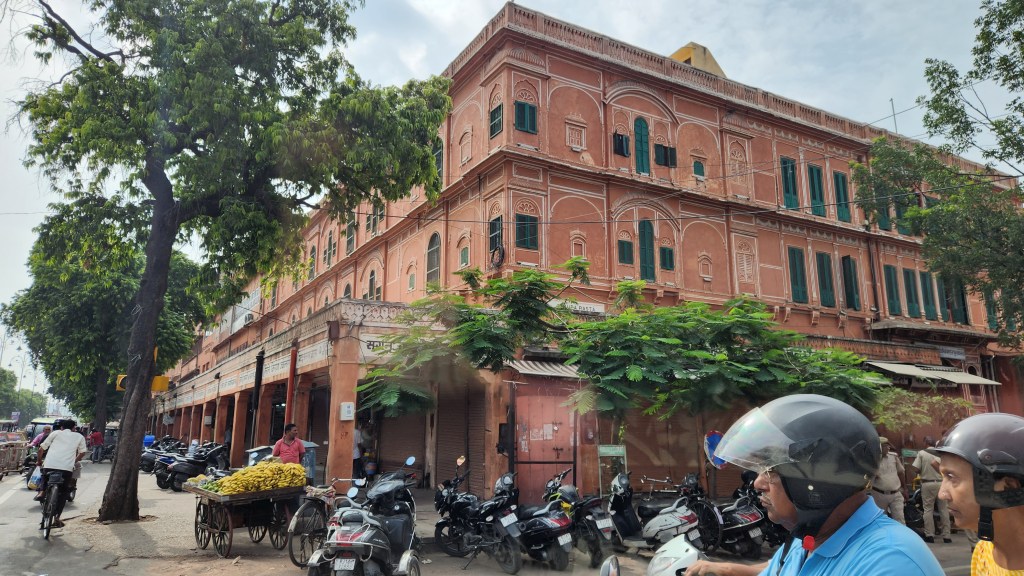
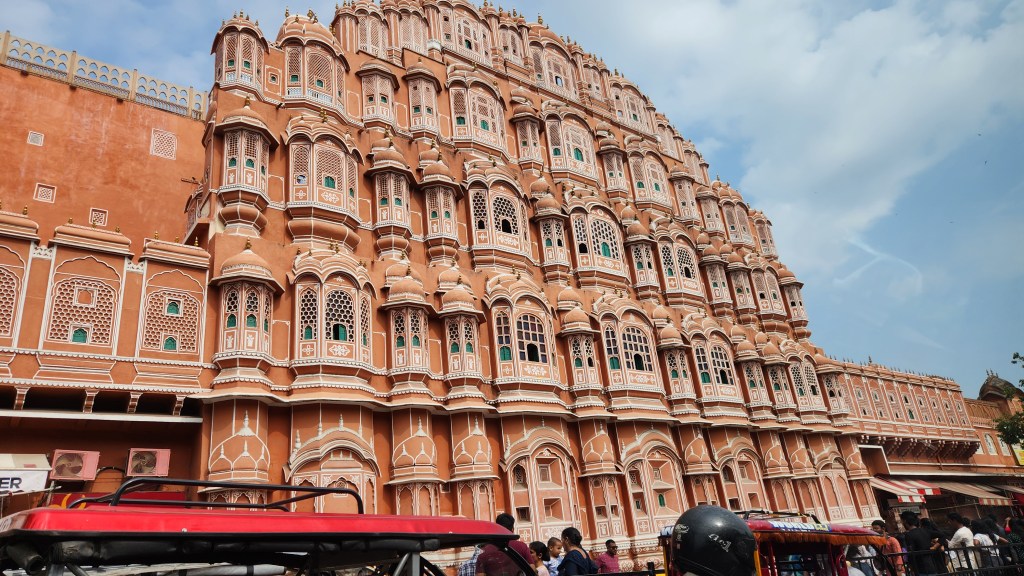
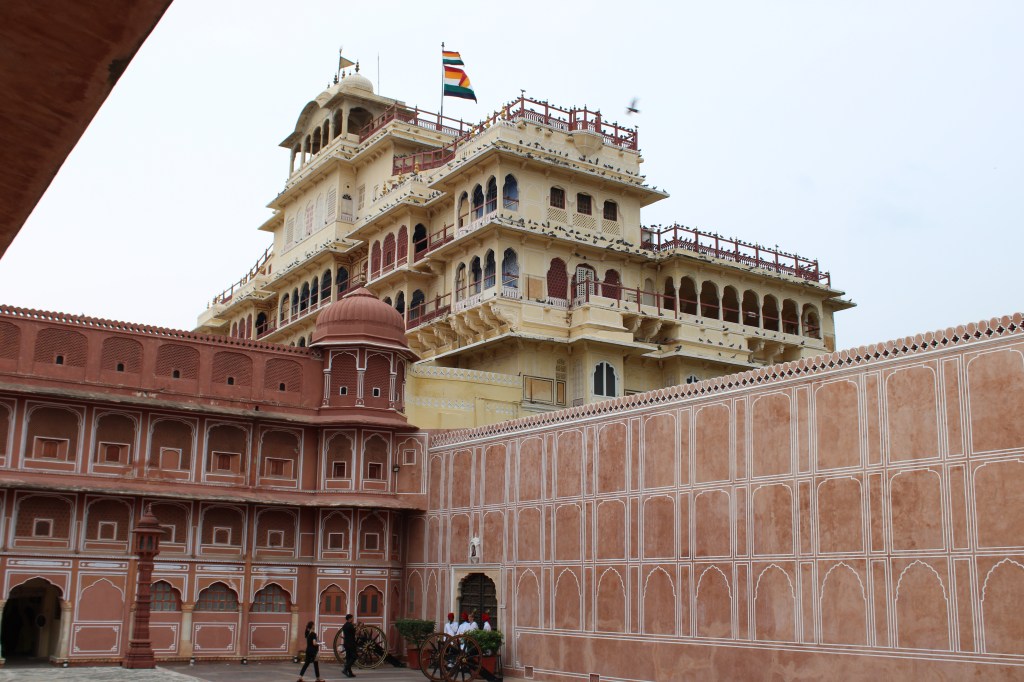
The old city of Jaipur (inside the original fort walls) was divided into nine blocks, two of which contained state buildings and the palace. The other seven were allotted to the public. The sectors of the city are defined by broad streets that are 111 feet wide, giving the city the nickname “the Paris of India.” The walls protecting and surrounding the old city of Jaipur run for 17 kilometers and are two to three meters thick and six to nine meters high with seven fortified gates. Three gates face east, west, and north (toward the original capital city of Amer). The city’s buildings were originally mostly white or yellow in accordance with the building material used. When it was announced that the Prince of Wales would make a state visit to Jaipur in 1876, the King of Jaipur ordered all buildings to be painted pink (the color of hospitality, or an attempt to compete with the red sandstone of Delhi, depending on the source). The colored walls impressed the Prince of Wales, who declared Jaipur the prettiest city in India and reportedly gave the city its nickname, the “Pink City” (some sources attribute the nickname to a British reporter traveling with the British entourage). The pigment originally came from Kanota, about 10 miles from Jaipur, but mines were dug closer to Jaipur when the King passed a law in 1877 making it illegal for any building to have a color other than “Jaipur pink.” The law is still in effect. Our guide indicated that the colors are refreshed about every 10 years.
Adjacent to his palace in Jaipur, Jai Singh constructed a collection of 19 astronomical instruments of stone (the “Jantar Mantar”), including the world’s largest sundial, because the tables in use at that time did not match his calculations. He wanted more accurate astronomical tables and built five observatories in order to compare readings. The Jaipur Jantar Mantar observatory is a UNESCO World Heritage Site. These instruments allow observation of astronomical positions with the naked eye. At the peak of its construction, at least 23 astromomers were employed. The astronomical tables Jai Singh created were used in India for over 100 years, particularly by the Hindu population to determine auspicious times for significant events like wedding dates.

Kinston walking by the Vrihat Samrat Yantra sundail, the largest stone sundail in the world. It can give local time to an accuracy of 2 seconds. Other stone instruments are to the left of the picture.

 Ginger Without Borders
Leave a comment