
Our return flight to Mumbai was not until late afternoon, so the adults gave the kids a long time for a final splash in the hotel pool. Then we loaded up the mini-van and drove to downtown Panaji. We parked near the main square named Praca Da Igreja (Church Square), because it is at the base of the hill on which the baroque style Our Lady of the Immaculate Conception Church is built. The main tower in the center of the Church facade features the bell from the St. Augustine monastry in Old Goa that was moved here in 1871.
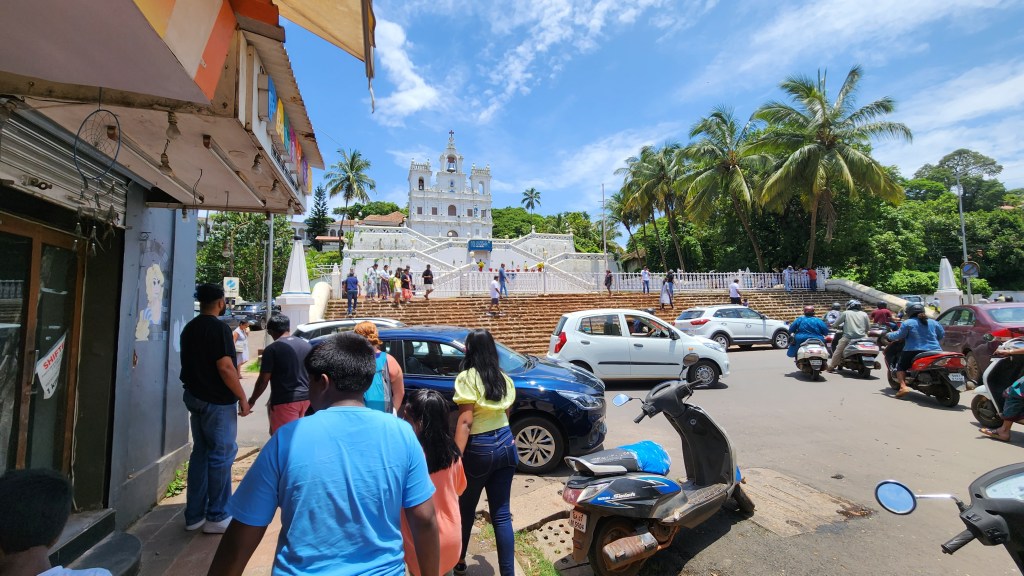
From the Church, we wandered into the Old City of Panaji again before climbing the steps up to the site of the courts of Goa and the municipal bulidings of “new” Goa overlooking the old Portuguese quarter.


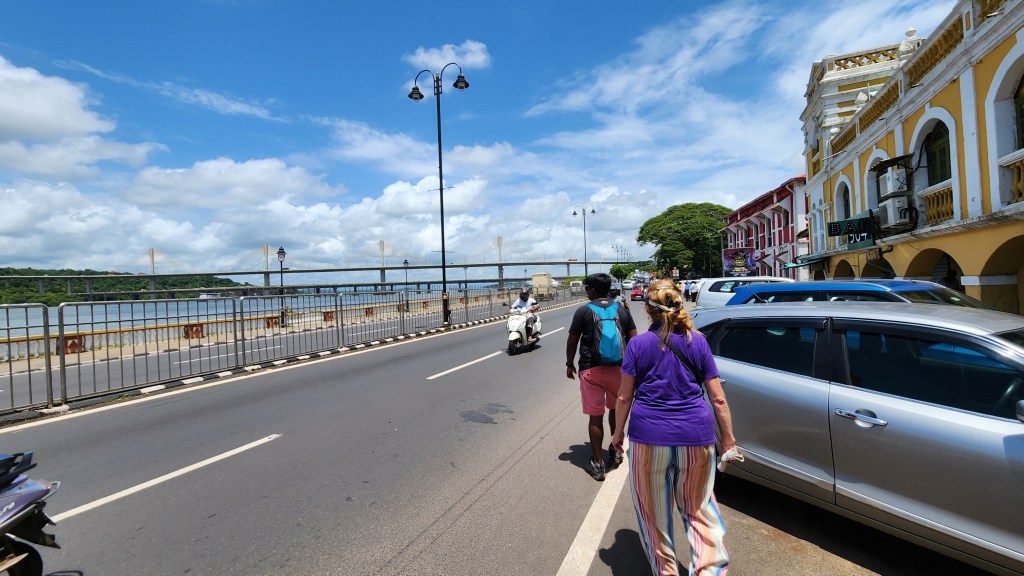
By the time we returned to the square in downtown Panaji, a group of young women with babies in hand had also arrived at the square and immediately began to solicit donations from us. It was another in a long line of the recurring experiences that any Western traveler to India must settle in their mind. We had met our first group of young women with sleeping babies strapped around their waists on the Juhu Chowpatty Beach in Mumbai. Panhandling (the common US term), begging or cadging is not unusual in nearly any urban setting anywhere in the world and we have experienced it often during our travels. Even after reading the warnings on tourist sites as we prepared for our visit to India, I was not prepared for how many folks would solicit donations and how persistent they could be. In India, our white skin attracted their attention at nearly every tourist attraction and even while sitting in our vehicles when we were just waiting for the light to change at many urban intersections. The Supreme Court of India in a case challenging regional laws against the practice observed that socio-economic issues force many people to beg to eke out a livelihood due to the absence of education and employment. It wrote that that criminalizing begging “violates the fundamental rights of some of the most vulnerable people.” Yet many states in India still have laws prohibiting begging. While waiting for the family to gather for lunch, I checked on the local police website in Goa to determine if the practice was illegal there. The police site did not specifically state whether it was prohibited but had a specific warning that tourists should not give anything to street people because in most instances the solicitors were (some willingly, more often not with respect to younger people) beholding to criminal gangs that collected the receipts they gathered. In particular, the site noted that most of the babies were no relation to the “mothers” and were often drugged to appear asleep. It was unsettling knowledge.
We ate a late lunch near the square where we parked. Like many restuarants in India, the upper level was air-conditioned but the lower level was not. We were able to find a table on the upper level, which was good because it was still fairly hot in Goa. We did have to split up into several tables (there were 14 of us) but had a great last meal in Goa. Then it was off to the airport and our flight back to Mumbai.
 Ginger Without Borders
Leave a comment