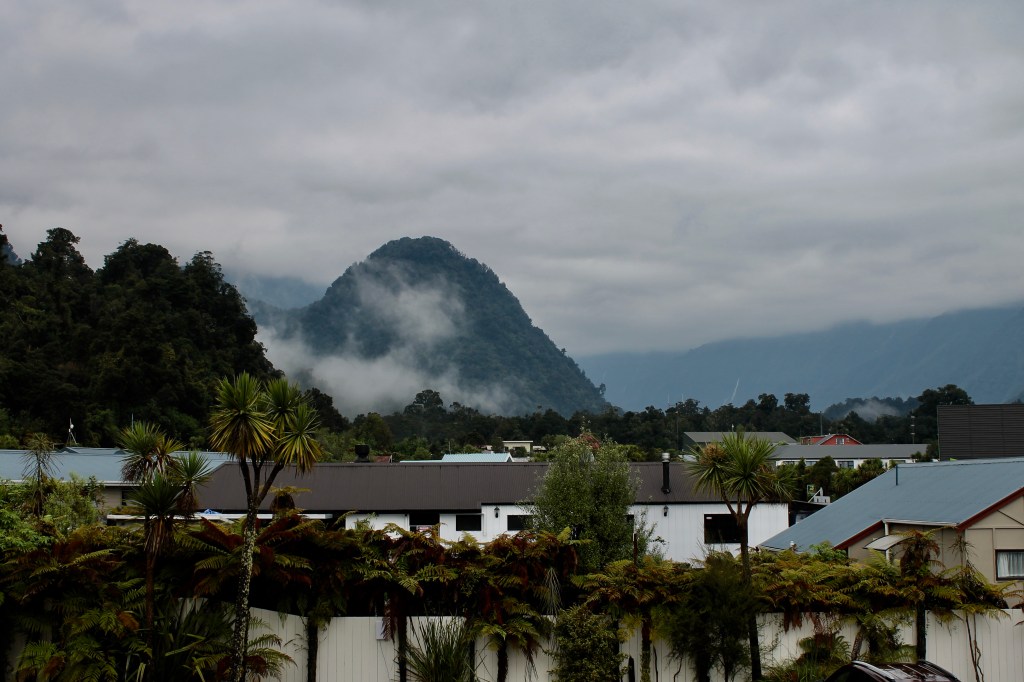
The man at the hotel’s reception desk said if you could see the waterfall from the parking lot, it was a good day to see the glacier. When we arrived too tired to make that walk, you could see the waterfall and the snow on the mountain tops above it (refer to my last blog). When we woke up the next morning, you could barely see the hill behind the hotel as the rain from the Tasman Sea set in.
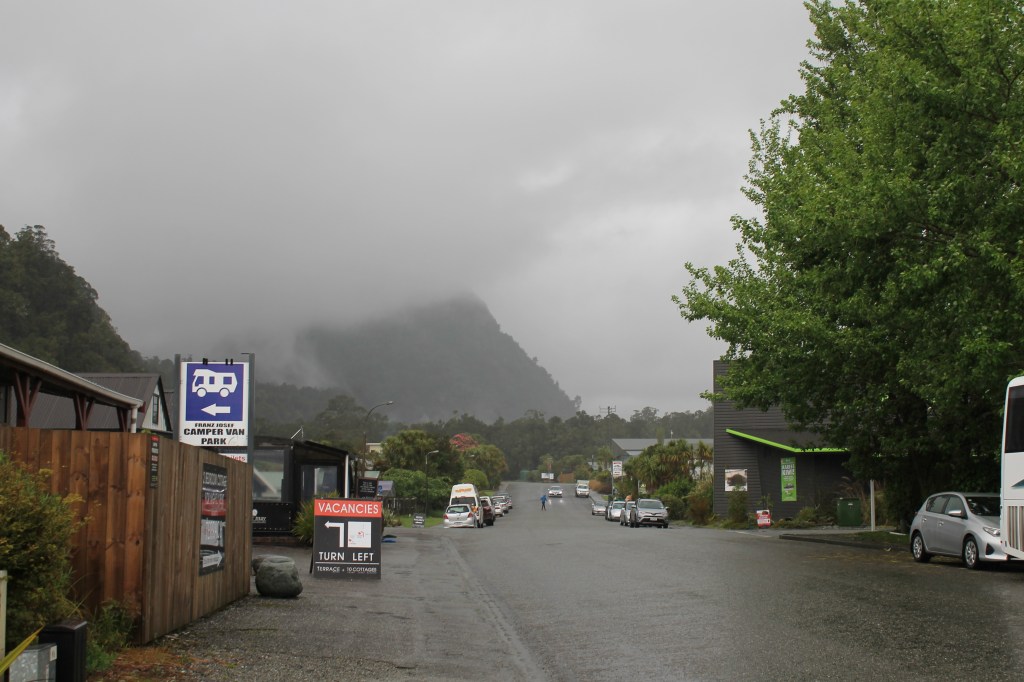
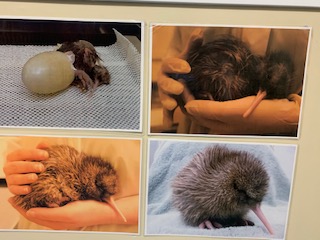
So we went back to bed and had a good “lie in” (British for sleeping late). The town of Franz Joseph is like a lot of tourist towns in any country, there are not many residents (444 at the last NZ population count) but a lot of hotels, restaurants and shops. However, it is home to a rescue center for the kiwi (the iconic flightless bird of NZ and the source of their national nickname). And this center works with not just any kiwi (there are four species), but the most endangered (only 400 currently) and smallest kiwi , the rowi. Since this was likely our only opportunity to see a live kiwi (and we like to support conservation efforts), so we decided to get out of the rain and take the rowi center tour.
When New Zealand was “discovered” by the western world (the Maori had been living here for 900 years), the only mammal was a small bat. But there were tons of different birds. Many of them were flightless and nocturnal because they had no mammalian predators. Their only predators were hawks who hunted during the day (the only owl in NZ is quite small and no threat to the large kiwi). The Brits brought rabbits with them, who soon were overabundant (duh, they had no predators other than man). So the settlers imported the British weasel, the stoat, to “control” the rabbits. Well the stoats decided that the young chics of the flightless birds were a whole lot easier to catch than rabbits. With their chicks being eaten by stoats, the iconic kiwi soon became a rarity (even though the adult can live up to 60 years in the wild and fight off a stoat with its claws).
To save their national symbol from extinction, the human Kiwis started a program similar to the one used by Australians to save their national symbol, the koala. National park rangers collect eggs from kiwis in various national parks (because the hatch rate in the wild is so low). Once the eggs hatch, the young chicks are moved to an island that has been cleared of stoats. At about one year old, the kiwis have learned how to fight with their sharp claws, so the stoats are no longer a threat. The kiwis are then moved back to protected national parks. The Franz Joseph facility had three eggs in incubators, three hatchings being warmed and two young kiwis being prepared for release to the island (we got to watch those running around their “night enclosure”). It has been a successful program increasing the rowi from its low of only 200. And NZ has begun a national effort to eradicate the stoat, which is proving fairly difficult.
After the rowi tour, we headed for the pub for Dawn’s gin and tonic, my dark beer and some rugby for both of us. The rain was fairly heavy during the night, so we had another lie in the next morning. When we finally looked outside, you could see the waterfall in the national park and there was no rain falling. So we booked an ecotour of the glacier.
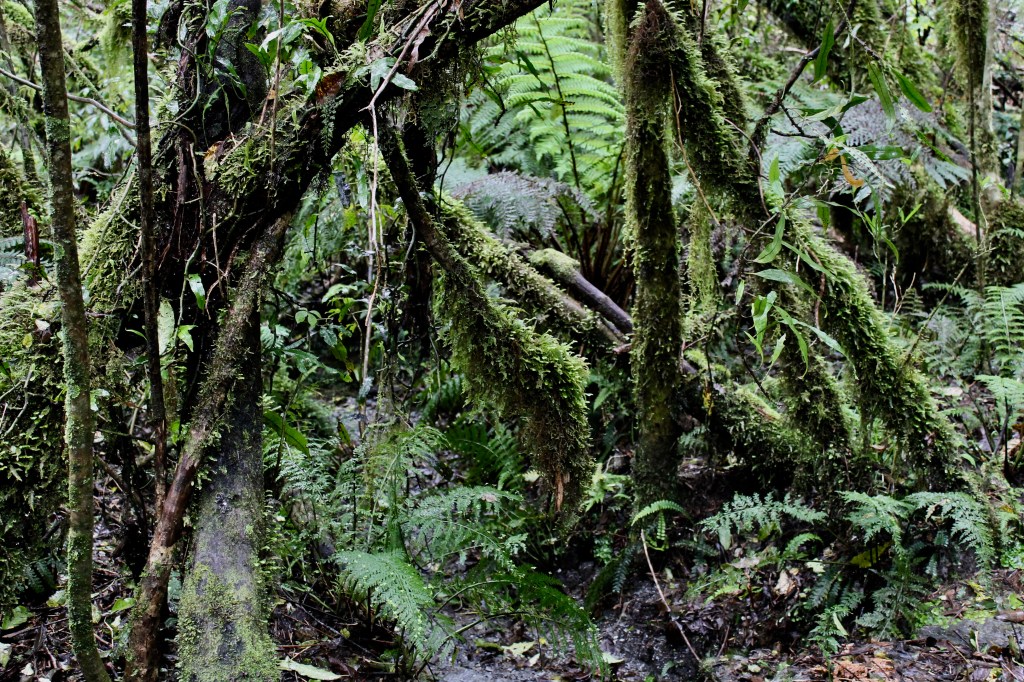
The tour folks provided us with still wet boots and dry socks because the trail to the glacier crosses several streams created by all of the rain. As we left the ecotour office, the rain started again. Similar to the day before, the rain varied from none at all to a light mist to a steady (but never hard) rain as we walked through the rainforest. Even more than what we saw in the Australian rainforests, there were numerous ferns, lichens and algae growing on every tree in sight (again, this is the wettest place in NZ).
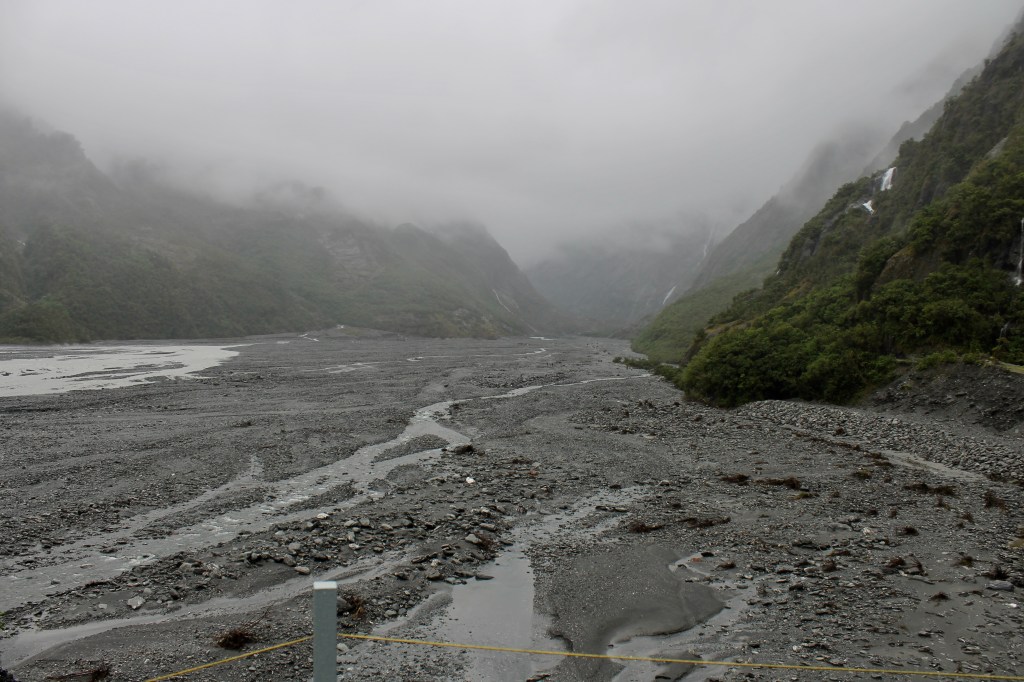
And then we got to the rock field created by the glacier. This glacier actually grew twice since the 1980’s with all the snow created by El Nino events. And during the previous March, there had been so much rainfall that this entire stream bed was filled with rushing water. The river washed out part of the road to the park and the one lane bridge to the town. We crossed a temporary bridge built in 17 days by the NZ army.
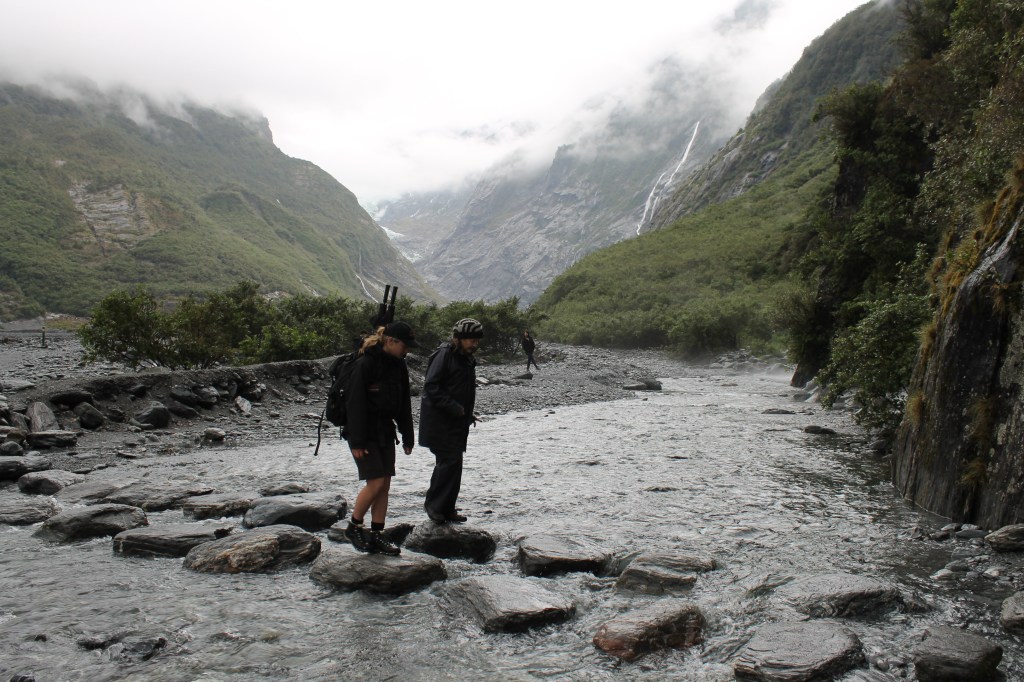
And here is where we found out the tour guides were not kidding. We walked through the stream trying to balance on the rocks but still getting wet shoes. And this was the only steam that had a rock path through it – we just walked through about seven more streams on the way to the glacier. The streams of crystal clear rain water were all shallow but the stream beds were filled with the small to medium sized round rocks worn by the river bed. I tripped on one such rock but managed not to fall into the stream.
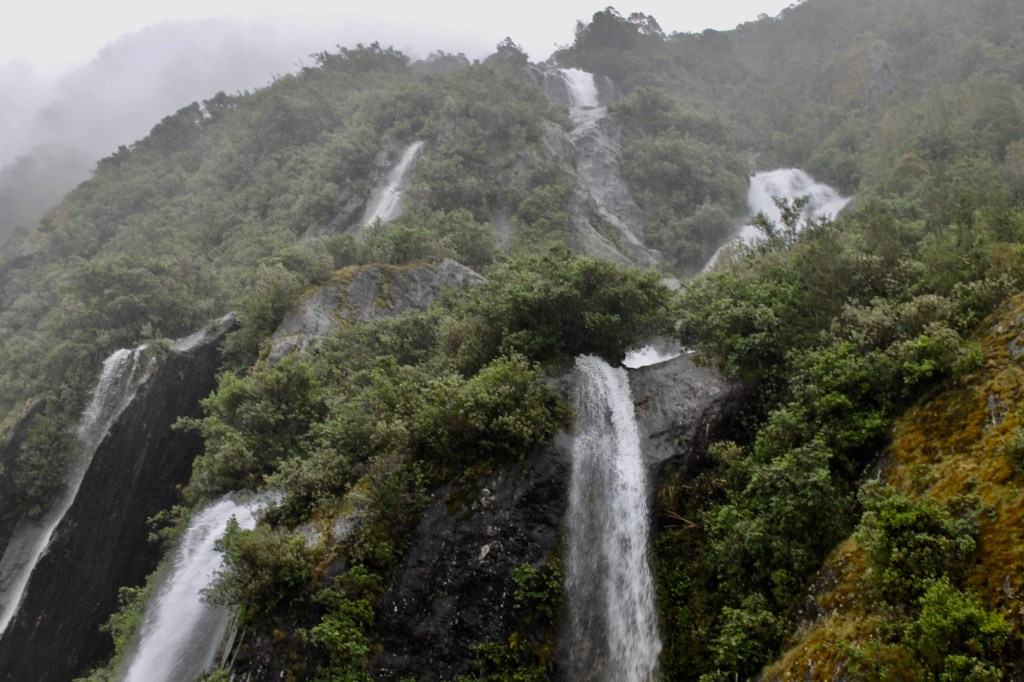
The streams are the product of numerous waterfalls created on the surrounding mountain sides by the rainfall (and most do not exist if there has been a period of several days without rain). The waterfall in the center of the picture below is the only one that runs all year.
The tour guide took us off the public path down to the side of slate gray river (full of rock dust from beneath the glacier) and collected some of the glacial ice that had been deposited on the bank. Dawn’s birthday was today (it is still yesterday in the US – so not sure when to celebrate), so this became Dawn’s 64th birthday picture.
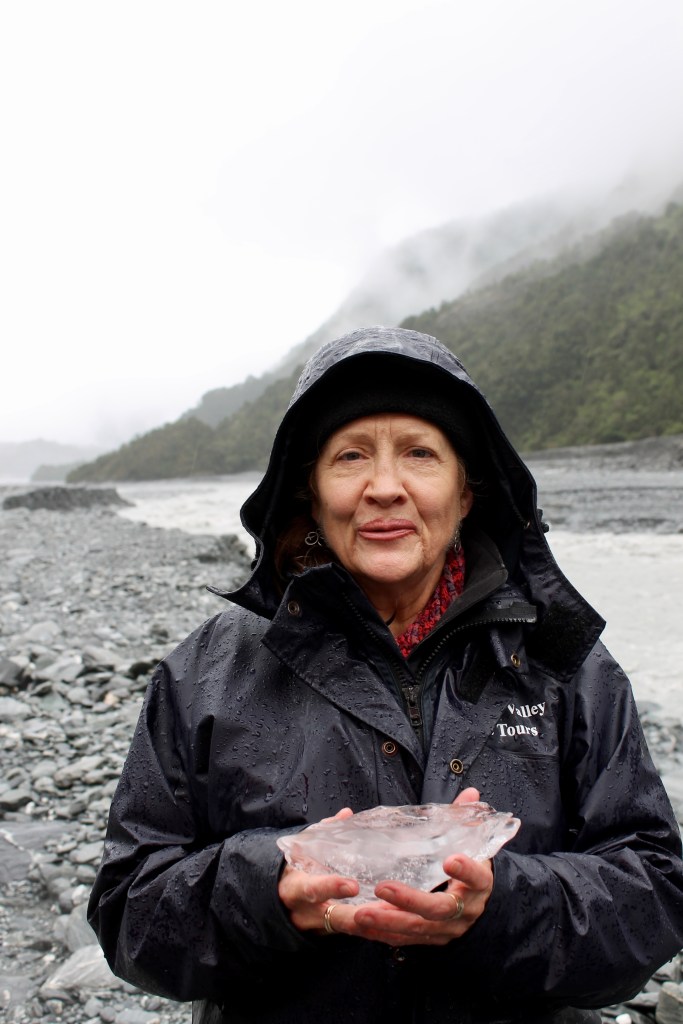
Dawn holding glacial ice gathered from the riverbed.
We returned to the public track and entered the moraine field left by the last two expansions of the glacier from 1983-1999 and 2004-2008.
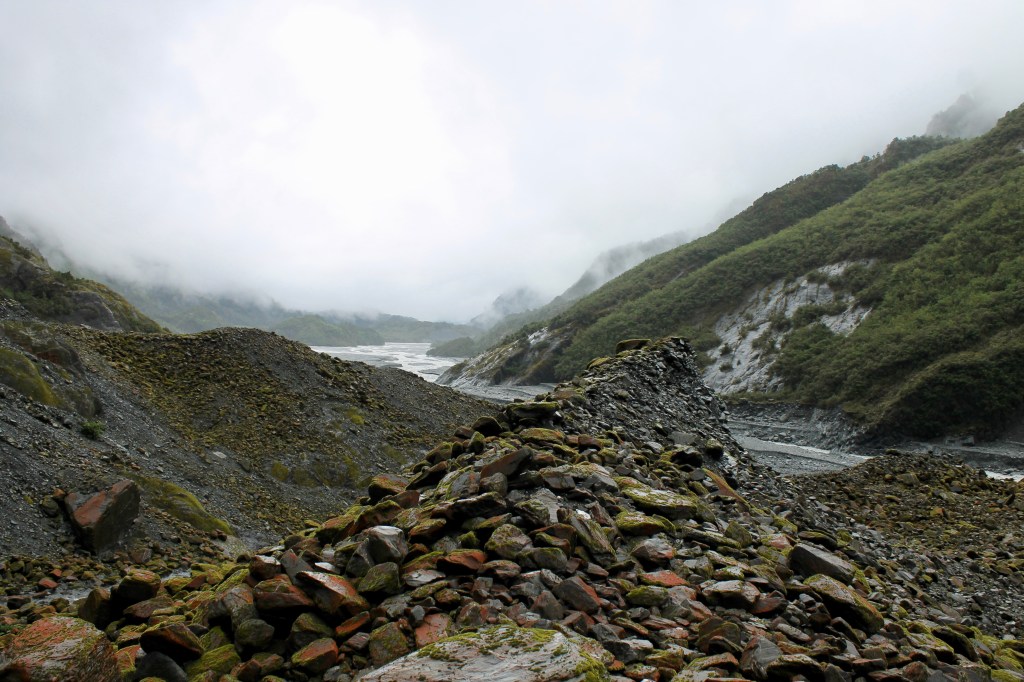
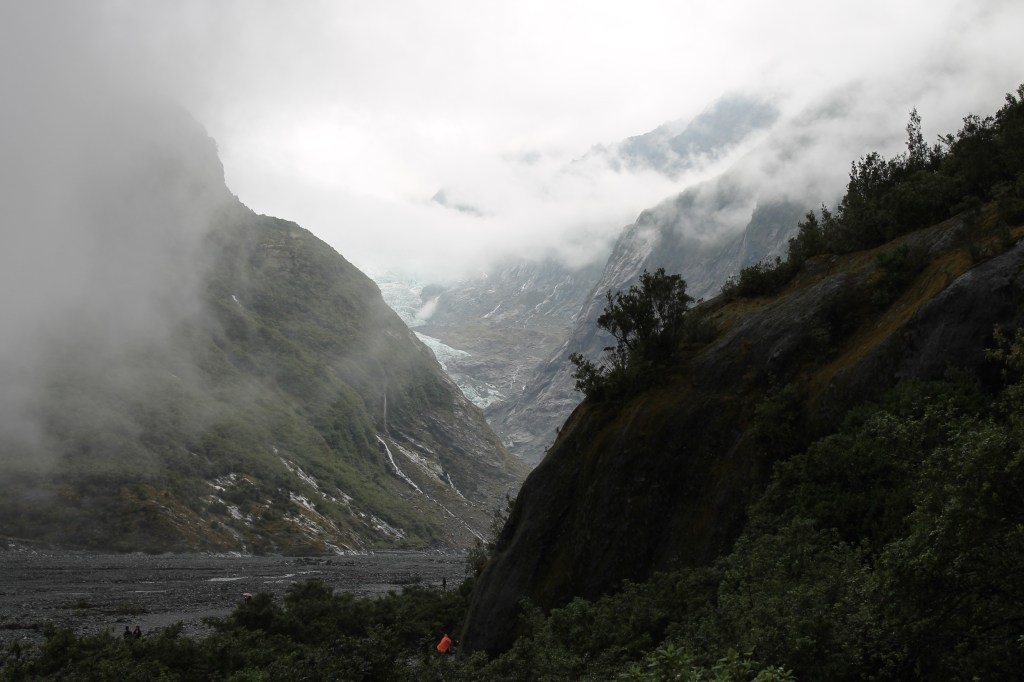
And then the glacier came into view with its blue center and dirty edges and the river of gray water coming from beneath its ice.
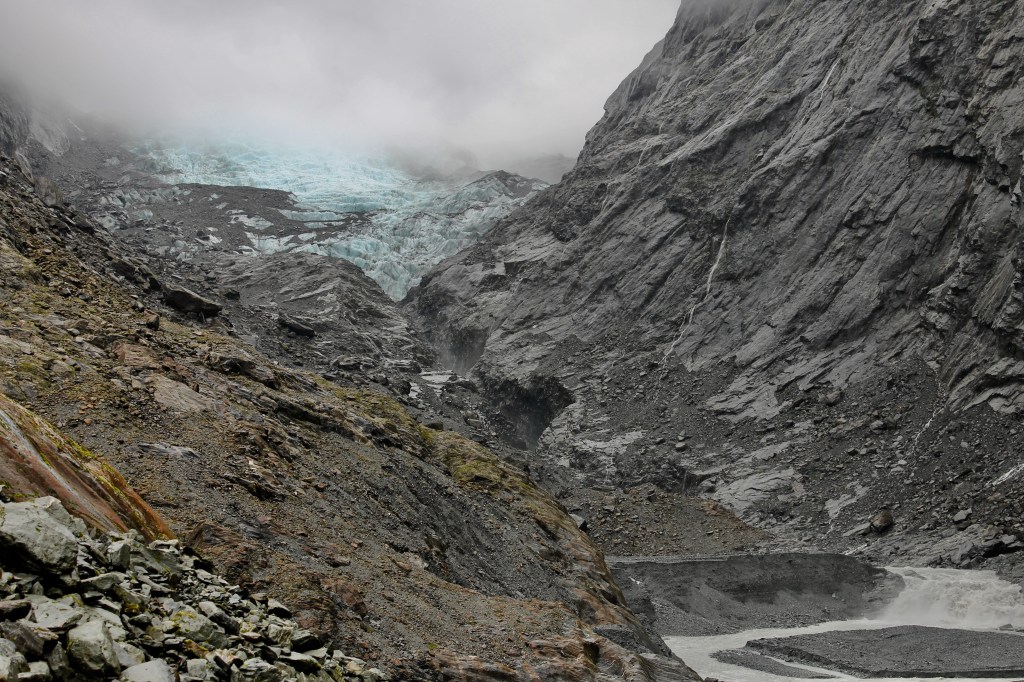
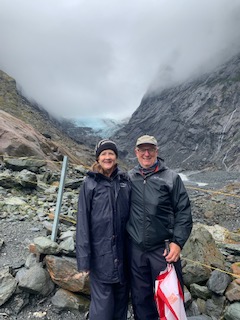
We returned through the streams. My feet were so soaked that I didn’t even bother using the stones as we crossed the last stream. Dawn’s feet got cold. While my feet were totally wet, they were only cold while in the streams. And the air was moist but not particularly cold at any point. As we were walking up the track out of the river bed, the clouds moved up from the town (they had always moved from the glacier toward the town before) and covered the view of the glacier.
And, of course, the rain (which had come and gone all day) completely stopped by the time we got back to the ecotour office. But it had been a good day and a visit to a terrain unlike any we had visited before.
PS., Lena, this was not a tour we had prearranged so we had to spend some more of your inheritance but Mom had a really adventurous birthday and has fallen asleep, so I am good for another day.


Leave a comment