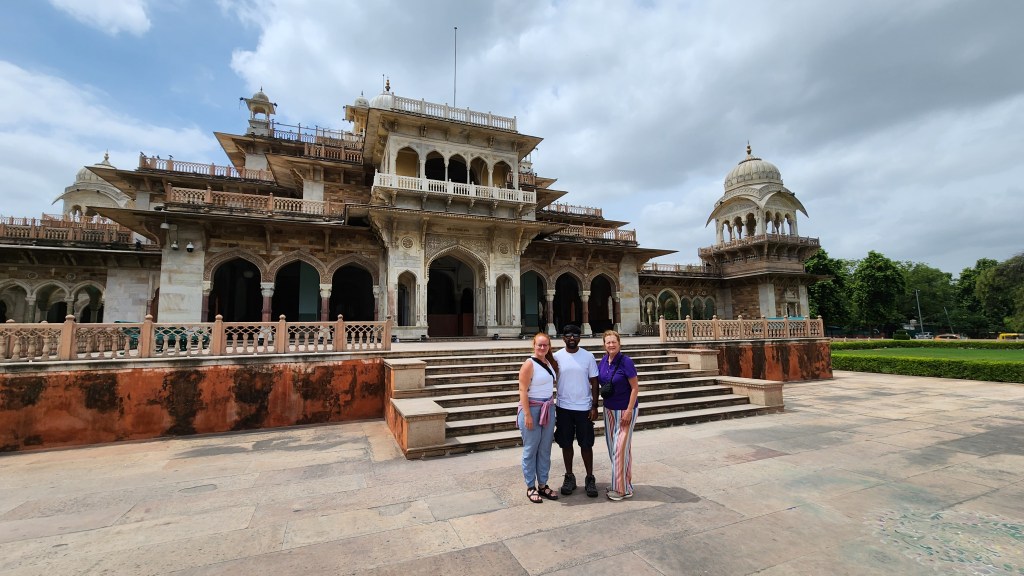
The Pink City was our favorite destination In North India, not just because of the planned city within those ancient walls, but the food, the Heritage Hotel and the vibe of the city. We had some time during our last day in Jaipur before our flight back to Mumbai, so we decided to visit the Central Museum, also known as the Albert Hall Museum. Designed by the British chief engineer of Jaipur at the time, the building is considered a fine example of Indo-Saracenic architecture (a revivalist Indo-Islamic style common to government buildings built during the British Raj.) It is not named for British Queen Victoria’s husband Albert, but in honor of the Prince of Wales (“Albert Edward”), later King Edward VII, who laid the foundation stone during his state visit to Jaipur in 1876. Raja Ram Singh II (who had ordered Jaipur’s buildings painted pink for the Prince of Wales’ visit) wanted the building to be used as a town hall, but he died in 1880 during its construction. His successor, Raja Madho Singh II, hosted the Jaipur Exhibition of 1883, displaying the finest examples of the Raja’s collection of industrial crafts. Rudyard Kipling expressed a scholarly appreciation for the new municipal building’s architecture in the Journal of Indian Art and Industry in 1885. The success of the industrial crafts exhibit led Madho Singh II to decide the new building should instead house a permanent museum for the industrial crafts and the other art of Jaipur. So the building was opened as public museum in 1887. It is the oldest museum of the state and functions as the state museum of Rajasthan. It quickly became famous world wide for its innovations, including the appointment of guides to conduct tours and museum hours only for women on Fridays (at a time when many Indian women were still subject to seclusion from male eyes). By 1898, it had already been visited by in excess of three million people. Interestingly in view of the name changes for other British Raj era buildings, there have only recently been BJP and Congress party arguments about changing the name, although one politician was quoted as saying he was only “jokingly” suggesting a name change.

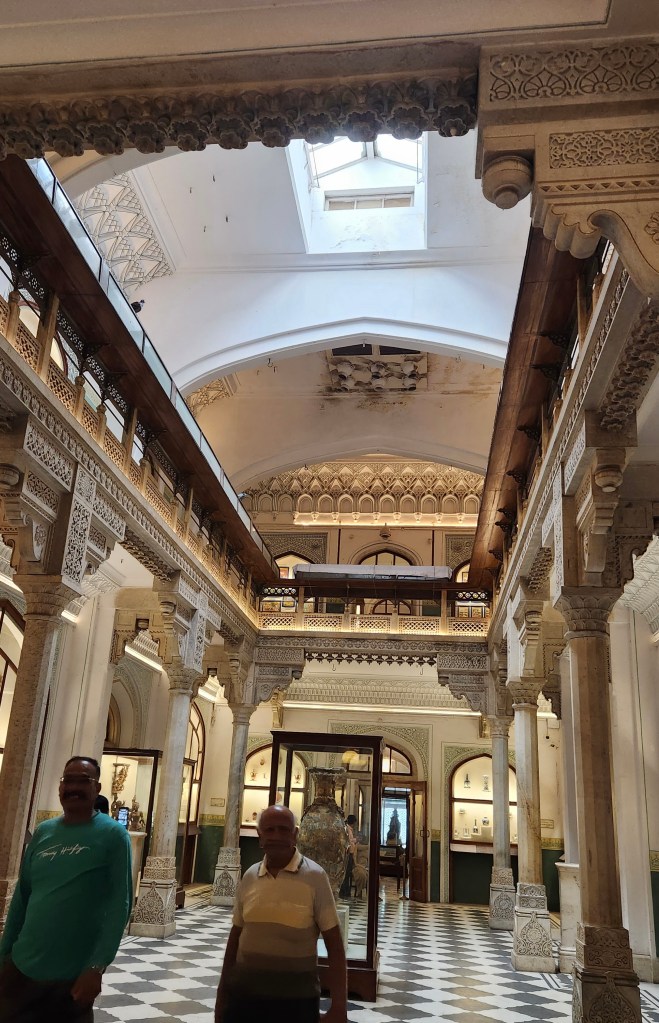

The museum has grown beyond the original Industrial arts and crafts collection and now includes over 19,000 objects, including paintings, arms and armor, sculpture, ancient Persian carpets, and Egyptian antiques (even a mummy). Its pottery was one of our favorites and one of the largest galleries with both Western and Indian samples. The museum itself was stunning and Dawn and I could have spent even more time in the various galleries.
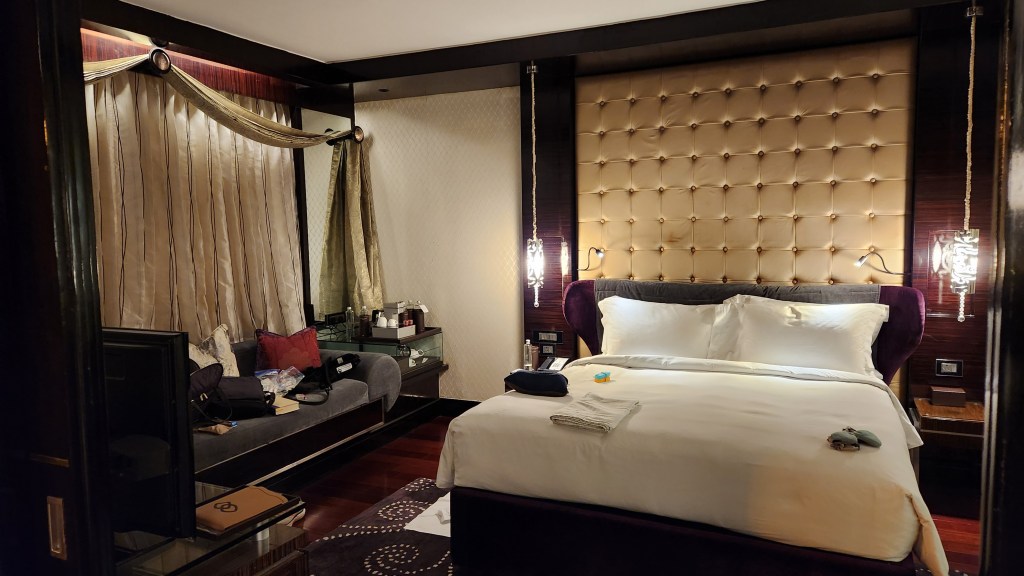
However, that is not Lena’s idea of a fun day and the airport was calling us. So we took our last ride in the van (a usual size but it had felt small after our Sprinter experience in Kerala) and said goodbye to our driver and North India. We landed in Mumbai in the evening and all of us were pretty tired. Our first Mumbai hotel was fully booked, so we stayed a little further away from Kingston’s family. Imagine our surprise when we got to our room. It was a suite. Unfortunately, we would only have one night in this room, unlike our three nights at the Heritage Hotel in Jaipur. But I ended up liking the breakfast buffet at the other Mumbai hotel better.

 Ginger Without Borders
Leave a comment