
Lena’s friends had encouraged her to consider Goa as a destination for our trip to India. I noticed that Goa was a 13 hour road trip from Mumbai. Even by air, it was an hour drive from the closest airport. So Goa was placed on the back burner for planning purposes. But we had almost a week left at the end of our month in India once we returned to Mumbai, and most of it fell over a long school break. So we decided to invite Kingston’s whole family to join us on a long weekend to Goa, the “beach State of India.” Most of the family flew (at 11:40PM) but Kingston’s sister decided to take the overnight train due to their work schedules. We landed at the Goa airport about 1AM and loaded into our mini-bus (there were going to be 14 of us once Kingston’s sister and her family arrived) for the hour drive to our hotel.

Now its time for my mini-history lesson on the remarkable State of Goa. Rock art engravings found in Goa are the earliest known traces of human life in India. It was a part of a Buddist empire in the 3rd Century BC. Beginning in the 2nd Century CE, Hindu dynasties (and some kings who patronized Jainism) ruled Goa. But in 1312, it came briefly under the Delhi Sultanate before becoming subject to various more militant Muslim sultans, who destroyed temples and murdered priests. In 1510, the Portuguese defeated the local sultan, massacred the Muslim population (while sparing the Hindus), and established a permanent settlement in Old Goa. It would last for four and a half centuries and have a profound impact on the local religion. While initially only hostile to Muslims, when the Inquisition arrived in 1560, the liberal policy toward Hindus also ended. By 1909, the Catholic population of Goa was 80%.
Goa was initially a principal port for the Portuguese, the “Lisbon of the East,” but by the 17th Century CE, losses of Portuguese territory in India to the Dutch and the English and the rise of Brazil as an economic center for Portugual, meant the decline of Golden Goa. The Maratha Empire (founded by Shivaji) attempted to grab Goa in 1737 but were defeated in part with assistance from the Mughal army. By 1750, the Portuguese were finally able to defeat the Marathas and preserve Goa as a Portuguese possession.
The Portuguese colonial administration discriminated even against native Goan Catholics and in 1787, a Catholic Goan noble family (family Pinto, awarded a Coat of Arms by the King of Portugal in 1770) began a failed revolt against Portuguese rule. Several members of the family were executed but others fled to France where they joined the French Revolution (still a legend in Goa today).
When Napoleon began his march across Europe, the Portuguese (whose royal family fled to Brazil) allowed British forces to occupy Goa from 1812 to 1815 in accordance with the Anglo-Portuguese Alliance. After Napoleon was defeated, Britian returned Goa to the Portuguese and did not threaten their rule even as they dominated most of the rest of India. When Pedro of Brazil refused to return as King to Portugual, constitutionalists took control of government. In 1822, a new Portuguese law declared all inhabitants of colonial territories to be citizens of Portugal. So unlike their former allies, the British, the Portuguese began to permit certain classes of Goans to vote in elections beginning in 1822, including the election of representatives to the newly created Parliament of Portugal. In 1835, all religions were granted freedom to pracice. In 1869, Goa was elevated from a colony to an overseas possession.
When India became independent in 1947, its new government demanded that Portugual leave Goa. But by then, Goa was considered an “integral part” of Portugal and the demand was refused. The Portuguese argument was that Goa had come under Portuguese control at a time when a unified India did not exist. An independence movement began on the part of the native Goans, leading to a blockade of Goa by the Indian govenment in 1955. The struggle became vicious (more later) and on 12/18/1961, Indian troops invaded Goa and within 36 hours, all the Portuguese forces unconditionally surrendered. In 1963, the Indian Parliament formally integrated Goa into India.
Because of its small territory, Goa was intially declared a Union Territory (like Delhi, the capital) and its official language was declared to be Marathi, the official language of Maharashtra (named after their old enemies, the Maratha Empire). But the local language spoken by over 66% of Goan residents is Konkani, which was derived from Marathi. Marathi speakers claimed Konkani was only a dialect, but Konkani was declared an independent language in 1975 by India’s most prominent literary organization. It was declared Goa’s official language in 1987. Dispite often violent (and in 1986, deadly) demonstrations, it did not become one of the 22 official languages of India until 1992. While the official language of Goa, Konkani is also spoken in the coastal areas of Karnataka, Maharashtra, Kerala and Gujarat.
In 1961, when Goa became a Union Territory, India was in the process of reorganizing its states along linguistic lines. There were demands that the Union Territory of Gao be merged into neighboring Maharashtra. So a plebiscite was held in 1967 (the only such referendum ever held in independent India), where Goans voted to become a state (India’s smallest state by area).
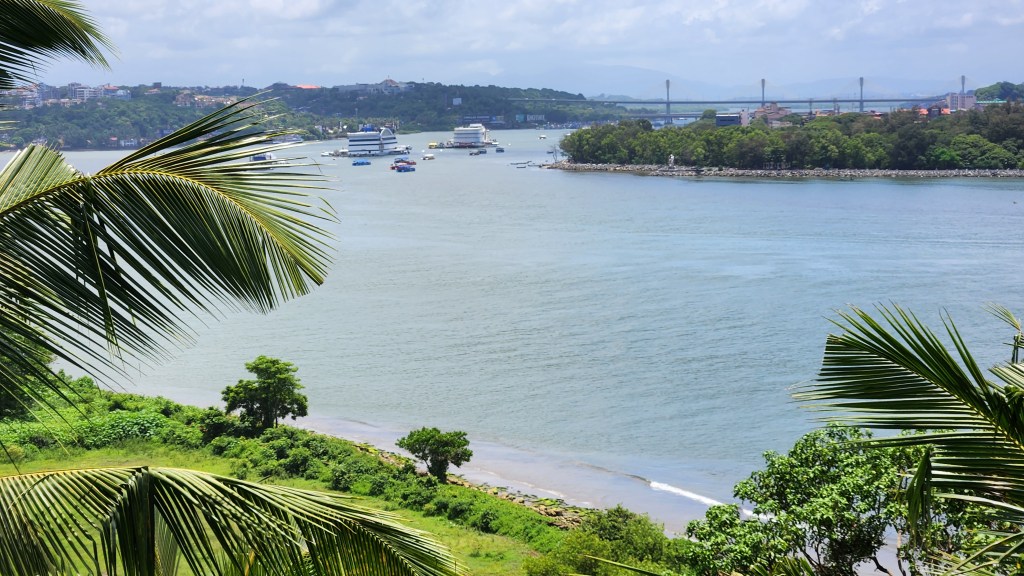
Goa (nicknamed the “Pearl of the Orient”) is India’s richest state with the highest gross domestic product per capita (2.5 times the national rate) and rated by the Indian government as having the best quality of life in India. It is also considered the party state because it was the first state to allow gambling (1976) and its low excise taxes mean low prices on alcohol. It attracts large numbers of both domestic and international tourists because of its white sand beaches, acitve nightlife (with gambling), and world heritage architecture.
Today, Christians only represent just over 25% of the population, in part because ethnic Goans are now less than 50% of the population. Many Christians immigrated to the larger Indian cities after annexation and mass migration to the wealth of Goa by non-Christian Indians has lead to a population that is now 66% Hindu and 8% Muslim.


Leave a Reply