
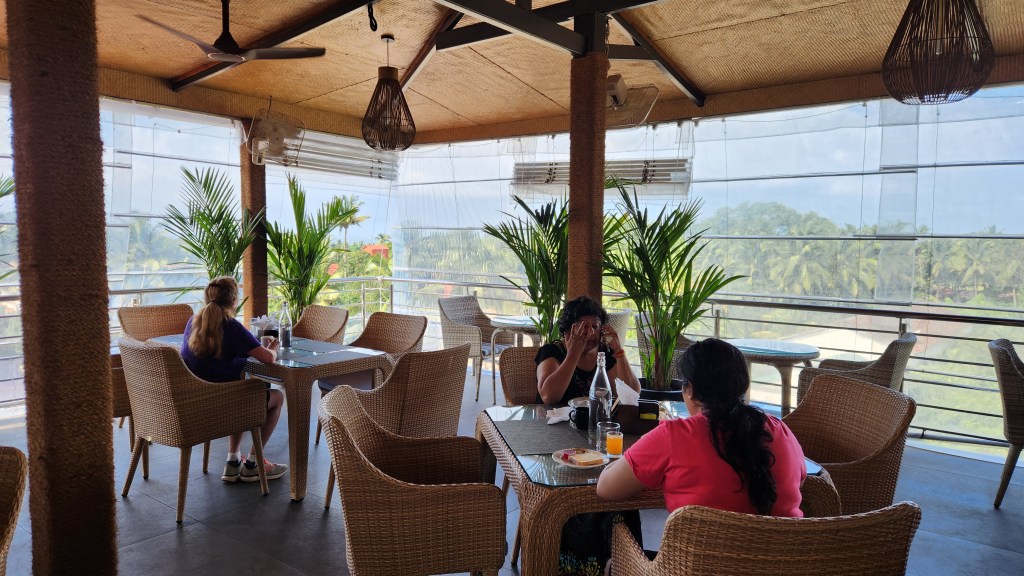
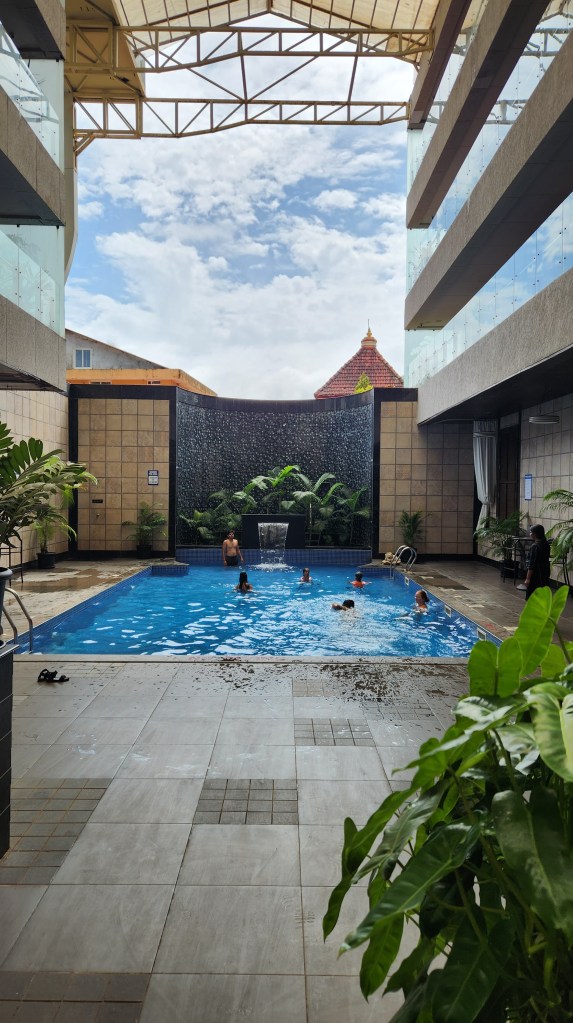
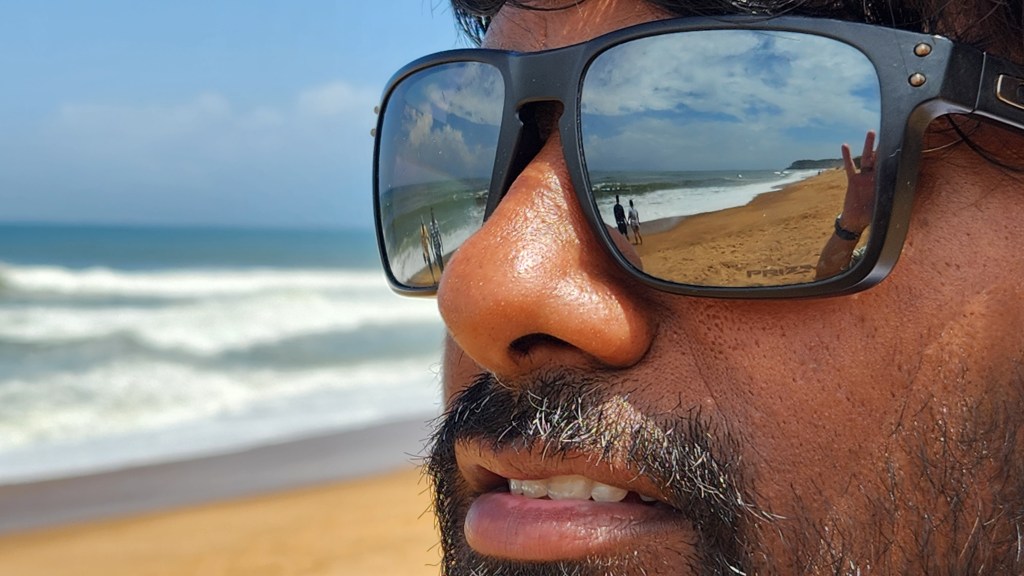
By the time we awoke at our beach hotel, Kingston’s sister and her family had arrived by train. And since the hotel had a pool, the very first thing the kids wanted to do after breakfast (on the veranda atop the hotel with great views of the Indian Ocean) was to play in the pool. The male adults decided to walk down to the nearby beach.

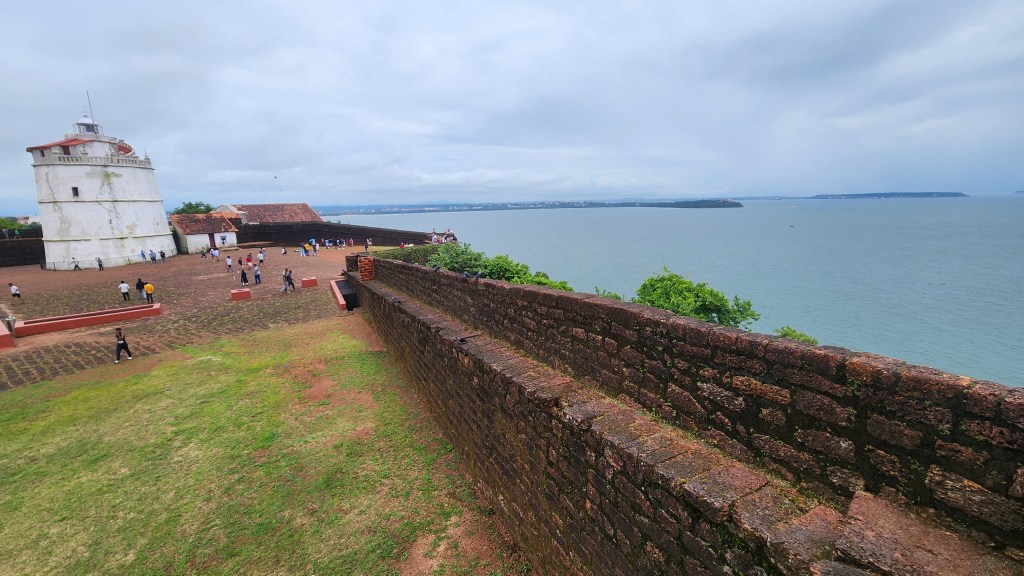
We forced the kids out of the pool and loaded everyone into our mini-van for a little touring. Our first stop was a fort that is named for one of its principal purposes: to supply water to the passing ships of the Portuguese military and trading fleets, Fort Aguada (“watery” in Portuguese). Its other principal purpose was to protect the shipping that sheltered in the deep water port formed at the mouth of the Mandovi River. The Fort was built in 1612 on a promontory overlooking the Mandovi River to guard against the Dutch fleet. The Portuguese had been successful in keeping the route to India a secret for over 100 years after their arrival in Gao in 1510, so no fort was needed until the Dutch discovered the route. Fort Aguada is so large that it occupies the entire peninsula with its thick walls and 79 canons. It also has its own freshwater spring and the capacity to store 2,376,000 gallons of water, one of the biggest freshwater storage systems of the time in all of Asia. It was the most prized and crucial fort of the Portuguese.
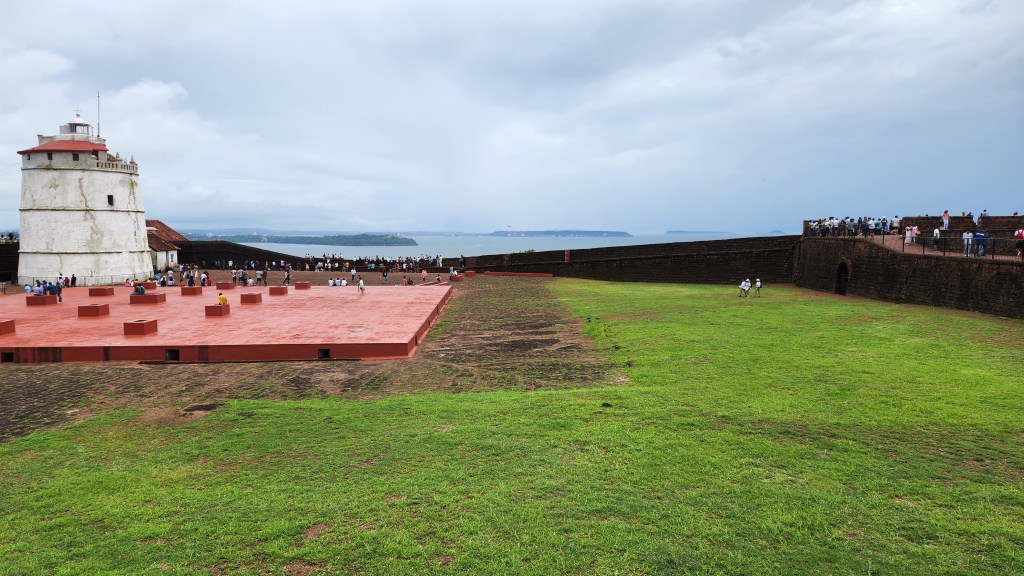
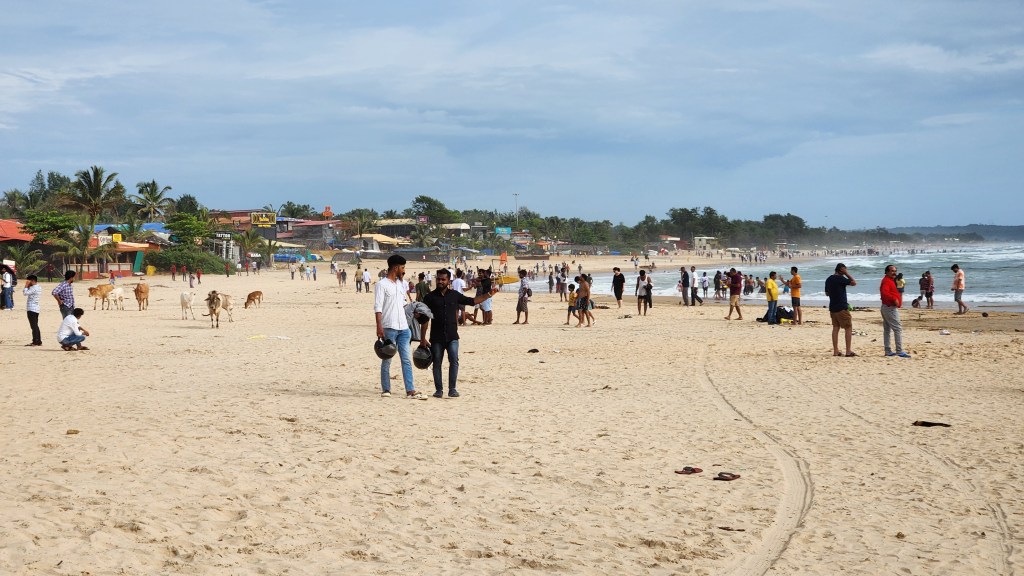
After we finished touring the Fort, it was time to head to the beach since we were in a beach town.

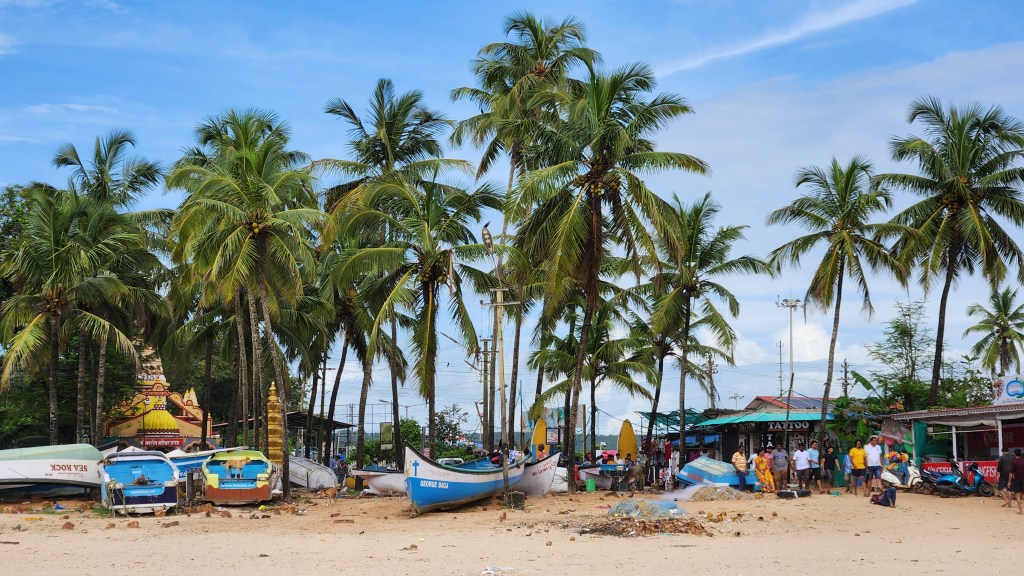
For dinner, we literally walked across the street from our hotel to find a restaurant that was able to arrange a table for 14. It was not a buffet, so we ordered from the menu. Since we were at the beach, I had a fish appetizer and fish main course fixed local style (which was not particularly hot). As is the Indian custom, everyone in the family shared what they ordered with whoever had an interest in the food. We also had drinks and shared deserts. When the bill came, Kingston (who had arranged all meals up to that point) finally shared with Lena the bill for our feast. She was surprised to see that a meal for 14 in Goa cost only slightly more than what she and Kingston would spend for a fancy meal for two in DC. They did not share the exact amount with me. The sleep deficit from our airline schedule finally hit me, so Dawn and I headed to bed.
 Ginger Without Borders
Leave a comment